Euphorbiaceae
Croton 'Petra': Complete Care Guide
Codiaeum variegatum 'Petra'
Thrives in bright indirect to filtered direct light, well-draining soil kept evenly moist, and high humidity. Sensitive to sudden environmental changes, cold drafts and soggy soil, which can trigger leaf drop.
Every 7 days
Bright indirect
16° - 29°C
50% - 70%
Categories
What is Croton 'Petra'?
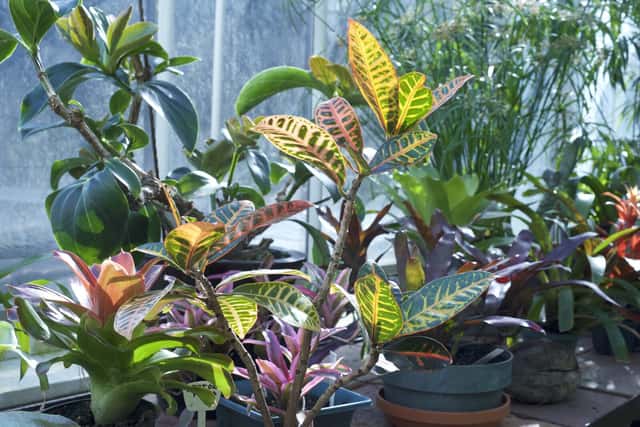
Croton 'Petra' (Codiaeum variegatum 'Petra') is a medium-care plant from the Euphorbiaceae family. Croton 'Petra' (Codiaeum variegatum 'Petra') is a popular croton cultivar prized for its large, glossy, leathery leaves splashed with vivid green, yellow, orange and red along the veins. Native to the Pacific Islands and Southeast Asia, this tropical evergreen shrub is grown mainly as a striking ind...
Croton 'Petra' grows up to 1.2m, spread of 60cm, watering every 7 days, 16°C – 29°C, 50–70% humidity. It is suitable for indoor environments and not safe for pets.
Without precautions, ingestion can cause irritation in pets. Keep out of reach of cats and dogs. Without adequate drainage, root rot can develop within 14 days.
How to Care for Croton 'Petra'?
TLDR: Croton 'Petra' needs Bright indirect, watering every 7 days, and temperatures between 16-29°C with 50-70% humidity.
How Often Should You Water Croton 'Petra'?
Water when the top 2-3 cm of soil feels dry to the touch, keeping the soil evenly moist but never waterlogged. Reduce frequency in winter.
How Much Light Does Croton 'Petra' Need?
Needs bright indirect to filtered direct light for at least 4-6 hours a day; low light causes new leaves to emerge mostly green, losing the plant's signature coloring.
What Is the Best Soil for Croton 'Petra'?
Use a light, organically rich, well-draining mix, such as potting soil combined with pine bark and coarse sand.
What Pot Should You Use for Croton 'Petra'?
A ceramic or terracotta pot with drainage holes, which helps prevent waterlogged soil.
Care Schedule
Fertilize
Every 30 days
Misting
Every 3 days
Rotate
Every 14 days
Repot
Every 730 days
What Is Croton 'Petra' and Where Does It Come From?
Croton 'Petra' (Codiaeum variegatum 'Petra') is a popular croton cultivar prized for its large, glossy, leathery leaves splashed with vivid green, yellow, orange and red along the veins. Native to the Pacific Islands and Southeast Asia, this tropical evergreen shrub is grown mainly as a striking indoor ornamental, requiring abundant light to keep its colors intense.
How to Propagate Croton 'Petra'?
Stem cutting
The milky sap can irritate skin, so wear gloves when handling cuttings. Rooting is slow and can take up to 2 months; a plastic humidity dome helps speed things up.
- 1 Cut a healthy 10-15 cm stem section with at least 2-3 leaves using clean, sharp shears
- 2 Let the cut callus over for a few hours to reduce milky latex sap bleeding
- 3 Dip the cut end in rooting hormone
- 4 Plant in a light, well-draining potting mix or place in water
- 5 Keep in a warm spot with bright indirect light and high humidity until roots form
Materials needed:
How Big Does Croton 'Petra' Grow?
TLDR: Croton 'Petra' can reach up to 1.2m tall with Slow growth rate.
Max height
1.2m
Spread
60cm
Growth rate
Slow
Foliage
Evergreen
Warning: Toxic Plant
This plant can be toxic if ingested. Keep out of reach of:
Plant Uses
Ornamental
Great for decoration
Is your plant showing symptoms?
Click on the symptom to discover possible causes:
What Diseases Commonly Affect Croton 'Petra'?
TLDR: Croton 'Petra' is susceptible to 8 known diseases. Monitor regularly for early detection.
Spider Mites
Spider mites are tiny arachnids (less than 1/20 inch long) related to spiders and ticks that feed on plant sap. They thrive in hot, dry conditions and can cause significant damage to ornamental and vegetable plants. During severe infestations, crop losses can reach 14% or higher as these pests disrupt vital plant processes including photosynthesis, carbon dioxide absorption, and transpiration.
Mealybugs
Mealybugs are small, soft-bodied insects covered with a white, waxy, cottony material. They are common pests of houseplants and outdoor plants in mild climates. These sap-sucking insects feed on plant tissue, causing damage, stunted growth, and can lead to plant death if left untreated. They produce sticky honeydew which attracts sooty mold.
Scale Insects
Scale insects are small sap-sucking pests that appear as brown, shell-like bumps on plant stems and leaves. There are over 25 species, divided into armored (hard) and unarmored (soft) scales. They feed by piercing plant tissue and extracting sap, which weakens the plant and can lead to yellowing, stunted growth, and even death if left untreated. They also excrete honeydew, which attracts ants and promotes sooty mold growth.
Aphids
Aphids are small, soft-bodied, pear-shaped insects (1/16 to 1/8 inch long) that feed by sucking nutrient-rich sap from plants. They reproduce rapidly and can quickly weaken plants, causing distorted growth and transmitting plant viruses. Aphids come in various colors including green, black, red, yellow, brown, and gray. They secrete honeydew, a sticky substance that attracts ants and encourages sooty mold growth.
Meaning & Symbolism
Represents positive change, energy, and overcoming challenges, mirrored in its vivid and ever-shifting leaf coloration.
Fun Facts
The name "croton" comes from the Greek "kroton", meaning tick, referencing the shape of its seeds.
A single Croton 'Petra' leaf can display 3 to 6 different colors at once.
Leaf color intensity depends directly on how much light the plant receives.
Frequently asked questions
Is Croton 'Petra' toxic to cats and dogs?
Why is my Croton dropping leaves?
How often should I water Croton 'Petra'?
How do you propagate Croton 'Petra'?
Compare with similar plants
| Attribute | Difficulty | Light | Watering | Pet Safe |
|---|---|---|---|---|
| Dark Fieldcap | Medium | Low light | 2d | ⚠️ |
| Azalea | Medium | Partial shade | 3d | ⚠️ |
| Muriel's Bamboo | Medium | Partial shade | 3d | ✓ |
| Bougainvillea | Medium | Direct sun | 7d | ⚠️ |
Choose & Compare
Sources & References
- Croton, Codiaeum variegatum - Wisconsin Horticulture
- Croton Production and Use - UF/IFAS EDIS ENH878
- Croton - Pet Poison Helpline
- Croton Petra Care: How To Grow Petra Crotons
- Croton (Codiaeum variegatum): All You Need To Know - Gardenia.net
- Crotons: How To Grow Codiaeum Variegatum - Epic Gardening
- What Are The Common Croton Pests? - PlantCareToday
- Codiaeum Variegatum - Petra Croton - The Nunhead Gardener
- The Double Edge Sword Of Croton Plants - FengShuied




