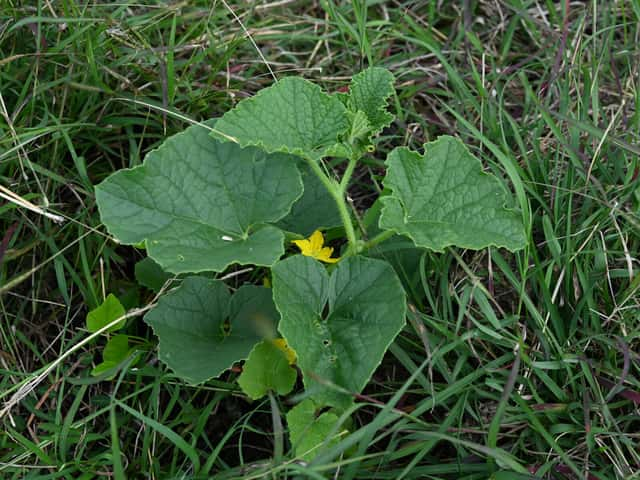
Cucurbitaceae
Cucumbers and Melons (Genus Cucumis)
Cucumis
The garden species want strong sun, warmth and frequent watering. Plant after the cold has passed, in rich soil that drains, and give the vine room or something to climb. Keeping the leaves dry helps hold off fungal problems.
Every 3 days
Direct sun
15° - 35°C
% - %
Categories
What is Cucumbers and melons?
Cucumbers and melons (Cucumis) is a medium-care plant from the Cucurbitaceae family. Cucumis is the genus behind cucumber (Cucumis sativus), melon (Cucumis melo), West Indian gherkin (Cucumis anguria) and horned melon (Cucumis metuliferus). These are vines that climb or trail with tendrils, in the same family as squash. The genus has around 60 species, most of them in Africa and the...
Cucumbers and melons grows up to watering every 3 days, 15°C – 35°C. It is not suitable for indoor environments and safe for pets.
Unlike many popular species, Cucumbers and melons is safe to keep around pets.
How to Care for Cucumbers and melons?
TLDR: Cucumbers and melons needs Direct sun, watering every 3 days, and temperatures between 15-35°C with 40-70% humidity.
How Often Should You Water Cucumbers and melons?
Water every 2 or 3 days in hot weather, at the base and not over the leaves. Soil that dries right out while fruit is forming tends to hurt the crop.
How Much Light Does Cucumbers and melons Need?
It needs direct sun for most of the day. In shade the vine grows weak and sets little fruit.
What Is the Best Soil for Cucumbers and melons?
Use rich soil that drains well, slightly acidic to neutral (pH 6 to 6.8).
What Pot Should You Use for Cucumbers and melons?
A large, deep pot with drainage holes, plus a support for the tendrils. Compact varieties cope best.
Care Schedule
Fertilize
Every 14 days
What Is Cucumbers and melons and Where Does It Come From?
Cucumis is the genus behind cucumber (Cucumis sativus), melon (Cucumis melo), West Indian gherkin (Cucumis anguria) and horned melon (Cucumis metuliferus). These are vines that climb or trail with tendrils, in the same family as squash. The genus has around 60 species, most of them in Africa and the rest in India, Southeast Asia and Australia. Flowers are usually yellow, and the garden species grow fast. If you know which plant you have, its own species page gives closer care advice.
How to Propagate Cucumbers and melons?
Seed
Seedlings don't like cold. In cold soil the seed can rot before it sprouts.
- 1 Wait until the cold has passed and the soil has warmed up
- 2 Sow where the plant will grow, or in small pots
- 3 Keep the soil moist but not soggy
- 4 Give the vine a support or room once it starts to run
Materials needed:
How Big Does Cucumbers and melons Grow?
TLDR: Cucumbers and melons can reach up to ?cm tall with Fast growth rate.
Growth rate
Fast
Plant Uses
Edible
Can be consumed
Culinary Uses
- Cucumber, melon, West Indian gherkin and horned melon are eaten as food. Don't eat fruit from a wild Cucumis unless you know the species.
Is your plant showing symptoms?
Click on the symptom to discover possible causes:
What Diseases Commonly Affect Cucumbers and melons?
TLDR: Cucumbers and melons is susceptible to 7 known diseases. Monitor regularly for early detection.
Powdery Mildew
Powdery mildew is a common fungal disease caused by various fungi species including Erysiphe, Podosphaera, Oïdium, and Leveillula. It affects over 10,000 plant species worldwide. The disease thrives in warm, dry climates with high humidity and appears as a distinctive white powdery coating on plant surfaces.
Downy Mildew
Downy mildew is a fungal-like disease caused by oomycetes (water molds) that thrives in cool, wet conditions. It affects a wide range of plants, causing yellowing leaves with fuzzy white-gray growth underneath, leading to defoliation and reduced yields if left untreated.
Anthracnose
Anthracnose is a fungal disease caused by fungi in the genus Colletotrichum that affects many plants, including vegetables, fruits, and trees. The disease thrives in cool, wet conditions, causing dark, sunken lesions on leaves, stems, flowers, and fruits.
Mosaic Virus
Mosaic virus is a group of plant viruses that cause mottled, patchy patterns on leaves and can affect a wide variety of plants. The virus creates characteristic yellow, white, and green mosaic patterns, often accompanied by stunted growth and deformed plant parts. This highly contagious disease spreads rapidly through insect vectors and contaminated tools.
Fun Facts
The genus has around 60 accepted species.
Horned melon, the spiky orange fruit, is in the same genus as cucumber.
The genus is centred on tropical Africa, yet cucumber and melon have wild relatives in India.
Frequently asked questions
Are cucumbers and melons related?
What is the white powder on my leaves?
Why do the leaves have a green and yellow mottled pattern?
Can I grow them on a balcony?
Compare with similar plants
| Attribute | Difficulty | Light | Watering | Pet Safe |
|---|---|---|---|---|
| Dark Fieldcap | Medium | Low light | 2d | ⚠️ |
| Azalea | Medium | Partial shade | 3d | ⚠️ |
| Muriel's Bamboo | Medium | Partial shade | 3d | ✓ |
| Bougainvillea | Medium | Direct sun | 7d | ⚠️ |




