Rutaceae
Curry tree: Aromatic Plant
Murraya koenigii
The curry tree is a sun-loving, frost-sensitive plant that requires temperatures above 18°C (64°F) and well-ventilated, nutrient-rich, slightly acidic to neutral soil. It thrives best in consistently moist but never waterlogged soil; overwatering leads to root rot. With regular misting and fertilization, it can develop lush, dark green foliage, whereas a lack of light causes the shoots to stretch and the foliage to thin out.
Every 7 days
Bright indirect
15° - 35°C
40% - 70%
Categories
What is Curry tree?
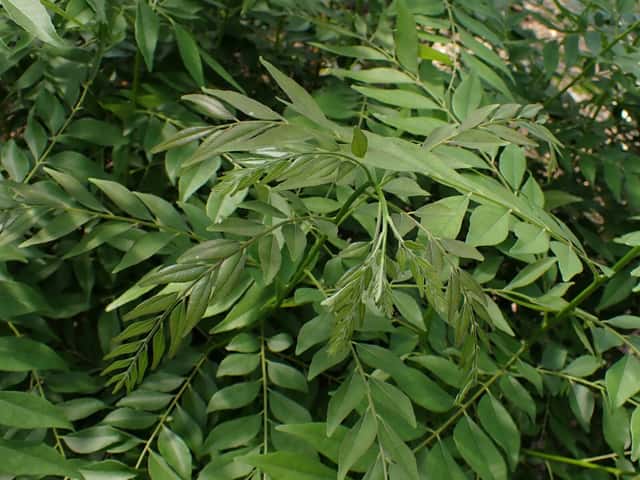
Curry tree (Murraya koenigii) is a medium-care plant from the Rutaceae family. Murraya koenigii, commonly known as the curry tree, is an evergreen shrub or small tree in the citrus family (Rutaceae), native to the forests of South Asia—specifically India and Sri Lanka. Its fragrant, compound, pinnate leaves are indispensable spices in South Indian and Sri Lankan cuisine: when...
Curry tree grows up to 4.0m, spread of 300cm, watering every 7 days, 15°C – 35°C, 40–70% humidity. It is suitable for indoor environments and not safe for pets.
Without precautions, ingestion can cause irritation in pets. Keep out of reach of cats and dogs. Without adequate drainage, root rot can develop within 14 days.
How to Care for Curry tree?
TLDR: Curry tree needs Bright indirect, watering every 7 days, and temperatures between 15-35°C with 40-70% humidity.
How Often Should You Water Curry tree?
Water when the top 2-3 cm of soil has dried out—this is typically required once a week, or more frequently during warmer months. Avoid standing water at the bottom of the pot, as the curry tree is particularly sensitive to overwatering and root rot.
How Much Light Does Curry tree Need?
Provide the brightest spot possible: outdoors it prefers 6+ hours of direct sunlight daily, while indoors you should choose a bright location near a south-facing window. Prolonged lack of light causes the stems to become leggy and the leaves to become sparse and paler.
What Is the Best Soil for Curry tree?
It requires well-draining, loose, nutrient-rich soil with an ideal pH between 6.0 and 7.5. A mixture of garden soil, compost, and sand or perlite—with good drainage—provides a suitable medium; ensure the pot has drainage holes at the bottom.
What Pot Should You Use for Curry tree?
Choose a deep, well-draining pot—preferably made of clay or terracotta, as this helps excess moisture evaporate and reduces the risk of root rot. Due to the taproot, young plants should be repotted into larger containers every 2-3 years.
Care Schedule
Fertilize
Every 30 days
Misting
Every 3 days
Rotate
Every 14 days
Repot
Every 730 days
What Is Curry tree and Where Does It Come From?
Murraya koenigii, commonly known as the curry tree, is an evergreen shrub or small tree in the citrus family (Rutaceae), native to the forests of South Asia—specifically India and Sri Lanka. Its fragrant, compound, pinnate leaves are indispensable spices in South Indian and Sri Lankan cuisine: when fried fresh or dried in hot oil, they release a characteristic aroma into dishes. The plant produces small, white, fragrant flowers in spring and summer, which develop into shiny black berries—though the seeds are poisonous, only the pulp is edible. It is well-suited for container gardening, although it can grow up to 4 meters tall in open ground.
How to Propagate Curry tree?
Seed
- 1 Obtaining fresh seeds
Use the freshest possible seeds from ripe, black berries—curry tree seeds lose their viability quickly.
- 2 Preparation
Remove the fruit pulp, rinse the seed, and let it dry for one day.
- 3 Sowing
Plant 1-2 cm deep in well-draining, moist seed-starting soil in a warm (25-30°C), bright location.
- 4 Aftercare
Keep the soil consistently moist until the seedling strengthens, then gradually acclimate it to stronger light.
Materials needed:
Cutting / Sucker
- 1 Taking the cutting
Cut a 10-15 cm semi-hardwood shoot from a healthy plant.
- 2 Rooting
Dip in rooting hormone, then plant in a moist, loose medium.
- 3 Environment
Keep in a high-humidity, warm place protected from direct sunlight until rooting occurs.
Materials needed:
How Big Does Curry tree Grow?
TLDR: Curry tree can reach up to 4.0m tall with Medium growth rate.
Max height
4.0m
Spread
3.0m
Growth rate
Medium
Foliage
Evergreen
Warning: Toxic Plant
This plant can be toxic if ingested. Keep out of reach of:
Plant Uses
Edible
Can be consumed
Medicinal
Medicinal properties
Aromatic
Pleasant fragrance
Ornamental
Great for decoration
Medicinal Uses
- In traditional Ayurvedic medicine, the leaves are used as a digestive aid and an anti-diarrheal remedy.
- Research has also indicated antioxidant, anti-inflammatory, and blood sugar-lowering effects in the leaves.
- Boiled with coconut oil, it is used as a hair care treatment to reduce hair loss and strengthen hair.
- In folk medicine, it has also been used to reduce fever and treat skin problems.
Culinary Uses
- Fresh or dried curry leaves are fried in hot oil or ghee ('tempering') and added to South Indian and Sri Lankan curries, dhals, and soups, imparting a distinctive citrusy-spicy aroma.
- They are used as a base spice for chutneys, marinades, and rice dishes (e.g., curry leaf rice), often paired with mustard seeds, cumin, and sliced onions.
- Freshly chopped, they are added to salads, seafood, and lentil dishes, while dried or powdered, they are an ingredient in long-lasting spice blends.
Is your plant showing symptoms?
Click on the symptom to discover possible causes:
What Diseases Commonly Affect Curry tree?
TLDR: Curry tree is susceptible to 8 known diseases. Monitor regularly for early detection.
Spider Mites
Spider mites are tiny arachnids (less than 1/20 inch long) related to spiders and ticks that feed on plant sap. They thrive in hot, dry conditions and can cause significant damage to ornamental and vegetable plants. During severe infestations, crop losses can reach 14% or higher as these pests disrupt vital plant processes including photosynthesis, carbon dioxide absorption, and transpiration.
Root Rot
Root rot is a serious fungal disease that affects the root system of plants, causing them to decay and die. It is primarily caused by overwatering, poor drainage, or soil-borne fungi such as Pythium, Phytophthora, Rhizoctonia, and Fusarium. The disease thrives in waterlogged conditions where roots are deprived of oxygen, making them susceptible to fungal infection.
Aphids
Aphids are small, soft-bodied, pear-shaped insects (1/16 to 1/8 inch long) that feed by sucking nutrient-rich sap from plants. They reproduce rapidly and can quickly weaken plants, causing distorted growth and transmitting plant viruses. Aphids come in various colors including green, black, red, yellow, brown, and gray. They secrete honeydew, a sticky substance that attracts ants and encourages sooty mold growth.
Mealybugs
Mealybugs are small, soft-bodied insects covered with a white, waxy, cottony material. They are common pests of houseplants and outdoor plants in mild climates. These sap-sucking insects feed on plant tissue, causing damage, stunted growth, and can lead to plant death if left untreated. They produce sticky honeydew which attracts sooty mold.
Meaning & Symbolism
In Indian and Sri Lankan households, it is traditionally planted near the kitchen so that fresh leaves are always at hand—it is a symbol of hospitality, abundance, and health.
Compare with similar plants
| Attribute | Difficulty | Light | Watering | Pet Safe |
|---|---|---|---|---|
| Dark Fieldcap | Medium | Low light | 2d | ⚠️ |
| Azalea | Medium | Partial shade | 3d | ⚠️ |
| Muriel's Bamboo | Medium | Partial shade | 3d | ✓ |
| Bougainvillea | Medium | Direct sun | 7d | ⚠️ |
Choose & Compare
Sources & References
- Murraya koenigii - PFAF Plant Database
- How to Grow and Care for Murraya Koenigii
- Identifying and Treating Common Diseases in Curry Leaf Plants
- Curry Leaf Plant Pests: Identification and Control
- The Asian Citrus Psyllid Host Murraya koenigii Is Immune to Citrus Huanglongbing Pathogen
- Nutritive Importance and Therapeutics Uses of Curry Leaves




