Cactaceae
Eriosyce curvispina (Curved-Spine Cactus): Care Guide
Eriosyce curvispina
Give it lots of sun, a very mineral mix and infrequent water. It is prone to rot, so let the soil dry out fully between waterings and keep it dry in winter. It tolerates light frost to about -4 C.
Every 14 days
Bright indirect
-4° - °C
% - %
Categories
What is Curved-spine cactus?
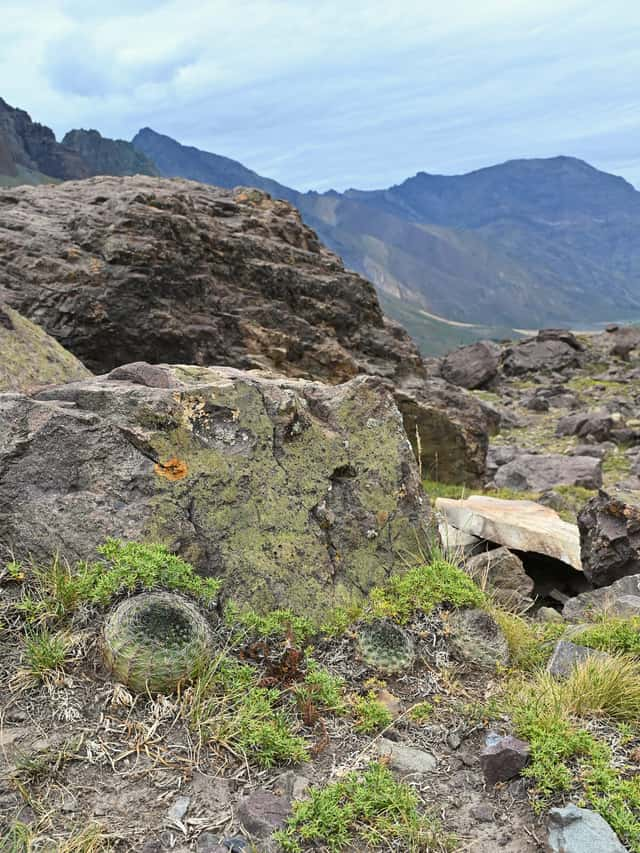
Curved-spine cactus (Eriosyce curvispina) is a medium-care plant from the Cactaceae family. Eriosyce curvispina is a globular cactus endemic to central Chile, where it grows mainly on rocky hillsides from near sea level up to about 2,200 m. It forms one or two spherical stems 5-25 cm across with 13-21 ribs. Its spines are stout and black to brown: the 2-4 cm central spines curve upward (he...
Curved-spine cactus grows up to 15cm, spread of 25cm, watering every 14 days. It is suitable for indoor environments and safe for pets.
Unlike many popular species, Curved-spine cactus is safe to keep around pets. Without adequate drainage, root rot can develop within 28 days.
How to Care for Curved-spine cactus?
TLDR: Curved-spine cactus needs Bright indirect, watering every 14 days, and temperatures between -4-30°C with 40-70% humidity.
How Often Should You Water Curved-spine cactus?
Water deeply in spring and summer only when the mix is completely dry, about every two weeks. Cut back in autumn and keep it almost dry in winter: excess water easily rots the root.
How Much Light Does Curved-spine cactus Need?
Full sun to light shade. Indoors, place it at the brightest window; in low light it stretches and loses its round shape.
What Is the Best Soil for Curved-spine cactus?
Use a cactus mix with 70-80% mineral grit (pumice, perlite or coarse sand) and a gravel top dressing to protect the base.
What Pot Should You Use for Curved-spine cactus?
A well-drained terracotta pot, fairly deep for the root, only slightly wider than the plant.
What Is Curved-spine cactus and Where Does It Come From?
Eriosyce curvispina is a globular cactus endemic to central Chile, where it grows mainly on rocky hillsides from near sea level up to about 2,200 m. It forms one or two spherical stems 5-25 cm across with 13-21 ribs. Its spines are stout and black to brown: the 2-4 cm central spines curve upward (hence the name) and the radials curve sideways. It bears large funnel-shaped flowers 3-6.5 cm long, yellowish to reddish with a red midstripe, followed by small oval red to brown fruits. It is extremely variable in size, spination and flower color, which has given it a long list of names.
How to Propagate Curved-spine cactus?
Seed
Seed is the main method, as this cactus rarely offsets. Seedlings are rot-sensitive: water sparingly and keep air moving.
- 1 Sow seeds on the surface of moist, fine mineral mix
- 2 Cover the tray to hold humidity
- 3 Keep at 20-25 C in bright, indirect light
- 4 Ventilate gradually after germination
- 5 Pot up seedlings after about a year, once they can be handled
Materials needed:
Offsets
Wear thick gloves or use tongs: the spines are strong and curved.
- 1 If the plant forms a second stem, separate it with a sterile blade
- 2 Let the cut callus for a week in a dry, shaded spot
- 3 Set it on dry mineral mix
- 4 Water lightly once roots appear
Materials needed:
How Big Does Curved-spine cactus Grow?
TLDR: Curved-spine cactus can reach up to 15cm tall with Slow growth rate.
Max height
15cm
Spread
25cm
Growth rate
Slow
Foliage
Evergreen
Plant Uses
Ornamental
Great for decoration
Is your plant showing symptoms?
Click on the symptom to discover possible causes:
What Diseases Commonly Affect Curved-spine cactus?
TLDR: Curved-spine cactus is susceptible to 4 known diseases. Monitor regularly for early detection.
Root Rot
Root rot is a serious fungal disease that affects the root system of plants, causing them to decay and die. It is primarily caused by overwatering, poor drainage, or soil-borne fungi such as Pythium, Phytophthora, Rhizoctonia, and Fusarium. The disease thrives in waterlogged conditions where roots are deprived of oxygen, making them susceptible to fungal infection.
Overwatering
Overwatering occurs when plants receive too much water, depriving roots of oxygen and causing root rot. This environmental stress is one of the most common causes of houseplant death, as waterlogged soil prevents roots from breathing and functioning properly.
Mealybugs
Mealybugs are small, soft-bodied insects covered with a white, waxy, cottony material. They are common pests of houseplants and outdoor plants in mild climates. These sap-sucking insects feed on plant tissue, causing damage, stunted growth, and can lead to plant death if left untreated. They produce sticky honeydew which attracts sooty mold.
Etiolation and Leaf Drop
Etiolation occurs when a plant receives insufficient light, causing the stem to grow elongated, weak, and pale. The lack of light energy prevents proper photosynthesis, leading to general weakening and premature leaf drop.
Fun Facts
"Curvispina" means "curved spine", after the central spines that arch upward.
It was described in 1833 from plants collected in Chile by the botanist Carlo Bertero.
It is so variable that a 2024 study proposed splitting the complex into nine species endemic to central Chile.
Frequently asked questions
How often should I water Eriosyce curvispina?
Is it cold-hardy?
Where does this cactus come from?
Is it the same as Neoporteria curvispina or Pyrrhocactus curvispinus?
Compare with similar plants
| Attribute | Difficulty | Light | Watering | Pet Safe |
|---|---|---|---|---|
| Dark Fieldcap | Medium | Low light | 2d | ⚠️ |
| Azalea | Medium | Partial shade | 3d | ⚠️ |
| Muriel's Bamboo | Medium | Partial shade | 3d | ✓ |
| Bougainvillea | Medium | Direct sun | 7d | ⚠️ |