Caryophyllaceae
Annual Baby's Breath: Ground Cover Plant
Psammophiliella muralis
Annual Baby's Breath is very easy to care for and is excellent for beginners. It thrives best in full sun and in lean, well-drained, preferably sandy or calcareous soil. Once established, it tolerates drought well but requires regular watering during germination and early growth. Standing moisture around the roots is the greatest risk—always ensure the soil drains well.
Every 7 days
Direct sun
-15° - °C
% - %
Categories
What is Annual Baby's Breath?
Annual Baby's Breath (Psammophiliella muralis) is a easy-care plant from the Caryophyllaceae family. Annual Baby's Breath (Psammophiliella muralis), formerly classified as Gypsophila muralis, is an annual herb in the pink family (Caryophyllaceae). The species was described as early as 1753 by Carl Linnaeus, and the name muralis ("growing on walls") refers to its preference for dry, open habitats su...
Annual Baby's Breath grows up to 40cm, spread of 30cm, watering every 7 days. It is not suitable for indoor environments and safe for pets.
Unlike many tropical plants, Annual Baby's Breath tolerates watering mistakes. Best for beginners. Unlike many popular species, Annual Baby's Breath is safe to keep around pets.
How to Care for Annual Baby's Breath?
TLDR: Annual Baby's Breath needs Direct sun, watering every 7 days, and temperatures between -15-30°C with 40-70% humidity.
How Often Should You Water Annual Baby's Breath?
Water regularly but allow the soil surface to dry out slightly between waterings. Avoid letting the plant sit in water or in soggy, compact soil—this increases the risk of root rot.
How Much Light Does Annual Baby's Breath Need?
Place the plant in the sunniest spot available—it needs at least 6 hours of direct sun per day to bloom profusely.
What Is the Best Soil for Annual Baby's Breath?
Use lean, well-drained soil with components of sand or gravel, preferably with a neutral to slightly alkaline pH (approx. 6.5-8.0). Consider mixing extra sand or grit into heavier garden soil for better drainage.
What Pot Should You Use for Annual Baby's Breath?
Well-drained pots or window boxes with drainage holes, filled with a sandy, lean soil mix—ideally mimicking a rock garden or gravel environment.
Care Schedule
Fertilize
Every 45 days
What Is Annual Baby's Breath and Where Does It Come From?
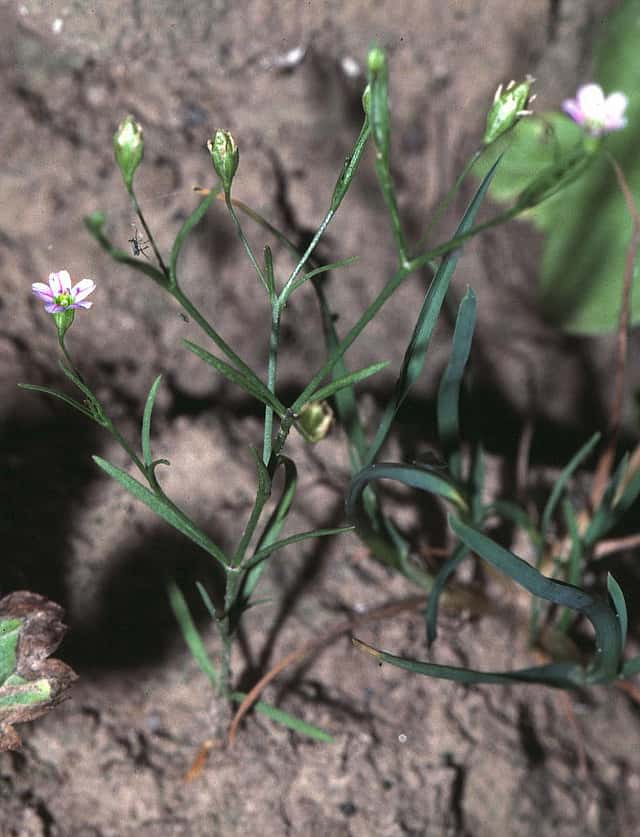
Annual Baby's Breath (Psammophiliella muralis), formerly classified as Gypsophila muralis, is an annual herb in the pink family (Caryophyllaceae). The species was described as early as 1753 by Carl Linnaeus, and the name muralis ("growing on walls") refers to its preference for dry, open habitats such as gravel paths, stone walls, and sandy soils. The plant forms a dense, bushy mound of thin, branched stems with narrow, linear leaves and typically reaches a height of 12-16 inches (30-40 cm). From midsummer to autumn, the mound is covered in a cloud of small, five-petaled flowers in shades of pink, or more rarely, white. The species is almost entirely free from serious pests, but in damp, poorly drained soil, it can be affected by root rot and gray mold.
How to Propagate Annual Baby's Breath?
Seed Sowing
- Keep the soil evenly moist until germination, which usually takes 1-2 weeks.
- Sow in successional batches every few weeks for an extended blooming period.
- 1 Sowing
Sow seeds shallowly in moist, low-nutrient seed-starting mix in early spring, either directly outdoors after the last frost or indoors 4-6 weeks earlier.
- 2 Light
The seeds require light to germinate and should not be covered with soil—simply press them lightly onto the surface.
- 3 Transplanting
Plant out the seedlings to their final sunny location once the risk of frost has passed.
Materials needed:
How Big Does Annual Baby's Breath Grow?
TLDR: Annual Baby's Breath can reach up to 40cm tall with Fast growth rate.
Max height
40cm
Spread
30cm
Growth rate
Fast
Foliage
Deciduous
Plant Uses
Ornamental
Great for decoration
Ground Cover
Soil coverage
Is your plant showing symptoms?
Click on the symptom to discover possible causes:
What Diseases Commonly Affect Annual Baby's Breath?
TLDR: Annual Baby's Breath is susceptible to 10 known diseases. Monitor regularly for early detection.
Aphids
Aphids are small, soft-bodied, pear-shaped insects (1/16 to 1/8 inch long) that feed by sucking nutrient-rich sap from plants. They reproduce rapidly and can quickly weaken plants, causing distorted growth and transmitting plant viruses. Aphids come in various colors including green, black, red, yellow, brown, and gray. They secrete honeydew, a sticky substance that attracts ants and encourages sooty mold growth.
Grey Mould
Pythium Root Rot
Pythium root rot is a serious fungal disease caused by various Pythium species including P. aphanidermatum, P. ultimum, and P. irregulare. These water molds are present in practically all cultivated soils and attack plant roots under wet conditions, causing rapid wet rot that can extend into the stem. The disease is favored by poor drainage, overwatering, and specific temperatures depending on the species.
Crown Rot
Crown rot is a serious fungal disease that attacks the crown (base) of the plant where the stem meets the soil. It is caused by various fungal pathogens including Phytophthora, Fusarium, and Rhizoctonia. The disease thrives in waterlogged conditions and can quickly spread to kill the entire plant if not addressed promptly.
Meaning & Symbolism
As a member of the Gypsophila genus, Annual Baby's Breath is associated with simplicity, purity, and unassuming beauty—the same symbolism that makes Baby's Breath a classic filler flower in bouquets and wedding arrangements.
Compare with similar plants
| Attribute | Difficulty | Light | Watering | Pet Safe |
|---|---|---|---|---|
| Field Maple | Easy | Bright indirect | 14d | ✓ |
| Silver Birch | Easy | Direct sun | 14d | ✓ |
| Common Blanketflower | Easy | Direct sun | 10d | ✓ |
| Cushion Bush | Easy | Direct sun | 14d | ✓ |





