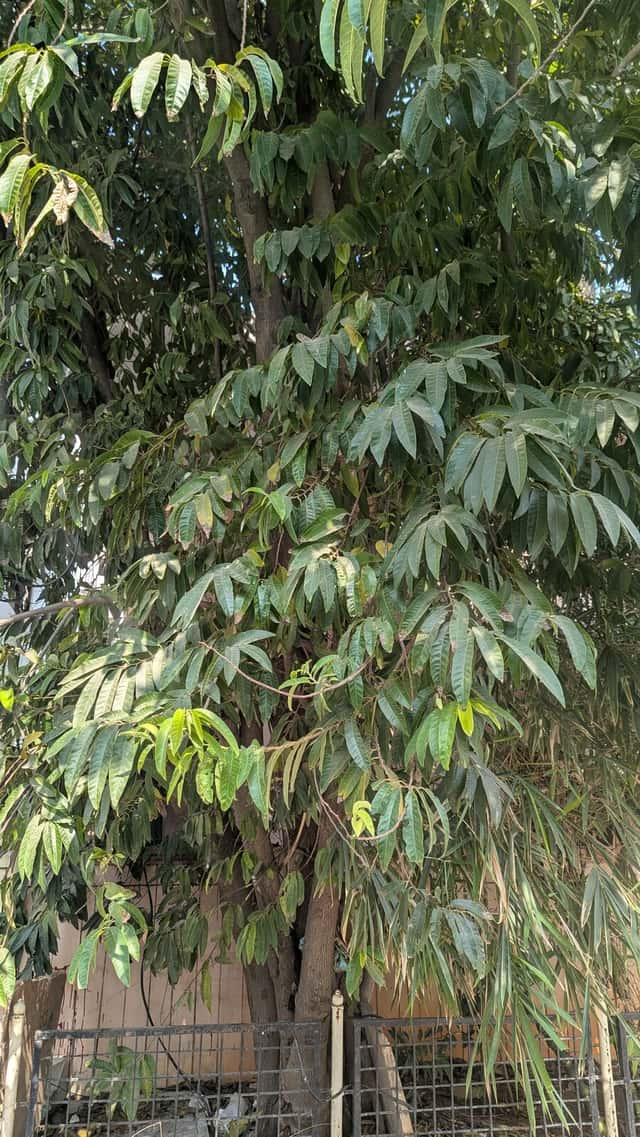
Annonaceae
Custard Apple (Annona reticulata)
Annona reticulata
A warm-climate tree that needs full sun, deep, fertile, well-drained soil and frequent watering in dry spells without waterlogging. Mature trees survive only light frosts. Feed with organic matter, mulch and prune once a year for shape. Grafted trees fruit 2 to 3 years after planting.
Every 4 days
Direct sun
10° - 35°C
60% - 85%
Categories
What is Custard Apple?
Custard Apple (Annona reticulata) is a medium-care plant from the Annonaceae family. Custard apple (Annona reticulata) is a fruit tree in the Annonaceae family, native to Central America and the Caribbean and now grown throughout the tropics. It reaches 5 to 10 m, with an open crown, smooth grey bark and long leaves that drop when the weather turns cool. Flowers hang in clusters, wi...
Custard Apple grows up to 10.0m, watering every 4 days, 10°C – 35°C, 60–85% humidity. It is not suitable for indoor environments and not safe for pets.
Without precautions, ingestion can cause irritation in pets. Keep out of reach of cats and dogs.
How to Care for Custard Apple?
TLDR: Custard Apple needs Direct sun, watering every 4 days, and temperatures between 10-35°C with 60-85% humidity.
How Often Should You Water Custard Apple?
Water every 3 to 5 days in hot, dry weather, soaking the root zone. It is less drought tolerant than sugar apple. Never leave the soil waterlogged or the roots will rot. Water less in winter while the tree is leafless.
How Much Light Does Custard Apple Need?
Needs full sun, at least 6 hours a day, to flower and fruit well. Not suitable as a houseplant.
What Is the Best Soil for Custard Apple?
Prefers deep, rich, well-drained soil high in organic matter, pH 5.5 to 8. On heavy clay, plant on a slight mound so water drains away.
What Pot Should You Use for Custard Apple?
Pots only for young seedlings; the permanent spot is in the ground, in full sun.
Care Schedule
Fertilize
Every 90 days
What Is Custard Apple and Where Does It Come From?
Custard apple (Annona reticulata) is a fruit tree in the Annonaceae family, native to Central America and the Caribbean and now grown throughout the tropics. It reaches 5 to 10 m, with an open crown, smooth grey bark and long leaves that drop when the weather turns cool. Flowers hang in clusters, with fleshy yellow-green petals spotted red inside. The heart-shaped fruit has a netted yellow to brown skin blushed with red and a sweet, creamy white to cream pulp full of dark seeds.
How to Propagate Custard Apple?
Seed
Wear gloves: the seeds are toxic. Seedlings take longer to fruit and fruit quality varies.
- 1 Take seeds from a ripe fruit and wash off the pulp
- 2 Soak in warm water for 24 hours
- 3 Sow 2 cm deep in light, moist potting mix
- 4 Keep warm and bright until they sprout
Materials needed:
Grafting
Grafting gives fruit true to the parent tree and brings the first harvest forward.
- 1 Use a custard apple, sugar apple or soursop seedling about 1 cm thick as rootstock
- 2 Cut a scion from a productive mature tree
- 3 Cleft graft or bud graft and wrap with grafting tape
- 4 Keep the young tree in light shade until it pushes new growth
Materials needed:
How Big Does Custard Apple Grow?
TLDR: Custard Apple can reach up to 10.0m tall with Fast growth rate.
Max height
10.0m
Growth rate
Fast
Foliage
Deciduous
Warning: Toxic Plant
This plant can be toxic if ingested. Keep out of reach of:
Plant Uses
Edible
Can be consumed
Medicinal
Medicinal properties
Medicinal Uses
- In folk medicine, a root decoction is used for fever and the bark for diarrhea (traditional use, unproven; parts of the plant are toxic)
Culinary Uses
- Pulp eaten fresh
- Juices, milkshakes and ice cream
- Custards and puddings
Is your plant showing symptoms?
Click on the symptom to discover possible causes:
What Diseases Commonly Affect Custard Apple?
TLDR: Custard Apple is susceptible to 8 known diseases. Monitor regularly for early detection.
Anthracnose
Anthracnose is a fungal disease caused by fungi in the genus Colletotrichum that affects many plants, including vegetables, fruits, and trees. The disease thrives in cool, wet conditions, causing dark, sunken lesions on leaves, stems, flowers, and fruits.
Mealybugs
Mealybugs are small, soft-bodied insects covered with a white, waxy, cottony material. They are common pests of houseplants and outdoor plants in mild climates. These sap-sucking insects feed on plant tissue, causing damage, stunted growth, and can lead to plant death if left untreated. They produce sticky honeydew which attracts sooty mold.
Leaf Spot
Leaf spot is a common fungal disease caused by various pathogens including Alternaria, Ascochyta, Colletotrichum, Septoria, and Venturia. It primarily affects leaves, causing discolored spots that can lead to premature leaf drop if left untreated.
Powdery Mildew
Powdery mildew is a common fungal disease caused by various fungi species including Erysiphe, Podosphaera, Oïdium, and Leveillula. It affects over 10,000 plant species worldwide. The disease thrives in warm, dry climates with high humidity and appears as a distinctive white powdery coating on plant surfaces.
Fun Facts
The name bullock's heart comes from the shape and red blush of the fruit
The seeds have insecticidal properties
It is also used as a rootstock for other annonas
Frequently asked questions
Is custard apple toxic?
How long does a custard apple tree take to fruit?
What is the difference between custard apple and sugar apple?
Why is my custard apple losing its leaves?
Compare with similar plants
| Attribute | Difficulty | Light | Watering | Pet Safe |
|---|---|---|---|---|
| Dark Fieldcap | Medium | Low light | 2d | ⚠️ |
| Azalea | Medium | Partial shade | 3d | ⚠️ |
| Muriel's Bamboo | Medium | Partial shade | 3d | ✓ |
| Bougainvillea | Medium | Direct sun | 7d | ⚠️ |




