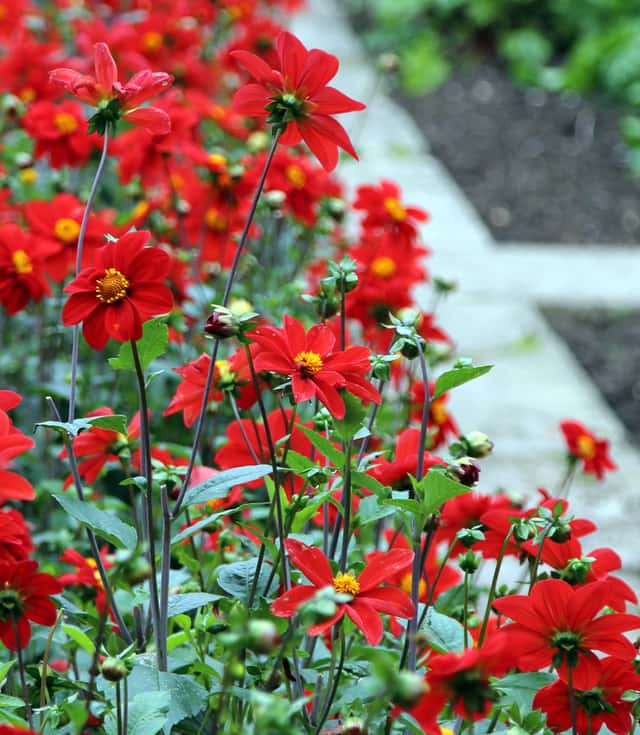
Asteraceae
Dahlia: Full Sun Plant
Dahlia
Water 2-3 times per week, keeping the soil evenly moist but never waterlogged. Avoid wetting foliage to prevent fungal diseases. Reduce watering after the first frost when tubers enter dormancy.
Every 3 days
Direct sun
10° - 27°C
40% - 70%
Categories
What is Dahlia?
Dahlia (Dahlia) is a medium-care plant from the Asteraceae family. Dahlia is a genus of tuberous herbaceous perennial plants native to the mountains of Mexico and Central America, belonging to the family Asteraceae. With over 42 accepted species and thousands of cultivars, dahlias are celebrated for their spectacular blooms in an extraordinary range of colors, size...
Dahlia grows up to 1.5m, spread of 90cm, watering every 3 days, 10°C – 27°C, 40–70% humidity. It is not suitable for indoor environments and not safe for pets.
Without precautions, ingestion can cause irritation in pets. Keep out of reach of cats and dogs.
How to Care for Dahlia?
TLDR: Dahlia needs Direct sun, watering every 3 days, and temperatures between 10-27°C with 40-70% humidity.
How Often Should You Water Dahlia?
Water at the base of the plant to keep foliage dry and reduce fungal risk. Keep soil consistently moist but never soggy — check soil moisture daily during hot weather.
How Much Light Does Dahlia Need?
Requires 6-8 hours of direct sunlight per day. Morning sun is ideal; in very hot climates, light afternoon shade helps protect blooms from scorching and prolongs flowering.
What Is the Best Soil for Dahlia?
Plant in rich, well-draining soil amended with compost or aged manure. Ideal pH is 6.0-7.5. Avoid heavy clay soils that hold excess moisture, which can cause tuber rot.
What Pot Should You Use for Dahlia?
Medium to large terracotta or ceramic pot with excellent drainage holes. Use a container at least 30 cm in diameter for medium to large varieties to allow adequate root development.
Care Schedule
Fertilize
Every 14 days
Misting
Every 3 days
Rotate
Every 7 days
Repot
Every 365 days
What Is Dahlia and Where Does It Come From?
Dahlia is a genus of tuberous herbaceous perennial plants native to the mountains of Mexico and Central America, belonging to the family Asteraceae. With over 42 accepted species and thousands of cultivars, dahlias are celebrated for their spectacular blooms in an extraordinary range of colors, sizes, and flower forms — from tiny pompons to enormous dinner-plate varieties measuring over 30 cm across. They bloom from mid-summer through the first autumn frost, making them a showstopper in gardens worldwide.
How Big Does Dahlia Grow?
TLDR: Dahlia can reach up to 1.5m tall with Fast growth rate.
Max height
1.5m
Spread
90cm
Growth rate
Fast
Foliage
Deciduous
Warning: Toxic Plant
This plant can be toxic if ingested. Keep out of reach of:
Plant Uses
Ornamental
Great for decoration
Is your plant showing symptoms?
Click on the symptom to discover possible causes:
What Diseases Commonly Affect Dahlia?
TLDR: Dahlia is susceptible to 15 known diseases. Monitor regularly for early detection.
Powdery Mildew
Powdery mildew is a common fungal disease caused by various fungi species including Erysiphe, Podosphaera, Oïdium, and Leveillula. It affects over 10,000 plant species worldwide. The disease thrives in warm, dry climates with high humidity and appears as a distinctive white powdery coating on plant surfaces.
Grey Mould
Gray Mold (Botrytis Blight)
Gray mold, caused by the fungus Botrytis cinerea, is one of the most common fungal diseases in plants. It affects over 200 plant species, including ornamentals, vegetables, fruits, and houseplants. The disease thrives in cool, humid conditions with poor air circulation, causing grayish spots and soft rot on infected tissues.
Verticillium Wilt
Verticillium wilt is a soil-borne fungal disease caused primarily by the fungi Verticillium dahliae and V. albo-atrum. These pathogens infect plant roots and grow within the vascular tissues, blocking water and nutrient transport, resulting in wilting and eventual plant death. The disease affects over 350 plant species including vegetables, fruits, ornamental flowers, and trees. The fungi can survive in soil for more than 10 years as resistant structures called microsclerotia.
Meaning & Symbolism
Dahlias symbolize elegance, dignity, diversity, and inner strength. They represent a lasting bond and creative expression, and are often given to convey commitment and gratitude.
Fun Facts
Dahlia is the national flower of Mexico, where it has been cultivated for centuries by indigenous peoples including the Aztecs.
Dahlia tubers are edible and were once a food source for Aztec peoples — they taste like a cross between a potato and a radish.
There are over 20,000 registered dahlia cultivars, coming in virtually every color of the rainbow except true blue.
Compare with similar plants
| Attribute | Difficulty | Light | Watering | Pet Safe |
|---|---|---|---|---|
| Dark Fieldcap | Medium | Low light | 2d | ⚠️ |
| Azalea | Medium | Partial shade | 3d | ⚠️ |
| Muriel's Bamboo | Medium | Partial shade | 3d | ✓ |
| Bougainvillea | Medium | Direct sun | 7d | ⚠️ |




