Araceae
Danish Arum: Best for Low Light
Arum cylindraceum
Danish Arum thrives best in a cool, semi-shady to shady location under deciduous trees or in thickets, in nutrient-rich, humus-rich, and moist, but well-drained soil. Once established, the plant tolerates some summer drought but should not stand in waterlogged soil, as the tuber is susceptible to rot. The leaves naturally die back after flowering in summer. The entire plant is poisonous and should be kept away from children and pets.
Every 10 days
Low light
-20° - 28°C
50% - 80%
Categories
What is Danish Arum?
Danish Arum (Arum cylindraceum) is a medium-care plant from the Araceae family. Danish Arum (Arum cylindraceum) is a perennial tuberous plant in the arum family (Araceae), and the only Arum species native to Denmark. It grows 25-40 cm tall with spear-shaped, unspotted leaves and a characteristic inflorescence consisting of a violet spadix surrounded by a pale green spathe, bloo...
Danish Arum grows up to 40cm, spread of 30cm, watering every 10 days, -20°C – 28°C, 50–80% humidity. It is not suitable for indoor environments and not safe for pets.
Without precautions, ingestion can cause irritation in pets. Keep out of reach of cats and dogs.
How to Care for Danish Arum?
TLDR: Danish Arum needs Low light, watering every 10 days, and temperatures between -20-28°C with 50-80% humidity.
How Often Should You Water Danish Arum?
Keep the soil evenly moist during the growing season from early spring until flowering, but allow the surface to dry slightly between waterings. Avoid waterlogged soil, as the tuber easily rots in standing water.
How Much Light Does Danish Arum Need?
Choose a cool, semi-shady to shady spot, ideally under deciduous trees or by a hedge, where the plant receives spring sun before leaf-out and shade in summer.
What Is the Best Soil for Danish Arum?
Plant in nutrient-rich, humus-rich forest soil amended with compost or leaf mold. The soil should retain moisture well but be well-drained to prevent tuber rot.
What Pot Should You Use for Danish Arum?
A deep pot without a bottom can be buried in the bed to limit the tuber's spread, if desired.
Care Schedule
Repot
Every 365 days
What Is Danish Arum and Where Does It Come From?
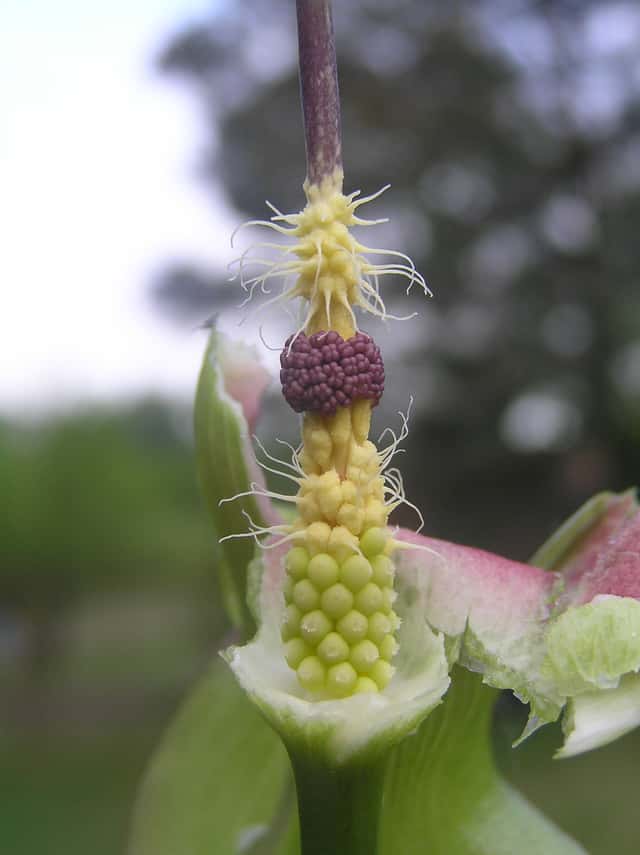
Danish Arum (Arum cylindraceum) is a perennial tuberous plant in the arum family (Araceae), and the only Arum species native to Denmark. It grows 25-40 cm tall with spear-shaped, unspotted leaves and a characteristic inflorescence consisting of a violet spadix surrounded by a pale green spathe, blooming in May-June. The plant is found here and there on the Danish islands and in eastern Jutland, where it grows in nutrient-rich, moist forest floors, thickets, and hedges. In autumn, it produces conspicuous, poisonous red berries. The entire plant – especially the berries and tuber – contains needle-shaped calcium oxalate crystals and is highly toxic if ingested.
How to Propagate Danish Arum?
Division of Tubers
- Always handle the plant with gloves due to toxic calcium oxalate crystals.
- Avoid overwatering immediately after planting to prevent tuber rot.
- 1 Excavation
Carefully dig up the tuber in autumn or spring when the foliage has died back.
- 2 Division
Carefully divide the tuber so that each part has healthy roots and growth points. Wear gloves, as the plant sap can irritate the skin.
- 3 Replanting
Replant the divisions immediately about 5-8 cm deep in nutrient-rich, moist forest soil.
Materials needed:
How Big Does Danish Arum Grow?
TLDR: Danish Arum can reach up to 40cm tall with Medium growth rate.
Max height
40cm
Spread
30cm
Growth rate
Medium
Foliage
Deciduous
Warning: Toxic Plant
This plant can be toxic if ingested. Keep out of reach of:
Plant Uses
Ornamental
Great for decoration
Is your plant showing symptoms?
Click on the symptom to discover possible causes:
What Diseases Commonly Affect Danish Arum?
TLDR: Danish Arum is susceptible to 10 known diseases. Monitor regularly for early detection.
Rust
Rust is a common fungal disease caused by fungi in the order Pucciniales that affects a wide variety of plants. The disease gets its name from the characteristic orange, yellow, or reddish-brown pustules that appear on leaves, resembling metal rust. This obligate fungal parasite requires living plants to survive and can cause significant economic losses in agricultural crops.
Leaf Spot
Leaf spot is a common fungal disease caused by various pathogens including Alternaria, Ascochyta, Colletotrichum, Septoria, and Venturia. It primarily affects leaves, causing discolored spots that can lead to premature leaf drop if left untreated.
Root Rot
Root rot is a serious fungal disease that affects the root system of plants, causing them to decay and die. It is primarily caused by overwatering, poor drainage, or soil-borne fungi such as Pythium, Phytophthora, Rhizoctonia, and Fusarium. The disease thrives in waterlogged conditions where roots are deprived of oxygen, making them susceptible to fungal infection.
Bacterial Soft Rot
Bacterial soft rot is a destructive plant disease caused primarily by bacteria from the genera Pectobacterium (formerly Erwinia) and Dickeya. These bacteria produce enzymes that break down plant cell walls, causing rapid and foul-smelling tissue decomposition. It mainly affects succulent tissues such as tubers, fruits, stems, and bulbs, being especially problematic in warm and humid conditions.
Compare with similar plants
| Attribute | Difficulty | Light | Watering | Pet Safe |
|---|---|---|---|---|
| Dark Fieldcap | Medium | Low light | 2d | ⚠️ |
| Azalea | Medium | Partial shade | 3d | ⚠️ |
| Muriel's Bamboo | Medium | Partial shade | 3d | ✓ |
| Bougainvillea | Medium | Direct sun | 7d | ⚠️ |




