Pinaceae
Deodar Cedar: Aromatic Plant
Cedrus deodara
Deodar cedar thrives outdoors in full sun with deep, infrequent watering and sharply drained soil. It is drought-tolerant once established but intolerant of soggy roots, so avoid overwatering and heavy, waterlogged sites. Minimal fertilizing and occasional pruning to remove deadwood are usually all it needs.
Every 10 days
Direct sun
15° - 24°C
% - %
Categories
What is Deodar Cedar?
Deodar Cedar (Cedrus deodara) is a medium-care plant from the Pinaceae family. The deodar cedar (Cedrus deodara) is a large evergreen conifer native to the western Himalayas, from Afghanistan to India and Nepal, where it grows at elevations of 1,500-3,200 m. A true cedar in the Pinaceae family, it forms a broad, pyramidal crown with graceful, drooping branch tips and soft, blu...
Deodar Cedar grows up to 15.0m, spread of 1200cm, watering every 10 days, 15°C – 24°C. It is not suitable for indoor environments and safe for pets.
Unlike many popular species, Deodar Cedar is safe to keep around pets.
How to Care for Deodar Cedar?
TLDR: Deodar Cedar needs Direct sun, watering every 10 days, and temperatures between 15-24°C with 40-70% humidity.
How Often Should You Water Deodar Cedar?
Water deeply once or twice a week during the growing season (spring-fall), letting the top few inches of soil dry between waterings; cut back to about once a month in winter. Never let the tree sit in waterlogged soil.
How Much Light Does Deodar Cedar Need?
Give it full sun - at least 6 hours of direct light daily. It will not thrive in shade and needs an open, unobstructed spot to develop its characteristic form.
What Is the Best Soil for Deodar Cedar?
Plant in well-drained, slightly acidic to slightly alkaline soil (loam, sandy loam, or clay all work if drainage is good). Wet, compacted soil is the fastest way to trigger root rot.
What Pot Should You Use for Deodar Cedar?
Best planted directly in the ground given its eventual size, but young specimens can be container-grown for several years in a large, deep pot (40+ cm) with generous drainage holes - unglazed terracotta or a wooden planter helps excess moisture escape and protects the roots from rot.
Care Schedule
Fertilize
Every 180 days
What Is Deodar Cedar and Where Does It Come From?
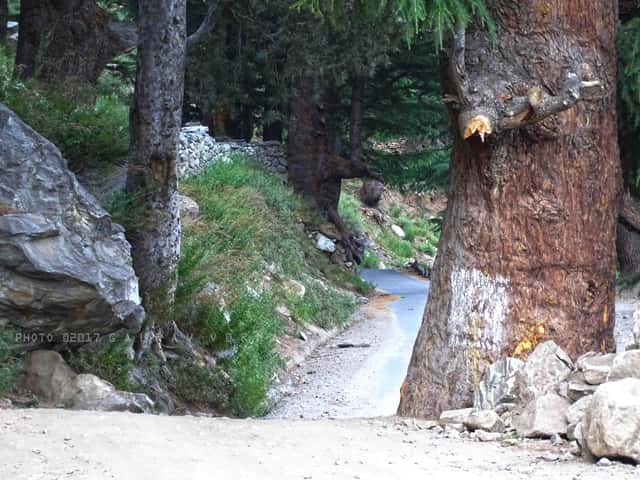
The deodar cedar (Cedrus deodara) is a large evergreen conifer native to the western Himalayas, from Afghanistan to India and Nepal, where it grows at elevations of 1,500-3,200 m. A true cedar in the Pinaceae family, it forms a broad, pyramidal crown with graceful, drooping branch tips and soft, blue-green to silvery needles arranged in dense whorls. Mature landscape trees typically reach 12-15 m tall with a wide spread, and can live for centuries. Revered in the Himalayas as "Devadaru" - Sanskrit for "wood of the gods" - it is prized both as a stately ornamental tree and, historically, for its rot-resistant, fragrant timber.
How to Propagate Deodar Cedar?
Seed
Fresh seed germinates far better than old seed; cold stratification is essential for reliable germination.
- 1 Collect mature cones in autumn and extract seeds once they open, or purchase fresh seed.
- 2 Cold-stratify seeds in moist sand or a damp paper towel in the refrigerator for 4-6 weeks to break dormancy.
- 3 Sow stratified seeds about 1 cm deep in a well-draining seed-starting mix.
- 4 Keep the mix consistently moist and in bright, indirect light at 15-20C.
- 5 Germination typically occurs within 4-8 weeks; transplant seedlings once they have several sets of true needles.
- 6 Grow on in containers for 1-2 years before planting out in a permanent full-sun location.
Materials needed:
Semi-hardwood cuttings
Cuttings root far less reliably than seed; this method is mainly used to preserve a specific cultivar such as Aurea.
- 1 Take 10-15 cm semi-hardwood cuttings with a heel from the current season growth in late summer.
- 2 Strip needles from the lower two-thirds of the cutting.
- 3 Dip the cut end in rooting hormone.
- 4 Insert into a well-draining mix of perlite and peat.
- 5 Keep under high humidity (propagator lid) in bright, indirect light.
- 6 Rooting is slow and often unreliable; be patient and avoid disturbing cuttings for several months.
Materials needed:
How Big Does Deodar Cedar Grow?
TLDR: Deodar Cedar can reach up to 15.0m tall with Medium growth rate.
Max height
15.0m
Spread
12.0m
Growth rate
Medium
Foliage
Evergreen
Plant Uses
Ornamental
Great for decoration
Medicinal
Medicinal properties
Aromatic
Pleasant fragrance
Medicinal Uses
- Anti-inflammatory, antimicrobial and analgesic heartwood/bark extracts used in Ayurvedic medicine
- Devdarvadi Kashaya (bark decoction) traditionally used for cough, cold, bronchitis and joint pain
- Essential oil applied externally as an antiseptic for skin conditions and wounds
- Oil used in calming massage for its sedative effect on the nervous system
Culinary Uses
- Not used in cooking - the wood and oil are reserved for medicinal, aromatic and construction purposes
Is your plant showing symptoms?
Click on the symptom to discover possible causes:
What Diseases Commonly Affect Deodar Cedar?
TLDR: Deodar Cedar is susceptible to 5 known diseases. Monitor regularly for early detection.
Rust
Rust is a common fungal disease caused by fungi in the order Pucciniales that affects a wide variety of plants. The disease gets its name from the characteristic orange, yellow, or reddish-brown pustules that appear on leaves, resembling metal rust. This obligate fungal parasite requires living plants to survive and can cause significant economic losses in agricultural crops.
Phytophthora Root Rot
Disease caused by fungus-like organisms (oomycetes) that live in soil and can survive for years. It affects roots, stem, and crown of plants, being especially severe in waterlogged or poorly drained soils. It is the second most common cause of root rot in trees and shrubs.
Canker
Canker is a disease caused by various fungi and bacteria that create necrotic, sunken areas on bark of branches, stems, and trunks. Pathogens enter through wounds and natural openings, especially when plants are stressed. Canker can gradually weaken or kill branches by disrupting water and nutrient flow.
Aphids
Aphids are small, soft-bodied, pear-shaped insects (1/16 to 1/8 inch long) that feed by sucking nutrient-rich sap from plants. They reproduce rapidly and can quickly weaken plants, causing distorted growth and transmitting plant viruses. Aphids come in various colors including green, black, red, yellow, brown, and gray. They secrete honeydew, a sticky substance that attracts ants and encourages sooty mold growth.
Meaning & Symbolism
In Hindu tradition, the deodar cedar is known as Devadaru - "wood of the gods" - and is considered sacred throughout the Himalayan foothills of Himachal Pradesh and Uttarakhand, where groves surround temples and are used in rituals and meditation. It is the national tree of Pakistan and the state tree of Himachal Pradesh, broadly symbolizing strength, longevity, and resilience.
Compare with similar plants
| Attribute | Difficulty | Light | Watering | Pet Safe |
|---|---|---|---|---|
| Dark Fieldcap | Medium | Low light | 2d | ⚠️ |
| Azalea | Medium | Partial shade | 3d | ⚠️ |
| Muriel's Bamboo | Medium | Partial shade | 3d | ✓ |
| Bougainvillea | Medium | Direct sun | 7d | ⚠️ |




