Asteraceae
Dogfennel (Eupatorium capillifolium): Growing Guide
Eupatorium capillifolium
A fast, undemanding perennial for full sun to part shade and moist but well-drained soil; it also tolerates dry, sandy and poor soils, deer and rabbits. Water young plants weekly and established ones only in long droughts. To stop it spreading, cut it back before it seeds or grow the sterile 'Elegant Feather'. Toxic if eaten: keep pets and livestock from grazing it.
Every 7 days
Bright indirect
° - °C
% - %
Categories
What is Dogfennel?
Dogfennel (Eupatorium capillifolium) is a easy-care plant from the Asteraceae family. Eupatorium capillifolium, dogfennel, is a tall herbaceous perennial of the daisy family native to the eastern and south-central United States, the Bahamas, Bermuda and Cuba. Several stems rise from a woody base to 1-2 m, clothed in leaves so finely divided they look like green threads; crushed, they...
Dogfennel grows up to 1.8m, spread of 90cm, watering every 7 days. It is not suitable for indoor environments and not safe for pets.
Unlike many tropical plants, Dogfennel tolerates watering mistakes. Best for beginners. Without precautions, ingestion can cause irritation in pets. Keep out of reach of cats and dogs.
How to Care for Dogfennel?
TLDR: Dogfennel needs Bright indirect, watering every 7 days, and temperatures between 15-30°C with 40-70% humidity.
How Often Should You Water Dogfennel?
Water weekly while getting established. Established plants tolerate drought and need water only in long dry spells; it grows lushest in soil that stays slightly moist.
How Much Light Does Dogfennel Need?
Full sun to part shade. In hot summers some afternoon shade keeps it fresher; in too much shade the stems flop.
What Is the Best Soil for Dogfennel?
Moist, well-drained soil of almost any type, from clay and loam to sand and shallow rocky soil, acid to alkaline. Rich soil gives taller plants.
What Pot Should You Use for Dogfennel?
Best in the ground; in containers use a large, deep pot of at least 30-40 litres with drainage holes, as plants reach 1-2 m.
What Is Dogfennel and Where Does It Come From?
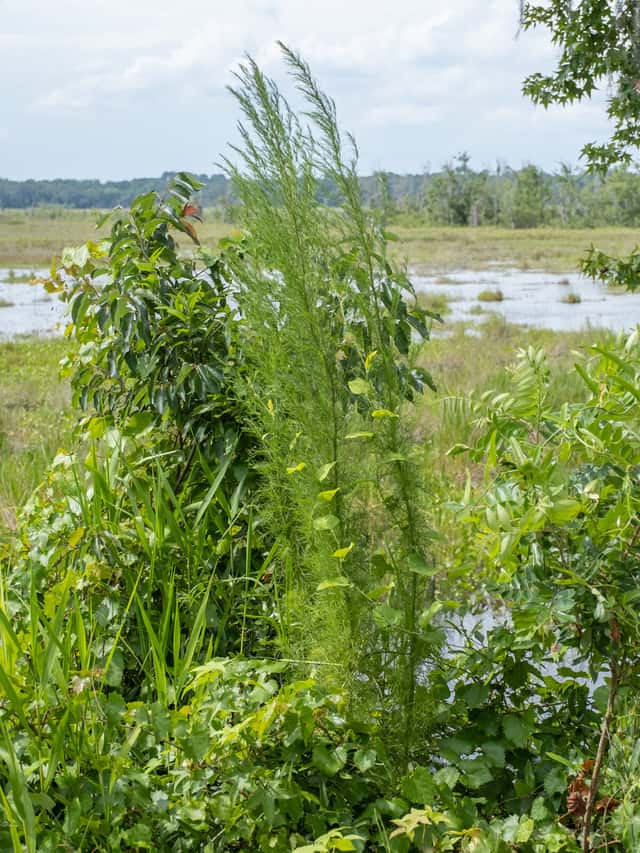
Eupatorium capillifolium, dogfennel, is a tall herbaceous perennial of the daisy family native to the eastern and south-central United States, the Bahamas, Bermuda and Cuba. Several stems rise from a woody base to 1-2 m, clothed in leaves so finely divided they look like green threads; crushed, they smell sharp, like dill pickles. From late summer to autumn it carries large, airy clusters of tiny greenish-white flower heads, which are wind-pollinated. In the Southeast it is a common weed of pastures and disturbed ground, while in the UK the species and its sterile cultivar 'Elegant Feather' are grown in borders and have the RHS Award of Garden Merit.
How to Propagate Dogfennel?
Division
Wear gloves; the sap and foliage are aromatic and can irritate. Divisions establish quickly.
- 1 Dig up an established clump in early spring as new shoots appear
- 2 Split the crown into pieces with roots and shoots using a spade or knife
- 3 Replant at the same depth in sun or part shade
- 4 Water well and keep the soil slightly moist until new growth is established
Materials needed:
Seed
The species self-sows freely and can become weedy; the cultivar Elegant Feather is sterile and is propagated only by division or cuttings.
- 1 Collect the tiny achenes in autumn or buy seed
- 2 Surface-sow in spring on moist seed mix, pressing lightly
- 3 Keep moist in a bright spot
- 4 Transplant seedlings when large enough to handle
Materials needed:
How Big Does Dogfennel Grow?
TLDR: Dogfennel can reach up to 1.8m tall with Fast growth rate.
Max height
1.8m
Spread
90cm
Growth rate
Fast
Foliage
Deciduous
Warning: Toxic Plant
This plant can be toxic if ingested. Keep out of reach of:
Plant Uses
Ornamental
Great for decoration
Aromatic
Pleasant fragrance
Medicinal
Medicinal properties
Medicinal Uses
- Traditionally applied externally as a remedy for insect and reptile bites; its essential oil has shown anti-fungal activity. Not for internal use: it contains liver-damaging pyrrolizidine alkaloids.
Is your plant showing symptoms?
Click on the symptom to discover possible causes:
What Diseases Commonly Affect Dogfennel?
TLDR: Dogfennel is susceptible to 4 known diseases. Monitor regularly for early detection.
Powdery Mildew
Powdery mildew is a common fungal disease caused by various fungi species including Erysiphe, Podosphaera, Oïdium, and Leveillula. It affects over 10,000 plant species worldwide. The disease thrives in warm, dry climates with high humidity and appears as a distinctive white powdery coating on plant surfaces.
Aphids
Aphids are small, soft-bodied, pear-shaped insects (1/16 to 1/8 inch long) that feed by sucking nutrient-rich sap from plants. They reproduce rapidly and can quickly weaken plants, causing distorted growth and transmitting plant viruses. Aphids come in various colors including green, black, red, yellow, brown, and gray. They secrete honeydew, a sticky substance that attracts ants and encourages sooty mold growth.
Slugs and Snails
Slugs and snails are mollusks that feed on plant tissue, causing irregular holes in leaves and damage to young seedlings. They are most active at night and in moist conditions, leaving characteristic silvery slime trails. These pests can quickly devastate gardens, especially during wet seasons.
leaf miners
Larval stages of leaf-mining insects are feeding on the leaf tissue of plants, building little tunnels under the leaf surface.
Meaning & Symbolism
Stands for tenacity and freedom: a plant of open, disturbed ground that comes back however often it is cut.
Fun Facts
The epithet capillifolium means "hair-like leaves"
Male scarlet-bodied wasp moths feed on it to collect toxins that protect them from predators
Unlike most Eupatorium it is pollinated by wind
Frequently asked questions
Is dogfennel poisonous?
How do I stop dogfennel from spreading?
Why does it smell like pickles?
Does dogfennel need much water?
Compare with similar plants
| Attribute | Difficulty | Light | Watering | Pet Safe |
|---|---|---|---|---|
| Field Maple | Easy | Bright indirect | 14d | ✓ |
| Iberian Houseleek | Easy | Direct sun | 14d | ✓ |
| Silver Birch | Easy | Direct sun | 14d | ✓ |
| Common Blanketflower | Easy | Direct sun | 10d | ✓ |





