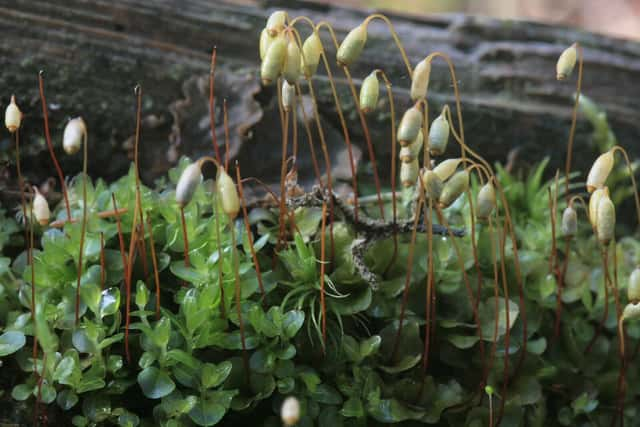
Mniaceae
Dotted Thyme-moss (Rhizomnium punctatum)
Rhizomnium punctatum
A moss of shade and constant moisture: keep it damp at all times, never submerged, out of direct sun (soft light or shade). Best in a closed terrarium or paludarium on stone, soil or damp wood. It needs no feeding or pruning. If it dries out, the leaves curl and darken.
Every 2 days
Low light
° - °C
% - %
Categories
What is Dotted thyme-moss?
Dotted thyme-moss (Rhizomnium punctatum) is a medium-care plant from the Mniaceae family. Rhizomnium punctatum is a moss in the family Mniaceae, common across Europe and North America and also found in North Africa and from Turkey east to Siberia, most often in cool boreal and mountain areas. It grows on constantly damp rock, soil and rotting wood in shade, especially along streams and o...
Dotted thyme-moss grows up to 10cm, watering every 2 days. It is suitable for indoor environments and safe for pets.
Unlike many popular species, Dotted thyme-moss is safe to keep around pets. Without adequate drainage, root rot can develop within 7 days.
How to Care for Dotted thyme-moss?
TLDR: Dotted thyme-moss needs Low light, watering every 2 days, and temperatures between 15-30°C with 40-70% humidity.
How Often Should You Water Dotted thyme-moss?
Never let it dry out: mist or water with chlorine-free water (rain or filtered) every 1-2 days outside a closed container. In a closed terrarium, just check the moisture every few days. Don't leave standing water covering it; it doesn't like being submerged.
How Much Light Does Dotted thyme-moss Need?
Low to moderate light or shade, like a streambank in woodland. Direct sun dries and scorches it; indoors, use indirect light or a gentle terrarium LED.
What Is the Best Soil for Dotted thyme-moss?
It needs no real soil: it grows on porous stone (sandstone), damp earth or decaying wood, acidic or lime-rich. In a terrarium, use a stone or bark base over moist soil with good drainage.
What Pot Should You Use for Dotted thyme-moss?
A closed or semi-closed glass terrarium or a paludarium, with a drainage layer and a porous stone or piece of wood as the base. Avoid small open pots, which dry out fast.
What Is Dotted thyme-moss and Where Does It Come From?
Rhizomnium punctatum is a moss in the family Mniaceae, common across Europe and North America and also found in North Africa and from Turkey east to Siberia, most often in cool boreal and mountain areas. It grows on constantly damp rock, soil and rotting wood in shade, especially along streams and on wet sandstone walls in ravines. It forms loose colonies of erect, unbranched stems 1-3 cm tall (sometimes up to 10 cm), reddish at the base and covered below by a dark felt of rhizoids. The leaves, 3-5 mm long, are broad and oval, light green to reddish green, translucent, with a toothless border of elongated cells; wet, they lie flat and spread out, dry, they crumple and shrink. Like all mosses it has no flowers: female plants produce hanging capsules that turn orange when ripe, on 2-3 cm stalks, mainly in autumn and winter.
How to Propagate Dotted thyme-moss?
Clump division
Only collect moss where it is allowed, and only small amounts; firm contact with a damp surface is what makes it take.
- 1 Lift a piece of the colony with some substrate and the rhizoids underneath
- 2 Lay it on damp stone, soil or wood in its new spot
- 3 Press gently so it makes good contact
- 4 Keep it constantly moist and shaded until it starts growing
Materials needed:
Spores
Slow and unpredictable; division is far easier. Male and female plants are separate, so not every colony produces capsules.
- 1 Collect ripe (orange) capsules in autumn or winter
- 2 Rub the capsules over a moist, sterilised substrate
- 3 Close the container to keep humidity high
- 4 Keep it shaded and wait for the green protonema to appear
Materials needed:
How Big Does Dotted thyme-moss Grow?
TLDR: Dotted thyme-moss can reach up to 10cm tall with Medium growth rate.
Max height
10cm
Foliage
Evergreen
Plant Uses
Ornamental
Great for decoration
Ground Cover
Soil coverage
Is your plant showing symptoms?
Click on the symptom to discover possible causes:
What Diseases Commonly Affect Dotted thyme-moss?
TLDR: Dotted thyme-moss is susceptible to 3 known diseases. Monitor regularly for early detection.
Underwatering
Underwatering or drought stress is a physiological disorder that occurs when the amount of water a plant loses through transpiration exceeds the amount its roots can absorb from the soil. This leads to cellular dehydration and various visible symptoms that can compromise plant health and productivity.
Low Humidity Stress
Low humidity stress occurs when indoor air becomes too dry, causing plants to lose moisture faster than they can absorb it through their roots. This is especially common during winter heating periods, near radiators and heating vents, or in air-conditioned spaces. Tropical plants are particularly susceptible to low humidity damage.
Excessive Light Exposure
Excessive light can be harmful, particularly to shade-tolerant plants. The surplus light energy is converted into heat, which can damage plant tissues. Symptoms include yellow or brown spots on the foliage, general leaf yellowing, crispy brown edges or tips, and wilting. In severe cases, excessive light leads to sunburn or sunscald.
Fun Facts
Its English name comes from leaves that look like thyme leaves
In eastern North America, crane fly larvae feed on its leaves
Its spores are larger than those of most mosses
Frequently asked questions
Is dotted thyme-moss a plant?
Can I grow it in a terrarium?
Why are the leaves crumpled?
Does it need fertilizer?
Compare with similar plants
| Attribute | Difficulty | Light | Watering | Pet Safe |
|---|---|---|---|---|
| Dark Fieldcap | Medium | Low light | 2d | ⚠️ |
| Azalea | Medium | Partial shade | 3d | ⚠️ |
| Muriel's Bamboo | Medium | Partial shade | 3d | ✓ |
| Bougainvillea | Medium | Direct sun | 7d | ⚠️ |




