Rosaceae
Douglas Spirea (Spiraea douglasii)
Spiraea douglasii
Douglas spirea is a low maintenance, hardy shrub that thrives in consistently moist to wet soil and full sun to partial shade. It tolerates seasonal flooding and heavy soils, making it ideal for rain gardens and boggy sites. Prune out spent flower spikes after blooming and remove root suckers regularly to control its spreading habit.
Every 3 days
Bright indirect
-10° - 29°C
40% - 70%
Categories
What is Douglas Spirea?
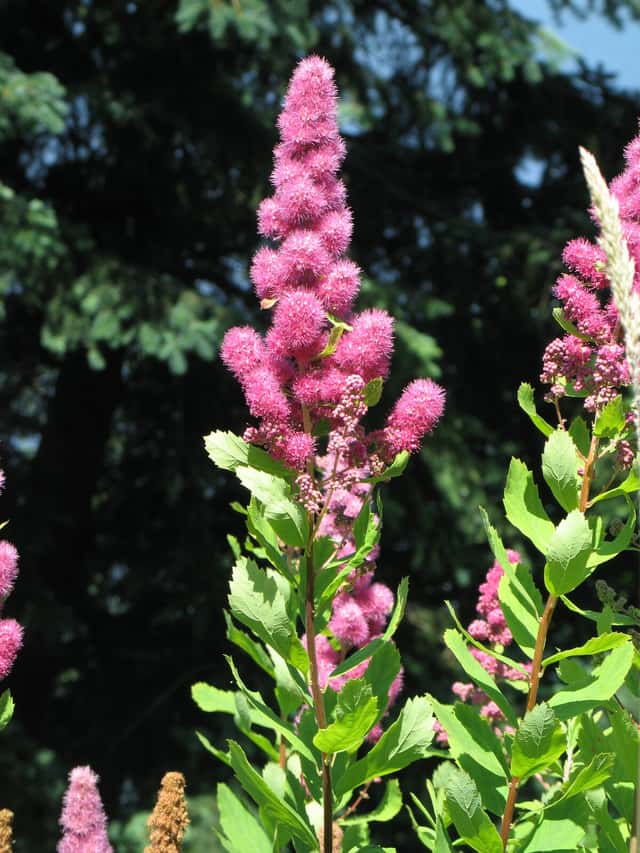
Douglas Spirea (Spiraea douglasii) is a easy-care plant from the Rosaceae family. Spiraea douglasii, commonly known as Douglas spirea or hardhack, is a deciduous, thicket forming shrub native to the Pacific coast of western North America, from Alaska to California. It grows three to six feet tall with woolly stems and produces dense, cone shaped spires of deep pink flowers in ear...
Douglas Spirea grows up to 1.8m, spread of 150cm, watering every 3 days, -10°C – 29°C, 40–70% humidity. It is not suitable for indoor environments and safe for pets.
Unlike many tropical plants, Douglas Spirea tolerates watering mistakes. Best for beginners. Unlike many popular species, Douglas Spirea is safe to keep around pets.
How to Care for Douglas Spirea?
TLDR: Douglas Spirea needs Bright indirect, watering every 3 days, and temperatures between -10-29°C with 40-70% humidity.
How Often Should You Water Douglas Spirea?
Keep soil consistently moist to wet; this shrub does not tolerate prolonged drought. Water deeply during dry spells, especially in its first two growing seasons.
How Much Light Does Douglas Spirea Need?
Plant in full sun for the best flowering, though it tolerates partial shade. Too much shade reduces bloom production.
What Is the Best Soil for Douglas Spirea?
Grows best in medium to wet, well drained, acidic to neutral soil. Adapts to clay and heavy soils that stay moist.
What Pot Should You Use for Douglas Spirea?
Best grown directly in the ground rather than in containers, since its spreading rhizomes need room. If potting is necessary, use a large, wide container with good drainage.
Care Schedule
Fertilize
Every 365 days
What Is Douglas Spirea and Where Does It Come From?
Spiraea douglasii, commonly known as Douglas spirea or hardhack, is a deciduous, thicket forming shrub native to the Pacific coast of western North America, from Alaska to California. It grows three to six feet tall with woolly stems and produces dense, cone shaped spires of deep pink flowers in early summer. Thriving in moist streambanks, swamps, and wetlands, this fast growing native shrub spreads readily by rhizomes to form dense colonies, making it a popular choice for erosion control, rain gardens, and wildlife habitat restoration.
How to Propagate Douglas Spirea?
Softwood stem cutting
Cover with a plastic bag to maintain humidity and check for root development after three weeks.
- 1 Take a 4-6 inch softwood cutting from a healthy, non-flowering stem in late spring
- 2 Remove leaves from the lower half of the cutting
- 3 Dip the cut end in rooting hormone
- 4 Insert into a moist mix of sand and peat
- 5 Keep consistently moist and in bright, indirect light until roots form
Materials needed:
Rhizome division
Divided suckers establish quickly since they already have roots attached.
- 1 Dig up a rooted sucker or rhizome section in fall or early spring
- 2 Cut it away from the parent plant with a sharp spade
- 3 Replant immediately at the same depth in moist soil
- 4 Water thoroughly after transplanting
Materials needed:
Seed propagation
Germination can be slow and uneven; patience is required.
- 1 Collect seed from dried flower spikes in late summer
- 2 Cold stratify seeds for 60-90 days in moist sand in the refrigerator
- 3 Sow shallowly in a moist seed starting mix
- 4 Keep consistently damp and in bright light until germination
Materials needed:
How Big Does Douglas Spirea Grow?
TLDR: Douglas Spirea can reach up to 1.8m tall with Fast growth rate.
Max height
1.8m
Spread
1.5m
Growth rate
Fast
Foliage
Deciduous
Plant Uses
Ornamental
Great for decoration
Ground Cover
Soil coverage
Medicinal Uses
- Bark tea was traditionally used by Indigenous peoples of the Pacific Northwest as a laxative, though internal use requires caution
Is your plant showing symptoms?
Click on the symptom to discover possible causes:
What Diseases Commonly Affect Douglas Spirea?
TLDR: Douglas Spirea is susceptible to 2 known diseases. Monitor regularly for early detection.
Aphids
Aphids are small, soft-bodied, pear-shaped insects (1/16 to 1/8 inch long) that feed by sucking nutrient-rich sap from plants. They reproduce rapidly and can quickly weaken plants, causing distorted growth and transmitting plant viruses. Aphids come in various colors including green, black, red, yellow, brown, and gray. They secrete honeydew, a sticky substance that attracts ants and encourages sooty mold growth.
Sooty Mold
Sooty mold is a fungal disease that develops on surfaces coated with honeydew, a sticky sweet substance secreted by sap-sucking insects like aphids, scale insects, and whiteflies. While it does not directly infect plant tissue, it reduces photosynthetic capacity by blocking sunlight and diminishes the plant's aesthetic appearance.
Meaning & Symbolism
New beginnings, purity, and resilience through hardship
Fun Facts
The genus name Spiraea shares its root with the word aspirin, since related plants contain salicylates similar to those first isolated from meadowsweet.
Indigenous peoples of the Pacific Northwest used the tough, straight stems of Douglas spirea to make brooms and skewers for cooking seafood over fires.
This shrub is sometimes called hardhack because its dense, tangled thickets are notoriously hard to hack through.
Douglas spirea is an excellent erosion control plant, often used to stabilize streambanks and wetland restoration sites.
Frequently asked questions
How much water does Douglas spirea need?
Is Douglas spirea toxic to pets?
How much sun does Douglas spirea need?
Does Douglas spirea spread aggressively?
When does Douglas spirea bloom?
Compare with similar plants
| Attribute | Difficulty | Light | Watering | Pet Safe |
|---|---|---|---|---|
| Field Maple | Easy | Bright indirect | 14d | ✓ |
| Silver Birch | Easy | Direct sun | 14d | ✓ |
| Common Blanketflower | Easy | Direct sun | 10d | ✓ |
| Cushion Bush | Easy | Direct sun | 14d | ✓ |
Choose & Compare
Sources & References
- Spiraea douglasii - Wikipedia
- Spiraea douglasii (Western Spirea) - Gardenia.net
- Spiraea douglasii - Plant Finder - Missouri Botanical Garden
- Rose spirea (Spiraea douglasii) Care Guide
- Is Rose spirea Safe for Pets?
- Douglas Spiraea, Spiraea douglasii - Native Plants PNW
- Spirea Flower Meaning, Symbolism & Spiritual Significance
- Plant Fact Sheet: Rose Spirea - USDA NRCS





