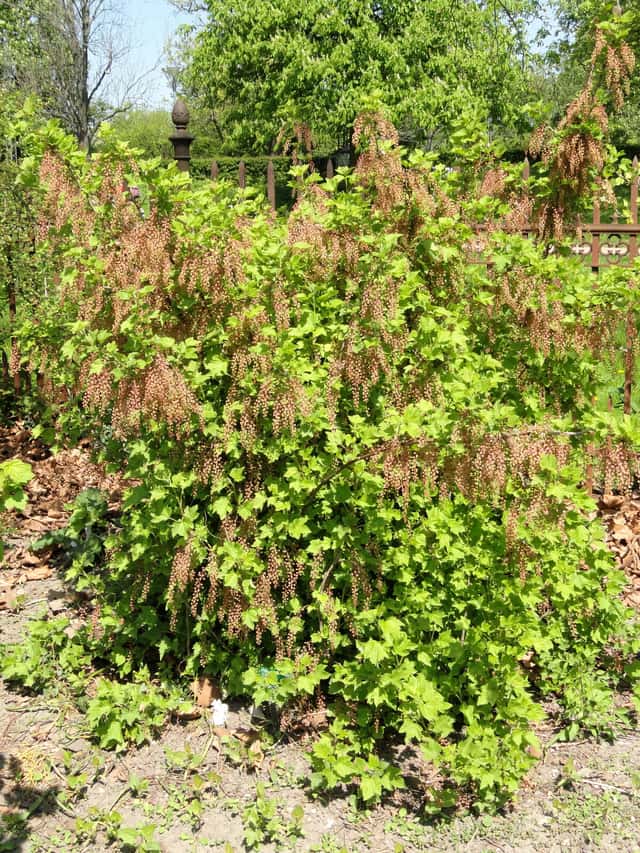
Grossulariaceae
Ribes spicatum - Downy Currant Care Guide
Ribes spicatum
Easy to grow given cool summers and consistently moist, well-drained soil. Plant in full sun for the best fruit set, though it tolerates light shade. Water regularly, mulch to retain moisture, and prune out old wood each winter to keep the shrub productive.
Every 7 days
Bright indirect
-20° - 30°C
40% - 70%
Categories
What is Downy Currant?
Downy Currant (Ribes spicatum) is a easy-care plant from the Grossulariaceae family. Ribes spicatum, commonly known as the downy currant or Nordic currant, is a deciduous shrub native to the boreal forests of northern Europe and northern Asia, from Scandinavia across Russia to Siberia and Mongolia. It typically reaches about 2 m (6.5 ft) in height, with duller, darker green leaves h...
Downy Currant grows up to 2.0m, spread of 150cm, watering every 7 days, -20°C – 30°C, 40–70% humidity. It is not suitable for indoor environments and safe for pets.
Unlike many tropical plants, Downy Currant tolerates watering mistakes. Best for beginners. Unlike many popular species, Downy Currant is safe to keep around pets.
How to Care for Downy Currant?
TLDR: Downy Currant needs Bright indirect, watering every 7 days, and temperatures between -20-30°C with 40-70% humidity.
How Often Should You Water Downy Currant?
Keep the soil evenly moist, especially during flowering and fruit development; water deeply about once a week and increase frequency during dry spells. Avoid waterlogging.
How Much Light Does Downy Currant Need?
Grows well in full sun to light shade. Full sun produces the heaviest crop of berries, while partial shade is tolerated but reduces fruiting.
What Is the Best Soil for Downy Currant?
Prefers a moisture-retentive, well-drained loamy soil enriched with organic matter. Tolerates sandy or clay soils and a wide pH range from mildly acid to mildly alkaline.
What Pot Should You Use for Downy Currant?
Best grown in open ground rather than containers; if pot culture is necessary, use a large container (40+ cm diameter) with generous drainage holes and a rich, well-draining organic mix.
Care Schedule
Fertilize
Every 180 days
What Is Downy Currant and Where Does It Come From?
Ribes spicatum, commonly known as the downy currant or Nordic currant, is a deciduous shrub native to the boreal forests of northern Europe and northern Asia, from Scandinavia across Russia to Siberia and Mongolia. It typically reaches about 2 m (6.5 ft) in height, with duller, darker green leaves held at a right angle to the stem, distinguishing it from the closely related common redcurrant (Ribes rubrum). In spring it produces small, greenish-yellow, bell-shaped flowers in drooping racemes, followed in summer by clusters of glossy, bright red, tart-sweet berries prized for foraging and preserving in Nordic cuisine. Hardy down to about -20°C (USDA zones 3-7), it thrives in the cool, moist, well-drained soils typical of northern woodland edges.
How to Propagate Downy Currant?
Softwood cuttings
Mist regularly to prevent wilting and provide bottom heat to speed rooting.
- 1 Take 10-15 cm softwood cuttings from healthy new growth in July or August
- 2 Remove the lower leaves and dip the cut end in rooting hormone
- 3 Insert into a moist, well-draining propagation mix
- 4 Keep humid and in bright, indirect light until roots form
Materials needed:
Hardwood cuttings
Choose a sheltered outdoor bed; hardwood cuttings root reliably with minimal care.
- 1 Cut 20-25 cm lengths of mature, dormant wood between November and February
- 2 Insert two-thirds of the cutting into open ground or a nursery bed
- 3 Firm the soil and water well
- 4 Leave undisturbed until strong roots and shoots develop by the following autumn
Materials needed:
Seed propagation
Germination can be slow and uneven; patience is required.
- 1 Sow fresh seed outdoors in autumn to allow natural cold stratification
- 2 Alternatively, stratify cleaned seed in moist sand for about 3 months at 4°C
- 3 Sow stratified seed in spring in seed trays with free-draining compost
- 4 Transplant seedlings once large enough to handle
Materials needed:
How Big Does Downy Currant Grow?
TLDR: Downy Currant can reach up to 2.0m tall with Medium growth rate.
Max height
2.0m
Spread
1.5m
Growth rate
Medium
Foliage
Deciduous
Plant Uses
Edible
Can be consumed
Ornamental
Great for decoration
Culinary Uses
- Jams and jellies
- Pies and desserts
- Fresh eating
- Juices and syrups
- Wine and cordial making
Is your plant showing symptoms?
Click on the symptom to discover possible causes:
What Diseases Commonly Affect Downy Currant?
TLDR: Downy Currant is susceptible to 6 known diseases. Monitor regularly for early detection.
Powdery Mildew
Powdery mildew is a common fungal disease caused by various fungi species including Erysiphe, Podosphaera, Oïdium, and Leveillula. It affects over 10,000 plant species worldwide. The disease thrives in warm, dry climates with high humidity and appears as a distinctive white powdery coating on plant surfaces.
Gray Mold (Botrytis Blight)
Gray mold, caused by the fungus Botrytis cinerea, is a widespread necrotrophic pathogen affecting over 1,400 plant species. It thrives in cool, humid conditions and attacks weakened or aging plant tissues, causing soft rot and characteristic gray fuzzy growth.
Rust
Rust is a common fungal disease caused by fungi in the order Pucciniales that affects a wide variety of plants. The disease gets its name from the characteristic orange, yellow, or reddish-brown pustules that appear on leaves, resembling metal rust. This obligate fungal parasite requires living plants to survive and can cause significant economic losses in agricultural crops.
Aphids
Aphids are small, soft-bodied, pear-shaped insects (1/16 to 1/8 inch long) that feed by sucking nutrient-rich sap from plants. They reproduce rapidly and can quickly weaken plants, causing distorted growth and transmitting plant viruses. Aphids come in various colors including green, black, red, yellow, brown, and gray. They secrete honeydew, a sticky substance that attracts ants and encourages sooty mold growth.
Meaning & Symbolism
In Nordic folk tradition the downy currant represents resilience, self-sufficiency, and the quiet abundance the northern forest offers to those who forage it.
Fun Facts
Its leaves are duller and darker green than the common redcurrant, letting experienced foragers identify it from 10 meters away.
It is one of the most cold-hardy currants, surviving winters down to -20°C in Siberia and Scandinavia.
Despite its tart flavor, its berries have been foraged in Nordic countries for centuries for jams and preserves.
Frequently asked questions
Is Ribes spicatum easy to grow?
How much sun does the downy currant need?
Are the berries of Ribes spicatum edible?
How cold-hardy is Ribes spicatum?
What diseases affect Ribes spicatum?
Compare with similar plants
| Attribute | Difficulty | Light | Watering | Pet Safe |
|---|---|---|---|---|
| Field Maple | Easy | Bright indirect | 14d | ✓ |
| Silver Birch | Easy | Direct sun | 14d | ✓ |
| Common Blanketflower | Easy | Direct sun | 10d | ✓ |
| Cushion Bush | Easy | Direct sun | 14d | ✓ |





