Droseraceae
Drosera — Sundew (Genus)
Drosera
Requires full sun to bright indirect light. Keep soil permanently moist using the tray method with distilled or rainwater only. Grow in nutrient-poor peat and sand mix. High humidity is essential; terrarium culture works very well.
Every 1 days
Bright indirect
5° - 30°C
60% - 90%
Categories
What is Sundew (genus)?
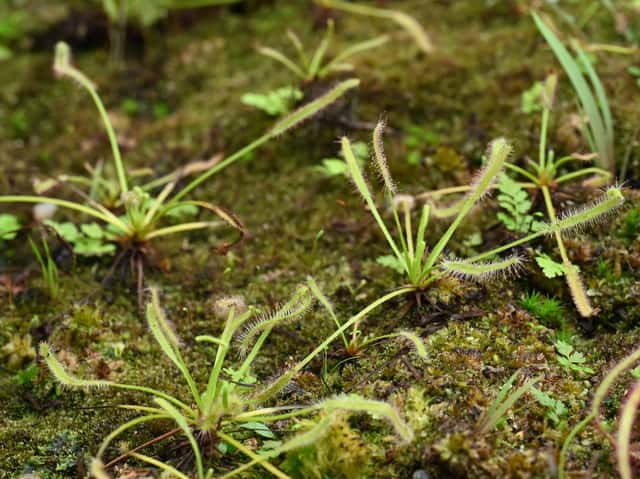
Sundew (genus) (Drosera) is a medium-care plant from the Droseraceae family. Drosera, commonly known as sundews, is one of the largest genera of carnivorous plants, with over 190 species found on every continent except Antarctica. They trap insects using sticky, glistening tentacles tipped with mucilaginous glands that resemble dewdrops in sunlight.
Sundew (genus) grows up to watering every 1 days, 5°C – 30°C, 60–90% humidity. It is suitable for indoor environments and safe for pets.
Unlike many popular species, Sundew (genus) is safe to keep around pets. Without adequate drainage, root rot can develop within 7 days.
How to Care for Sundew (genus)?
TLDR: Sundew (genus) needs Bright indirect, watering every 1 days, and temperatures between 5-30°C with 60-90% humidity.
How Often Should You Water Sundew (genus)?
Use the tray method: sit the pot in 1–2 cm of distilled or rainwater at all times. Never use tap water — dissolved minerals cause rapid decline and death.
How Much Light Does Sundew (genus) Need?
Needs at least 6 hours of direct sun or very bright indirect light per day. Indoors, place near a south- or east-facing window, or supplement with full-spectrum grow lights.
What Is the Best Soil for Sundew (genus)?
Plant in a 50/50 mix of sphagnum peat moss and silica sand or perlite. Soil pH should be acidic (3.5–5.5). Never add fertilizer — nutrient-rich soil is harmful.
Care Schedule
Fertilize
Every 14 days
Misting
Every 3 days
Rotate
Every 7 days
Repot
Every 365 days
What Is Sundew (genus) and Where Does It Come From?
Drosera, commonly known as sundews, is one of the largest genera of carnivorous plants, with over 190 species found on every continent except Antarctica. They trap insects using sticky, glistening tentacles tipped with mucilaginous glands that resemble dewdrops in sunlight.
How Big Does Sundew (genus) Grow?
TLDR: Sundew (genus) can reach up to ?cm tall with Slow growth rate.
Growth rate
Slow
Foliage
Evergreen
Plant Uses
Ornamental
Great for decoration
Is your plant showing symptoms?
Click on the symptom to discover possible causes:
What Diseases Commonly Affect Sundew (genus)?
TLDR: Sundew (genus) is susceptible to 4 known diseases. Monitor regularly for early detection.
Root Rot
Root rot is a serious fungal disease that affects the root system of plants, causing them to decay and die. It is primarily caused by overwatering, poor drainage, or soil-borne fungi such as Pythium, Phytophthora, Rhizoctonia, and Fusarium. The disease thrives in waterlogged conditions where roots are deprived of oxygen, making them susceptible to fungal infection.
Fungus Gnats
Fungus gnats are small, gray-to-black mosquito-like insects (1/8 to 1/10 inches long) commonly found in indoor plants. Adult gnats are mostly a nuisance, but their larvae feed on plant roots and organic matter in soil, potentially causing serious damage to young or vulnerable plants. The larvae are translucent white with distinctive black heads and can leave slime trails on the soil surface in heavy infestations.
Aphids
Aphids are small, soft-bodied, pear-shaped insects (1/16 to 1/8 inch long) that feed by sucking nutrient-rich sap from plants. They reproduce rapidly and can quickly weaken plants, causing distorted growth and transmitting plant viruses. Aphids come in various colors including green, black, red, yellow, brown, and gray. They secrete honeydew, a sticky substance that attracts ants and encourages sooty mold growth.
Gray Mold (Botrytis Blight)
Gray mold, caused by the fungus Botrytis cinerea, is a widespread necrotrophic pathogen affecting over 1,400 plant species. It thrives in cool, humid conditions and attacks weakened or aging plant tissues, causing soft rot and characteristic gray fuzzy growth.
Fun Facts
The glistening drops on sundew tentacles are not dew but a sticky digestive glue laced with enzymes.
Some Drosera species can catch up to 2,000 insects in a single growing season.
With over 190 species, Drosera is one of the largest genera of carnivorous plants on Earth.
Compare with similar plants
| Attribute | Difficulty | Light | Watering | Pet Safe |
|---|---|---|---|---|
| Dark Fieldcap | Medium | Low light | 2d | ⚠️ |
| Azalea | Medium | Partial shade | 3d | ⚠️ |
| Muriel's Bamboo | Medium | Partial shade | 3d | ✓ |
| Bougainvillea | Medium | Direct sun | 7d | ⚠️ |




