Crassulaceae
Dudleya Care Guide: Growing the “Liveforever” Succulent
Dudleya
Grow Dudleya in full sun to bright light with fast-draining, gritty soil. Water deeply but infrequently during the cool growing season (fall through spring), and withhold water almost entirely during summer dormancy. Never touch or spray the leaves; the white farina coating is a one-time protective layer that does not regrow.
Every 21 days
Bright indirect
4° - 35°C
30% - 50%
Categories
What is Liveforever?
Liveforever (Dudleya) is a medium-care plant from the Crassulaceae family. Dudleya is a genus of rosette-forming succulents native to the coastal bluffs, cliffs, and rocky outcrops of California, Arizona, Baja California, and Guadalupe Island. Often called liveforevers for their remarkable longevity, the roughly 70 species and countless cultivars share a striking feature:...
Liveforever grows up to 30cm, spread of 50cm, watering every 21 days, 4°C – 35°C, 30–50% humidity. It is suitable for indoor environments and safe for pets.
Unlike many popular species, Liveforever is safe to keep around pets. Without adequate drainage, root rot can develop within 42 days.
How to Care for Liveforever?
TLDR: Liveforever needs Bright indirect, watering every 21 days, and temperatures between 4-35°C with 30-50% humidity.
How Often Should You Water Liveforever?
Water at the base only, letting the soil dry out completely between waterings. Reduce watering drastically or stop altogether during the summer dormant period, and never let water sit on the rosette.
How Much Light Does Liveforever Need?
Give Dudleya bright light to full sun; coastal-growing species tolerate all-day sun, while inland gardens may need light afternoon shade to prevent leaf stress.
What Is the Best Soil for Liveforever?
Use a fast-draining cactus/succulent mix, ideally amended with pumice or coarse sand, and always plant in a container with drainage holes.
What Pot Should You Use for Liveforever?
Shallow, unglazed terracotta or hypertufa containers with generous drainage holes suit Dudleya's shallow root system and help excess moisture evaporate quickly.
What Is Liveforever and Where Does It Come From?
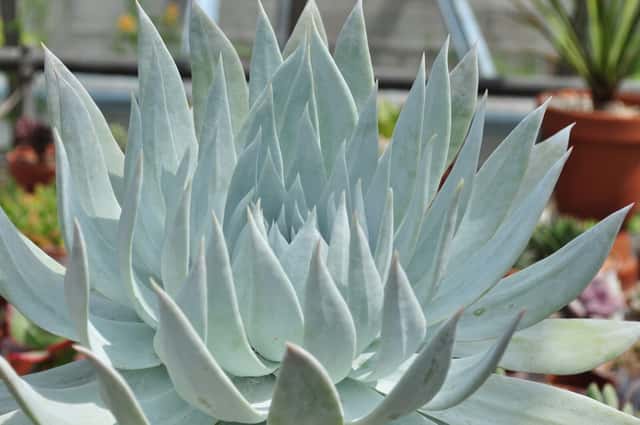
Dudleya is a genus of rosette-forming succulents native to the coastal bluffs, cliffs, and rocky outcrops of California, Arizona, Baja California, and Guadalupe Island. Often called liveforevers for their remarkable longevity, the roughly 70 species and countless cultivars share a striking feature: a powdery white coating called farina that covers the leaves like natural sunscreen, protecting the plant from intense coastal sun and reducing water loss. Species such as D. brittonii and D. pulverulenta form dramatic silver-white rosettes up to 30-50 cm across, sometimes held on short woody stems. Unlike many other succulents, Dudleya cannot be propagated from a single leaf; plants grow from offsets, division, or seed. Their most distinctive habit is summer dormancy: in their native Mediterranean climate, Dudleya grow actively through the cool, wet winter and spring, then rest through the hot, dry summer, when they should receive little to no water. Handling the leaves removes the farina permanently, leaving unsightly marks and exposing tissue to sunburn, so these plants are best admired without touching.
How to Propagate Liveforever?
Offset (pup) removal
Avoid touching the rosette leaves during removal to protect the farina coating; handle offsets by the base or with tweezers.
- 1 Wait until an offset (pup) at the base of the mother rosette has its own small roots or is at least a few centimeters wide
- 2 Gently twist or cut the offset away from the main rosette with a clean, sharp blade
- 3 Let the cut surface callus over in a dry, shaded spot for 2-3 days
- 4 Place the callused offset on top of well-draining succulent soil without burying the base
- 5 Mist the soil lightly only after roots appear, then transition to normal watering
Materials needed:
Clump division
Best done at the start of the cool growing season, not during summer dormancy.
- 1 Remove the whole clumping plant from its pot
- 2 Gently separate individual rosettes, keeping as many roots attached to each as possible
- 3 Let divided sections callus for a day or two before replanting
- 4 Replant each division into its own well-draining pot
Materials needed:
Seed sowing
Seeds are near-microscopic and germination can be slow and uneven; patience and consistent light moisture are essential.
- 1 Sow the tiny, crescent-shaped seeds on the surface of moist, well-draining succulent mix
- 2 Do not bury the seeds; press them lightly into the soil surface
- 3 Keep in bright, indirect light with consistent light moisture until germination
- 4 Grow seedlings on with careful watering for the first year before treating as an established plant
Materials needed:
How Big Does Liveforever Grow?
TLDR: Liveforever can reach up to 30cm tall with Slow growth rate.
Max height
30cm
Spread
50cm
Growth rate
Slow
Foliage
Evergreen
Plant Uses
Ornamental
Great for decoration
Is your plant showing symptoms?
Click on the symptom to discover possible causes:
What Diseases Commonly Affect Liveforever?
TLDR: Liveforever is susceptible to 7 known diseases. Monitor regularly for early detection.
Root Rot
Root rot is a serious fungal disease that affects the root system of plants, causing them to decay and die. It is primarily caused by overwatering, poor drainage, or soil-borne fungi such as Pythium, Phytophthora, Rhizoctonia, and Fusarium. The disease thrives in waterlogged conditions where roots are deprived of oxygen, making them susceptible to fungal infection.
Powdery Mildew
Powdery mildew is a common fungal disease caused by various fungi species including Erysiphe, Podosphaera, Oïdium, and Leveillula. It affects over 10,000 plant species worldwide. The disease thrives in warm, dry climates with high humidity and appears as a distinctive white powdery coating on plant surfaces.
Alternaria Leaf Spot
Alternaria leaf spot is a common fungal disease caused by Alternaria solani and Alternaria alternata that affects a wide range of plants including tomatoes, potatoes, brassicas, and ornamentals. The disease thrives in warm, humid conditions and can cause significant crop damage if left untreated. Spores overwinter on plant debris and can attach to seeds, making complete elimination difficult.
Mealybugs
Mealybugs are small, soft-bodied insects covered with a white, waxy, cottony material. They are common pests of houseplants and outdoor plants in mild climates. These sap-sucking insects feed on plant tissue, causing damage, stunted growth, and can lead to plant death if left untreated. They produce sticky honeydew which attracts sooty mold.
Meaning & Symbolism
As a genus nicknamed “liveforever,” Dudleya has come to symbolize resilience, self-preservation, and quiet endurance — a plant that thrives by protecting itself, clinging to bare cliffs where little else survives.
Fun Facts
The genus name honors William Russel Dudley, the first head of the botany department at Stanford University.
Some Dudleya species are critically endangered due to illegal poaching for the international succulent trade.
The white farina coating on the leaves is a natural sunscreen that never grows back once removed.
Certain Dudleya rosettes can live for decades on bare, vertical cliff faces where almost nothing else survives.
Frequently asked questions
Why should I avoid touching the leaves of my Dudleya?
Why is my Dudleya dropping leaves or looking mushy in summer?
Can I grow Dudleya from a leaf like other succulents?
How much sun does Dudleya need?
Compare with similar plants
| Attribute | Difficulty | Light | Watering | Pet Safe |
|---|---|---|---|---|
| Dark Fieldcap | Medium | Low light | 2d | ⚠️ |
| Azalea | Medium | Partial shade | 3d | ⚠️ |
| Muriel's Bamboo | Medium | Partial shade | 3d | ✓ |
| Bougainvillea | Medium | Direct sun | 7d | ⚠️ |




