Ulmaceae
Dutch Elm (Ulmus × hollandica)
Ulmus × hollandica
Plant in full sun to partial shade with loamy, well-drained soil (pH 6.5-7.5). Water deeply about once every 10 days while establishing, and monitor closely each spring and late summer for early signs of Dutch elm disease.
Every 10 days
Bright indirect
-23° - 35°C
% - %
Categories
What is Dutch Elm?
Dutch Elm (Ulmus × hollandica) is a medium-care plant from the Ulmaceae family. Ulmus × hollandica, commonly known as the Dutch Elm, is a natural hybrid between the Wych Elm (Ulmus glabra) and the Field Elm (Ulmus minor) that arose spontaneously across Europe wherever the ranges of its two parent species overlap. A large, fast-growing deciduous tree, it was historically planted...
Dutch Elm grows up to 36.6m, spread of 2438cm, watering every 10 days, -23°C – 35°C. It is not suitable for indoor environments and safe for pets.
Unlike many popular species, Dutch Elm is safe to keep around pets.
How to Care for Dutch Elm?
TLDR: Dutch Elm needs Bright indirect, watering every 10 days, and temperatures between -23-35°C with 40-70% humidity.
How Often Should You Water Dutch Elm?
Water deeply and infrequently to encourage deep roots; avoid waterlogged soil, which promotes root rot.
How Much Light Does Dutch Elm Need?
Give it full sun to partial shade - at least 6 hours of direct sun daily produces the healthiest, most disease-resistant growth.
What Is the Best Soil for Dutch Elm?
Use loamy or sandy-loam soil with good drainage and a near-neutral pH (6.5-7.5); avoid compacted or waterlogged ground.
What Pot Should You Use for Dutch Elm?
Not suitable for pots - this is a large shade tree that needs to be planted directly in open ground with ample space for its root system.
Care Schedule
Fertilize
Every 180 days
What Is Dutch Elm and Where Does It Come From?
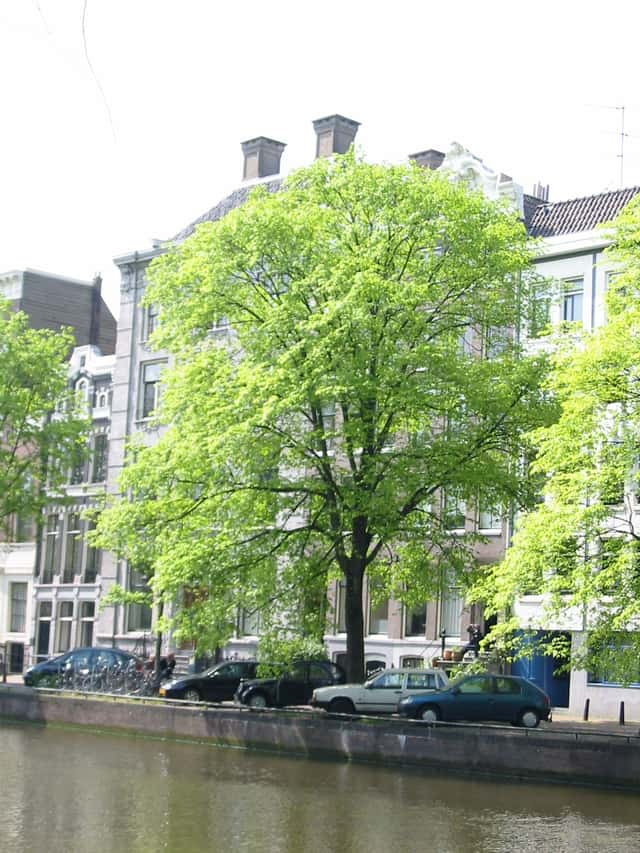
Ulmus × hollandica, commonly known as the Dutch Elm, is a natural hybrid between the Wych Elm (Ulmus glabra) and the Field Elm (Ulmus minor) that arose spontaneously across Europe wherever the ranges of its two parent species overlap. A large, fast-growing deciduous tree, it was historically planted in vast numbers as a street and canal-side tree throughout the Netherlands and the rest of the Low Countries, prized for its tolerance of urban conditions and its elegant, broadly spreading crown. Its leaves are intermediate in shape between the two parent species, and inconspicuous reddish flowers appear in early spring before the foliage, followed by winged samara fruits. The hybrid became infamous during the 20th century for its role in the Dutch elm disease epidemics, though some clones show moderate resistance and continue to be bred for improved tolerance.
How to Propagate Dutch Elm?
Grafting
Grafting is the standard method for producing true-to-type Dutch Elm cultivars, since seedlings do not breed true to the parent hybrid.
- 1 Select a healthy, disease-free scion from the desired cultivar
- 2 Whip-graft or bud-graft the scion onto a compatible elm rootstock
- 3 Seal the graft union and keep it protected from wind and frost until it callouses
- 4 Monitor the union through the first growing season and remove rootstock suckers
Materials needed:
Hardwood cutting
Success rates are lower than grafting and vary widely by clone; keep cuttings consistently moist but not waterlogged.
- 1 Take a 15-20 cm hardwood cutting from a healthy branch
- 2 Dip the cut end in rooting hormone
- 3 Insert into moist, well-draining potting mix
- 4 Keep humid and lightly shaded until roots form
Materials needed:
How Big Does Dutch Elm Grow?
TLDR: Dutch Elm can reach up to 36.6m tall with Fast growth rate.
Max height
36.6m
Spread
24.4m
Growth rate
Fast
Foliage
Deciduous
Plant Uses
Ornamental
Great for decoration
Is your plant showing symptoms?
Click on the symptom to discover possible causes:
What Diseases Commonly Affect Dutch Elm?
TLDR: Dutch Elm is susceptible to 7 known diseases. Monitor regularly for early detection.
Anthracnose
Anthracnose is a fungal disease caused by fungi in the genus Colletotrichum that affects many plants, including vegetables, fruits, and trees. The disease thrives in cool, wet conditions, causing dark, sunken lesions on leaves, stems, flowers, and fruits.
Powdery Mildew
Powdery mildew is a common fungal disease caused by various fungi species including Erysiphe, Podosphaera, Oïdium, and Leveillula. It affects over 10,000 plant species worldwide. The disease thrives in warm, dry climates with high humidity and appears as a distinctive white powdery coating on plant surfaces.
Root Rot
Root rot is a serious fungal disease that affects the root system of plants, causing them to decay and die. It is primarily caused by overwatering, poor drainage, or soil-borne fungi such as Pythium, Phytophthora, Rhizoctonia, and Fusarium. The disease thrives in waterlogged conditions where roots are deprived of oxygen, making them susceptible to fungal infection.
Spider Mites
Spider mites are tiny arachnids (less than 1/20 inch long) related to spiders and ticks that feed on plant sap. They thrive in hot, dry conditions and can cause significant damage to ornamental and vegetable plants. During severe infestations, crop losses can reach 14% or higher as these pests disrupt vital plant processes including photosynthesis, carbon dioxide absorption, and transpiration.
Meaning & Symbolism
In European folklore the elm is linked to dignity, strength, and quiet resilience; in the Netherlands it became a civic emblem lining historic streets and canals, later turning into a poignant symbol of loss and recovery after the Dutch elm disease epidemics.
Fun Facts
Some individual Dutch Elm trees have grown to over 44 meters tall with trunks over 2.5 meters in diameter.
The hybrid arises naturally wherever the ranges of Wych Elm and Field Elm overlap across Europe.
It was once one of the most widely planted street trees in the Netherlands, lining canals and boulevards.
The name comes from Dutch botanists who first studied and classified the hybrid, not from the disease that later devastated it.
Frequently asked questions
Is the Dutch Elm resistant to Dutch elm disease?
How much sun does a Dutch Elm need?
Is the Dutch Elm toxic to pets?
How fast does the Dutch Elm grow?
Can I grow a Dutch Elm in a pot?
Compare with similar plants
| Attribute | Difficulty | Light | Watering | Pet Safe |
|---|---|---|---|---|
| Dark Fieldcap | Medium | Low light | 2d | ⚠️ |
| Azalea | Medium | Partial shade | 3d | ⚠️ |
| Muriel's Bamboo | Medium | Partial shade | 3d | ✓ |
| Bougainvillea | Medium | Direct sun | 7d | ⚠️ |
Choose & Compare
Sources & References
- Ulmus × hollandica - Wikipedia
- Ulmus hollandica (Dutch Elm) - Backyard Gardener
- Dutch Elm Disease - UMass Amherst CAFE
- Ulmus (Elm) - NC State Extension Gardener Plant Toolbox
- Dutch Elm Commelin Plant Care - Greg App
- Ulmus × hollandica Care Guide - ForwardPlant
- Ulmus × hollandica Christine Buisman - Arnold Arboretum Arnoldia




