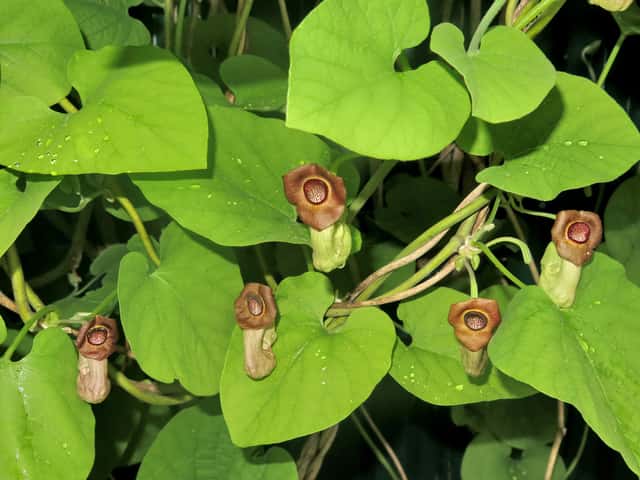
Aristolochiaceae
Dutchman's Pipe: Fast Growing
Aristolochia
Grow in bright, indirect light with rich, organic, well-drained soil kept consistently moist in the growing season. Provide a trellis or support for climbing stems, moderate humidity, and protection from frost.
Every 5 days
Partial shade
10° - 25°C
40% - 60%
Categories
What is Dutchman's Pipe?
Dutchman's Pipe (Aristolochia) is a medium-care plant from the Aristolochiaceae family. Aristolochia is a large genus of about 350 climbing and herbaceous plants in the family Aristolochiaceae, prized for their curious pipe- or trumpet-shaped flowers in brown, yellow, green and purple tones. Species range from cold-hardy temperate vines like A. macrophylla to tender tropical climbers....
Dutchman's Pipe grows up to 10.0m, watering every 5 days, 10°C – 25°C, 40–60% humidity. It is suitable for indoor environments and not safe for pets.
Without precautions, ingestion can cause irritation in pets. Keep out of reach of cats and dogs. Without adequate drainage, root rot can develop within 10 days.
How to Care for Dutchman's Pipe?
TLDR: Dutchman's Pipe needs Partial shade, watering every 5 days, and temperatures between 10-25°C with 40-60% humidity.
How Often Should You Water Dutchman's Pipe?
Keep the soil evenly moist during spring and summer, watering with room-temperature, low-lime water; let the topsoil dry slightly between waterings in autumn and winter to avoid waterlogging.
How Much Light Does Dutchman's Pipe Need?
Give bright, filtered/indirect light; strong direct midday sun can scorch the foliage, though good light encourages flowering.
What Is the Best Soil for Dutchman's Pipe?
Use a light, organic-rich, well-draining mix (e.g. equal parts peat/coir and sand with compost); avoid heavy, clay soils that trap water around the roots.
What Pot Should You Use for Dutchman's Pipe?
A wide, sturdy pot with a trellis or moss pole, and drainage holes to prevent waterlogged roots.
What Is Dutchman's Pipe and Where Does It Come From?
Aristolochia is a large genus of about 350 climbing and herbaceous plants in the family Aristolochiaceae, prized for their curious pipe- or trumpet-shaped flowers in brown, yellow, green and purple tones. Species range from cold-hardy temperate vines like A. macrophylla to tender tropical climbers. All parts of the plant contain aristolochic acid, a compound now known to be nephrotoxic and carcinogenic, so it should be handled with care and kept away from children and pets.
How to Propagate Dutchman's Pipe?
Stem cutting
Use clean, sharp tools and keep the cutting warm and humid; change water weekly if rooting in water.
- 1 Take a healthy 10cm stem cutting with a couple of leaf nodes
- 2 Dip the cut end in rooting hormone
- 3 Place in water or a moist, light substrate until roots form
Materials needed:
Seed propagation
Germination can be slow and uneven; patience and stable warmth help.
- 1 Sow seeds in a light substrate in spring
- 2 Keep temperature and humidity stable and warm
- 3 Maintain consistent moisture until germination
Materials needed:
How Big Does Dutchman's Pipe Grow?
TLDR: Dutchman's Pipe can reach up to 10.0m tall with Fast growth rate.
Max height
10.0m
Growth rate
Fast
Foliage
Deciduous
Warning: Toxic Plant
This plant can be toxic if ingested. Keep out of reach of:
Plant Uses
Ornamental
Great for decoration
Medicinal Uses
- Historically used in traditional obstetric, wound and snakebite remedies — now considered unsafe for internal use due to aristolochic acid toxicity and carcinogenicity
Is your plant showing symptoms?
Click on the symptom to discover possible causes:
What Diseases Commonly Affect Dutchman's Pipe?
TLDR: Dutchman's Pipe is susceptible to 2 known diseases. Monitor regularly for early detection.
Root Rot
Root rot is a serious fungal disease that affects the root system of plants, causing them to decay and die. It is primarily caused by overwatering, poor drainage, or soil-borne fungi such as Pythium, Phytophthora, Rhizoctonia, and Fusarium. The disease thrives in waterlogged conditions where roots are deprived of oxygen, making them susceptible to fungal infection.
Caterpillars
Caterpillars are the larval stage of moths and butterflies that feed voraciously on plant foliage, stems, flowers, and fruits. Common species include cabbage loopers, tomato hornworms, armyworms, and cutworms. These pests can cause extensive damage by consuming large amounts of plant tissue in a short time. They vary in size from small (1/4 inch) to large (5 inches), with colors ranging from green to brown, often featuring stripes or spots. Caterpillars are highly mobile and can quickly spread throughout gardens, making them one of the most destructive common pests.
Meaning & Symbolism
The genus name comes from Greek "aristos" (best) + "locheia" (childbirth) — Aristolochia was historically used in ancient obstetrics. Modern research revealing its aristolochic acid toxicity has turned this old symbolism into a cautionary tale about traditional herbal remedies.
Compare with similar plants
| Attribute | Difficulty | Light | Watering | Pet Safe |
|---|---|---|---|---|
| Dark Fieldcap | Medium | Low light | 2d | ⚠️ |
| Azalea | Medium | Partial shade | 3d | ⚠️ |
| Muriel's Bamboo | Medium | Partial shade | 3d | ✓ |
| Bougainvillea | Medium | Direct sun | 7d | ⚠️ |
Choose & Compare
Sources & References
- Aristolochia care and characteristics: guide, watering, and species
- Aristolochia macrophylla | NC State Extension Gardener Plant Toolbox
- Aristolochia species and aristolochic acids - IARC Monographs (NCBI Bookshelf)
- Aristolochia Gigantea: A Death Sentence For Baby Pipevine Swallowtails
- Which Aristolochia species are toxic to pipevine swallowtail caterpillars




