Iridaceae
Iris pumila - Dwarf Bearded Iris Care Guide
Iris pumila
Easy to grow and drought-tolerant once established, dwarf bearded iris thrives in full sun with well-draining, slightly acidic to neutral soil. Plant rhizomes shallowly with the top exposed to sunlight, water moderately during the growing season, and let the soil dry out between waterings to prevent rot.
Every 10 days
Bright indirect
-30° - 35°C
% - %
Categories
What is Dwarf Bearded Iris?
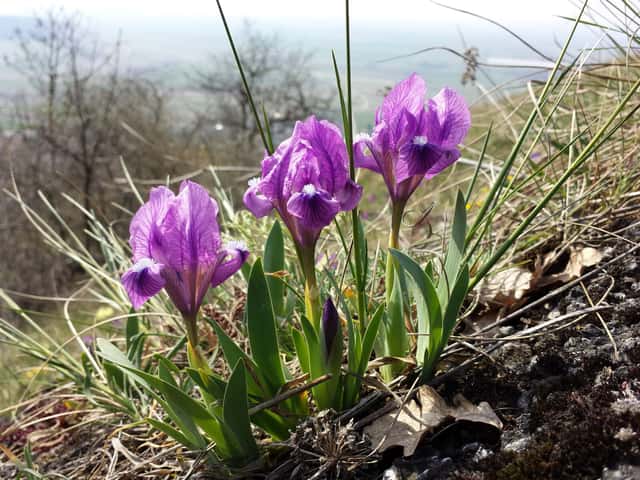
Dwarf Bearded Iris (Iris pumila) is a easy-care plant from the Iridaceae family. Iris pumila is a low-growing rhizomatous perennial native to the grasslands and rocky steppes of eastern Europe and western Asia. Reaching only 10-20 cm in height, it forms dense mats of sword-shaped, blue-green leaves and produces large, showy flowers in shades of purple, yellow, blue, cream, and w...
Dwarf Bearded Iris grows up to 20cm, spread of 30cm, watering every 10 days, -30°C – 35°C. It is not suitable for indoor environments and not safe for pets.
Unlike many tropical plants, Dwarf Bearded Iris tolerates watering mistakes. Best for beginners. Without precautions, ingestion can cause irritation in pets. Keep out of reach of cats and dogs.
How to Care for Dwarf Bearded Iris?
TLDR: Dwarf Bearded Iris needs Bright indirect, watering every 10 days, and temperatures between -30-35°C with 40-70% humidity.
How Often Should You Water Dwarf Bearded Iris?
Water moderately in spring while the plant is actively growing, allowing the soil to dry almost completely between waterings. Reduce watering significantly during summer dormancy to avoid rhizome rot.
How Much Light Does Dwarf Bearded Iris Need?
Provide full sun for at least 6 hours a day; strong light is essential for abundant flowering. Partial afternoon shade is tolerated in very hot climates.
What Is the Best Soil for Dwarf Bearded Iris?
Use well-draining, gritty or loamy soil with a neutral to slightly acidic pH. Plant rhizomes at or just below the soil surface -- burying them too deep encourages rot.
What Pot Should You Use for Dwarf Bearded Iris?
Best grown in the ground or in shallow, wide terracotta containers with excellent drainage; avoid deep pots that hold excess moisture around the rhizome.
What Is Dwarf Bearded Iris and Where Does It Come From?
Iris pumila is a low-growing rhizomatous perennial native to the grasslands and rocky steppes of eastern Europe and western Asia. Reaching only 10-20 cm in height, it forms dense mats of sword-shaped, blue-green leaves and produces large, showy flowers in shades of purple, yellow, blue, cream, and white, often with a darker spot on the falls. One of the earliest bearded irises to bloom each spring, it has been extensively used to breed modern dwarf and median bearded iris cultivars.
How to Propagate Dwarf Bearded Iris?
Rhizome Division
Divide clumps every 3-4 years to keep plants vigorous and prevent overcrowding, which reduces flowering.
- 1 Dig up the clump 6-8 weeks after flowering has finished
- 2 Shake off excess soil and separate healthy rhizomes with a clean knife, keeping at least one fan of leaves per division
- 3 Trim leaves to about 10 cm and discard any soft or rotten sections
- 4 Replant divisions immediately with the rhizome top just at soil level, spaced 15-20 cm apart
- 5 Water lightly to settle the soil and keep barely moist until new growth appears
Materials needed:
How Big Does Dwarf Bearded Iris Grow?
TLDR: Dwarf Bearded Iris can reach up to 20cm tall with Medium growth rate.
Max height
20cm
Spread
30cm
Growth rate
Medium
Foliage
Deciduous
Warning: Toxic Plant
This plant can be toxic if ingested. Keep out of reach of:
Plant Uses
Ornamental
Great for decoration
Ground Cover
Soil coverage
Is your plant showing symptoms?
Click on the symptom to discover possible causes:
What Diseases Commonly Affect Dwarf Bearded Iris?
TLDR: Dwarf Bearded Iris is susceptible to 5 known diseases. Monitor regularly for early detection.
Bacterial Soft Rot
Bacterial soft rot is a destructive plant disease caused primarily by bacteria from the genera Pectobacterium (formerly Erwinia) and Dickeya. These bacteria produce enzymes that break down plant cell walls, causing rapid and foul-smelling tissue decomposition. It mainly affects succulent tissues such as tubers, fruits, stems, and bulbs, being especially problematic in warm and humid conditions.
Root Rot
Root rot is a serious fungal disease that affects the root system of plants, causing them to decay and die. It is primarily caused by overwatering, poor drainage, or soil-borne fungi such as Pythium, Phytophthora, Rhizoctonia, and Fusarium. The disease thrives in waterlogged conditions where roots are deprived of oxygen, making them susceptible to fungal infection.
Rust
Rust is a common fungal disease caused by fungi in the order Pucciniales that affects a wide variety of plants. The disease gets its name from the characteristic orange, yellow, or reddish-brown pustules that appear on leaves, resembling metal rust. This obligate fungal parasite requires living plants to survive and can cause significant economic losses in agricultural crops.
Aphids
Aphids are small, soft-bodied, pear-shaped insects (1/16 to 1/8 inch long) that feed by sucking nutrient-rich sap from plants. They reproduce rapidly and can quickly weaken plants, causing distorted growth and transmitting plant viruses. Aphids come in various colors including green, black, red, yellow, brown, and gray. They secrete honeydew, a sticky substance that attracts ants and encourages sooty mold growth.
Meaning & Symbolism
Represents faith, hope, wisdom, and valor; purple varieties are associated with royalty, and the iris flower inspired the fleur-de-lis emblem.
Fun Facts
Iris pumila is believed to be a natural hybrid between Iris pseudopumila and Iris attica.
It was extensively used in 20th-century breeding programs to create modern dwarf and median bearded iris cultivars.
The genus Iris is named after the Greek goddess of the rainbow, reflecting the wide range of flower colors.
Frequently asked questions
How often should I water Iris pumila?
Is Iris pumila toxic to pets?
How much sun does dwarf bearded iris need?
When should I divide dwarf bearded iris?
Compare with similar plants
| Attribute | Difficulty | Light | Watering | Pet Safe |
|---|---|---|---|---|
| Field Maple | Easy | Bright indirect | 14d | ✓ |
| Silver Birch | Easy | Direct sun | 14d | ✓ |
| Common Blanketflower | Easy | Direct sun | 10d | ✓ |
| Cushion Bush | Easy | Direct sun | 14d | ✓ |





