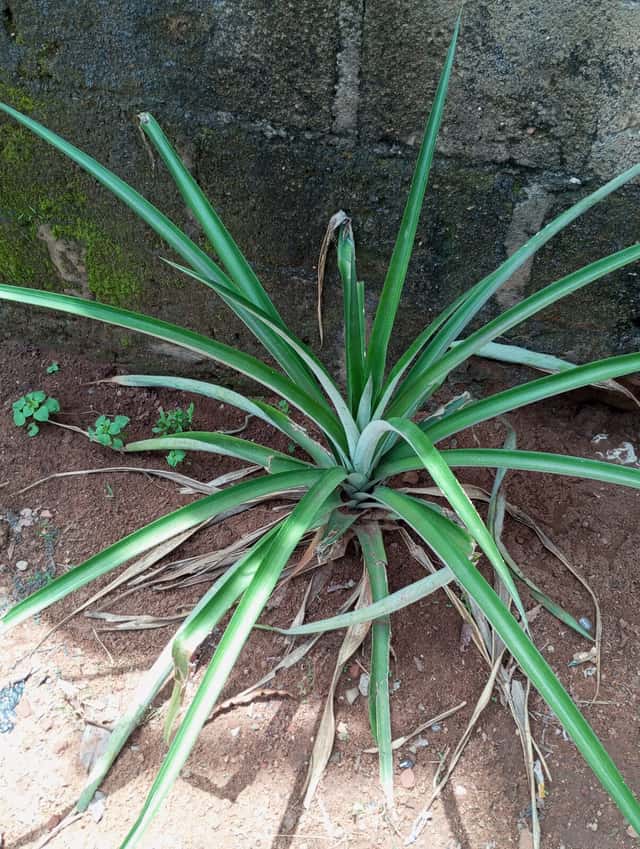
Bromeliaceae
Ananas nanus: Complete Dwarf Pineapple Care Guide
Ananas nanus
A rustic, low-maintenance plant that tolerates dry, sandy soils and needs infrequent watering. It requires plenty of light, ideally full sun, to keep its leaf coloring vivid and encourage fruiting.
Every 7 days
Direct sun
15° - 30°C
% - %
Categories
What is Dwarf Pineapple?
Dwarf Pineapple (Ananas nanus) is a medium-care plant from the Bromeliaceae family. Ananas nanus, commonly known as dwarf pineapple, is a terrestrial bromeliad native to Brazil, grown mainly as a compact ornamental plant. It forms a tight rosette of stiff, serrated leaves and produces a small inflorescence followed by a tiny, tart, low-pulp fruit typically used as a decorative acce...
Dwarf Pineapple grows up to 50cm, watering every 7 days, 15°C – 30°C. It is suitable for indoor environments and safe for pets.
Unlike many popular species, Dwarf Pineapple is safe to keep around pets. Without adequate drainage, root rot can develop within 14 days.
How to Care for Dwarf Pineapple?
TLDR: Dwarf Pineapple needs Direct sun, watering every 7 days, and temperatures between 15-30°C with 40-70% humidity.
How Often Should You Water Dwarf Pineapple?
Water only when the substrate feels dry to the touch, roughly once a week. Avoid soggy soil, as the plant is prone to root rot.
How Much Light Does Dwarf Pineapple Need?
Prefers direct or very bright light; indoors, place it close to a well-lit window.
What Is the Best Soil for Dwarf Pineapple?
Use a sandy, well-draining substrate similar to its natural habitat.
What Pot Should You Use for Dwarf Pineapple?
A terracotta or ceramic pot with drainage holes, only slightly larger than the leaf rosette.
Care Schedule
Fertilize
Every 30 days
What Is Dwarf Pineapple and Where Does It Come From?
Ananas nanus, commonly known as dwarf pineapple, is a terrestrial bromeliad native to Brazil, grown mainly as a compact ornamental plant. It forms a tight rosette of stiff, serrated leaves and produces a small inflorescence followed by a tiny, tart, low-pulp fruit typically used as a decorative accent in pots and arrangements.
How to Propagate Dwarf Pineapple?
Division of lateral offsets (pups)
The mother plant is monocarpic and dies after fruiting, but produces pups beforehand that keep the plant going. Avoid overwatering while the pup roots.
- 1 Wait for offsets (pups) to reach about one third the size of the mother plant
- 2 Cut the pup close to the base with a clean, sharp knife
- 3 Let the cut callus (dry) for 1-2 days in a shaded, ventilated spot
- 4 Plant in light, well-draining substrate, keeping it lightly moist until rooted
Materials needed:
How Big Does Dwarf Pineapple Grow?
TLDR: Dwarf Pineapple can reach up to 50cm tall with Slow growth rate.
Max height
50cm
Growth rate
Slow
Foliage
Evergreen
Plant Uses
Ornamental
Great for decoration
Edible
Can be consumed
Culinary Uses
- The ripe fruit can be eaten fresh or cooked despite its tart, low-pulp flesh
- Used as a decorative garnish for cocktails and dishes
Is your plant showing symptoms?
Click on the symptom to discover possible causes:
What Diseases Commonly Affect Dwarf Pineapple?
TLDR: Dwarf Pineapple is susceptible to 8 known diseases. Monitor regularly for early detection.
Root Rot
Root rot is a serious fungal disease that affects the root system of plants, causing them to decay and die. It is primarily caused by overwatering, poor drainage, or soil-borne fungi such as Pythium, Phytophthora, Rhizoctonia, and Fusarium. The disease thrives in waterlogged conditions where roots are deprived of oxygen, making them susceptible to fungal infection.
Overwatering
Overwatering occurs when plants receive too much water, depriving roots of oxygen and causing root rot. This environmental stress is one of the most common causes of houseplant death, as waterlogged soil prevents roots from breathing and functioning properly.
Phytophthora Root Rot
The Phytophthora genus consists of soil-borne oomycetes (water molds) that act as plant pathogens, primarily affecting trees and woody plants. It typically spreads through the root system, leading to systemic decline and eventual plant collapse.
Fusarium Wilt
Fusarium wilt is a serious fungal disease caused by the soil-borne fungus Fusarium oxysporum. The fungus invades roots and blocks the water-conducting vessels (xylem) of the plant, causing progressive wilting and eventual death. Host-specific forms of the pathogen exist that attack different plant species.
Fun Facts
It is a monocarpic plant: the mother rosette dies after fruiting but produces pups beforehand to continue its cycle
Despite its name, its fruit is much smaller and more tart than the common pineapple (Ananas comosus)
It is native to Brazil, found naturally in cerrado and rocky grassland habitats
Frequently asked questions
Is the fruit of Ananas nanus edible?
How often should I water the dwarf pineapple?
Does Ananas nanus need full sun?
How do you propagate a dwarf pineapple?
Is Ananas nanus toxic to cats and dogs?
Compare with similar plants
| Attribute | Difficulty | Light | Watering | Pet Safe |
|---|---|---|---|---|
| Dark Fieldcap | Medium | Low light | 2d | ⚠️ |
| Azalea | Medium | Partial shade | 3d | ⚠️ |
| Muriel's Bamboo | Medium | Partial shade | 3d | ✓ |
| Bougainvillea | Medium | Direct sun | 7d | ⚠️ |




