Fabaceae
Dyer's Broom (Genista)
Genista
Grow broom in full sun, in sandy or gravelly soil that is nutrient-poor and extremely well-drained. Water moderately until established, then only during prolonged drought; soggy soil is the main cause of trouble for this plant. Give it a light prune right after flowering to keep a compact shape, avoiding cuts into old, hard wood.
Every 14 days
Direct sun
-20° - 35°C
% - %
Categories
What is Dyer's Broom?
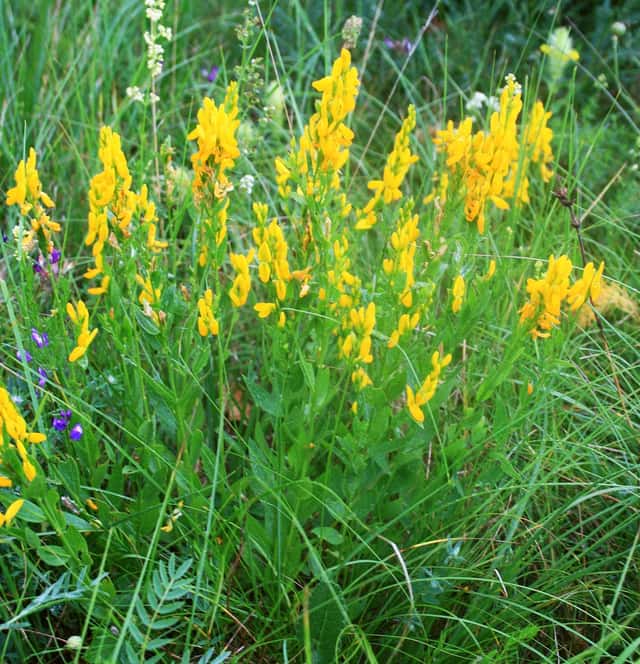
Dyer's Broom (Genista) is a easy-care plant from the Fabaceae family. Genista is a genus of leguminous shrubs in the family Fabaceae, commonly called broom, with roughly 90 species native to Europe, North Africa, and western Asia. The genus is characterized by slender, often nearly leafless green stems and butterfly-shaped (papilionaceous) yellow flowers that cover th...
Dyer's Broom grows up to 1.5m, spread of 150cm, watering every 14 days, -20°C – 35°C. It is not suitable for indoor environments and not safe for pets.
Unlike many tropical plants, Dyer's Broom tolerates watering mistakes. Best for beginners. Without precautions, ingestion can cause irritation in pets. Keep out of reach of cats and dogs.
How to Care for Dyer's Broom?
TLDR: Dyer's Broom needs Direct sun, watering every 14 days, and temperatures between -20-35°C with 40-70% humidity.
How Often Should You Water Dyer's Broom?
Water sparingly and let the soil dry out well between waterings. Once established, broom tolerates long dry spells and suffers far more from overwatering than from drought.
How Much Light Does Dyer's Broom Need?
Needs full sun all day; it will not thrive in shade and flowers poorly in partially shaded spots.
What Is the Best Soil for Dyer's Broom?
Prefers sandy or loamy soil, low in organic matter, with excellent drainage; tolerates acid to alkaline pH. Avoid heavy clay and waterlogged ground.
What Pot Should You Use for Dyer's Broom?
If grown in a container, use a wide, shallow terracotta pot with generous drainage holes and sandy compost; avoid pots that hold moisture.
What Is Dyer's Broom and Where Does It Come From?
Genista is a genus of leguminous shrubs in the family Fabaceae, commonly called broom, with roughly 90 species native to Europe, North Africa, and western Asia. The genus is characterized by slender, often nearly leafless green stems and butterfly-shaped (papilionaceous) yellow flowers that cover the plant through spring and summer. It is a tough, drought-tolerant plant adapted to poor, well-drained soils, widely used in rock gardens, banks, and ornamental borders. The English royal House of Plantagenet takes its name from the Latin planta genista, as its founders wore a sprig of the plant as an emblem.
How to Propagate Dyer's Broom?
Seed propagation
Scarifying and soaking greatly improve germination rates since the seed coat is very hard.
- 1 Collect ripe seeds from the pods in late summer
- 2 Scarify the hard seed coat lightly with fine sandpaper
- 3 Soak the seeds in warm water for 24 hours
- 4 Sow in well-drained sandy compost and keep in a cold spot for several weeks to stratify
- 5 Transplant seedlings to individual pots once they have 2-3 true leaves
Materials needed:
Semi-ripe cuttings
Broom has a lower success rate from cuttings than from seed; take several cuttings to ensure at least one succeeds.
- 1 Take 8-10 cm cuttings from semi-ripe, non-flowering shoots
- 2 Strip leaves from the lower half of the cutting
- 3 Dip the base in rooting hormone
- 4 Insert into well-drained sandy compost and keep moist but not waterlogged
- 5 Keep in a shaded, sheltered spot until rooted
Materials needed:
How Big Does Dyer's Broom Grow?
TLDR: Dyer's Broom can reach up to 1.5m tall with Medium growth rate.
Max height
1.5m
Spread
1.5m
Growth rate
Medium
Foliage
Deciduous
Warning: Toxic Plant
This plant can be toxic if ingested. Keep out of reach of:
Plant Uses
Ornamental
Great for decoration
Medicinal Uses
- Historically used in small, controlled doses as a diuretic and cathartic
- Traditional use as a vasoconstrictor and stimulant in folk preparations
Culinary Uses
- Flower buds occasionally used as a caper substitute in parts of Europe
Is your plant showing symptoms?
Click on the symptom to discover possible causes:
What Diseases Commonly Affect Dyer's Broom?
TLDR: Dyer's Broom is susceptible to 6 known diseases. Monitor regularly for early detection.
Aphids
Aphids are small, soft-bodied, pear-shaped insects (1/16 to 1/8 inch long) that feed by sucking nutrient-rich sap from plants. They reproduce rapidly and can quickly weaken plants, causing distorted growth and transmitting plant viruses. Aphids come in various colors including green, black, red, yellow, brown, and gray. They secrete honeydew, a sticky substance that attracts ants and encourages sooty mold growth.
Eriophyid Mites
Eriophyid mites (family Eriophyidae) are extremely small, worm-shaped mites that feed by piercing plant tissue and sucking out the contents. They live on young leaves, buds, and sometimes fruit. Typical signs include tightly curled or blistered leaves, felt-like patches (erineum), small galls, bronzing or rough “russeted” fruit skin, and stunted or distorted new growth. They do not make the obvious webbing seen with spider mites, and you often need a hand lens to spot them. Many ornamentals and edibles can be affected, including roses, maples, grapes, apples, pears, birch, and viburnum. Some species can also spread certain plant viruses (for example, on roses).
Powdery Mildew
Powdery mildew is a common fungal disease caused by various fungi species including Erysiphe, Podosphaera, Oïdium, and Leveillula. It affects over 10,000 plant species worldwide. The disease thrives in warm, dry climates with high humidity and appears as a distinctive white powdery coating on plant surfaces.
Rust
Rust is a common fungal disease caused by fungi in the order Pucciniales that affects a wide variety of plants. The disease gets its name from the characteristic orange, yellow, or reddish-brown pustules that appear on leaves, resembling metal rust. This obligate fungal parasite requires living plants to survive and can cause significant economic losses in agricultural crops.
Meaning & Symbolism
A symbol of humility and resilience, broom flowers even in poor, rocky ground; it was the emblem of the Plantagenet dynasty in medieval England.
Fun Facts
The English royal House of Plantagenet takes its name from the Latin planta genista, since its founders wore a sprig of broom as an emblem.
Dyer's broom flowers were historically used to produce a yellow dye, which combined with woad (Isatis tinctoria) produced a vivid green for textiles.
The slender green stems of broom carry out photosynthesis even when the plant sheds its leaves, an adaptation to poor, dry soils.
Despite being ornamental, broom belongs to the same family as peas and beans (Fabaceae) and fixes nitrogen in the soil through its roots.
Frequently asked questions
Is broom toxic to pets?
When is the best time to prune broom?
Does broom need regular fertilizing?
Can broom be grown in a pot?
Why is my broom not flowering?
Compare with similar plants
| Attribute | Difficulty | Light | Watering | Pet Safe |
|---|---|---|---|---|
| Field Maple | Easy | Bright indirect | 14d | ✓ |
| Silver Birch | Easy | Direct sun | 14d | ✓ |
| Common Blanketflower | Easy | Direct sun | 10d | ✓ |
| Cushion Bush | Easy | Direct sun | 14d | ✓ |





