Juglandaceae
Eastern Black Walnut (Juglans nigra) Care Guide
Juglans nigra
Give this fast-growing native tree full sun, deep and well-drained soil, and plenty of room to mature; water regularly while young, then rely mostly on rainfall once established. Plant it away from gardens and other sensitive plants, since its roots and fallen leaves release juglone, a natural compound toxic to many species.
Every 7 days
Bright indirect
-34° - 38°C
30% - 70%
Categories
What is Eastern Black Walnut?
Eastern Black Walnut (Juglans nigra) is a medium-care plant from the Juglandaceae family. Juglans nigra, the eastern black walnut, is a large deciduous tree native to the eastern and central United States, prized for its rich, dark, highly figured wood, its edible nuts, and its imposing shade canopy. Mature specimens typically reach 20-30 m tall with a broad, rounded crown and can live w...
Eastern Black Walnut grows up to 30.0m, spread of 2000cm, watering every 7 days, -34°C – 38°C, 30–70% humidity. It is not suitable for indoor environments and not safe for pets.
Without precautions, ingestion can cause irritation in pets. Keep out of reach of cats and dogs.
How to Care for Eastern Black Walnut?
TLDR: Eastern Black Walnut needs Bright indirect, watering every 7 days, and temperatures between -34-38°C with 30-70% humidity.
How Often Should You Water Eastern Black Walnut?
Water deeply once a week during the first few growing seasons to help establish a strong taproot; mature trees are fairly drought-tolerant and need supplemental water only during prolonged dry spells.
How Much Light Does Eastern Black Walnut Need?
Plant in full sun for the healthiest growth and best nut production; young trees tolerate partial shade but grow more slowly.
What Is the Best Soil for Eastern Black Walnut?
Prefers deep, fertile, well-drained loam with a slightly acidic to neutral pH (6.0-7.5); tolerates clay and drier soils but dislikes poor drainage.
What Pot Should You Use for Eastern Black Walnut?
Not suitable for containers long-term — plant directly in the ground due to its deep taproot and eventual large size; if starting from seed, use a deep, wide nursery pot only until ready to transplant.
What Is Eastern Black Walnut and Where Does It Come From?
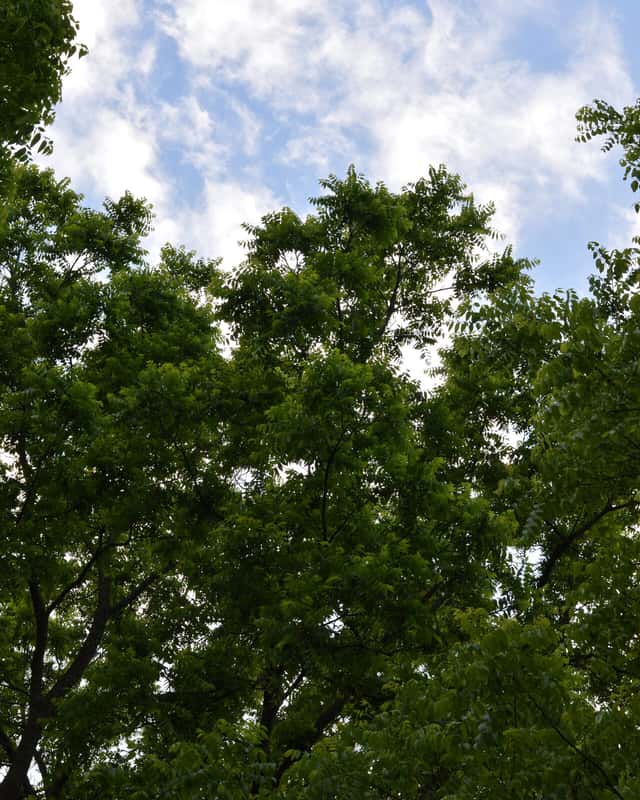
Juglans nigra, the eastern black walnut, is a large deciduous tree native to the eastern and central United States, prized for its rich, dark, highly figured wood, its edible nuts, and its imposing shade canopy. Mature specimens typically reach 20-30 m tall with a broad, rounded crown and can live well over a century. The pinnately compound leaves, made up of 15-23 lance-shaped leaflets, turn a soft yellow in autumn before dropping early, and the deeply furrowed, dark gray-brown bark gives older trees a rugged, sculptural silhouette. In spring, inconspicuous green catkins appear alongside the emerging leaves, followed by round, thick-husked nuts that ripen in fall and stain hands and pavement a deep brown. One of the tree's most distinctive traits is allelopathy: its roots, leaf litter and nut husks release juglone, a chemical that suppresses or kills many nearby plants — including tomatoes, azaleas and blueberries — within its dripline, so it is best planted well away from vegetable gardens and ornamental beds. Juglone and other compounds in the shavings and hulls can also be irritating to dogs and, notably, toxic to horses if used as bedding. Despite these quirks, black walnut is a valuable wildlife tree, feeding squirrels and other mammals, and its lumber is among the most sought-after hardwoods in North America.
How to Propagate Eastern Black Walnut?
Seed propagation (stratified nuts)
Black walnuts develop a long taproot early, so plant them in their final location rather than transplanting; wear gloves when handling husks as they stain skin and fabric.
- 1 Collect ripe nuts still in their green husks in early fall and remove the husks.
- 2 Cold-stratify the nuts by burying them in moist sand or planting them directly outdoors in fall.
- 3 Keep the nuts in temperatures around 1-4°C for at least 90-120 days to break dormancy.
- 4 Plant stratified nuts about 5 cm deep in well-draining soil in a permanent sunny spot in spring.
- 5 Protect young seedlings from rodents and keep the soil consistently moist until established.
Materials needed:
How Big Does Eastern Black Walnut Grow?
TLDR: Eastern Black Walnut can reach up to 30.0m tall with Medium growth rate.
Max height
30.0m
Spread
20.0m
Growth rate
Medium
Foliage
Deciduous
Warning: Toxic Plant
This plant can be toxic if ingested. Keep out of reach of:
Plant Uses
Edible
Can be consumed
Ornamental
Great for decoration
Medicinal
Medicinal properties
Medicinal Uses
- Traditional folk remedy for skin conditions (hull extract)
- Source of natural juglone-based dye and stain
Culinary Uses
- Edible kernels eaten raw, roasted, or used in baking
- Used to flavor syrups, liqueurs (e.g. nocino) and desserts
Is your plant showing symptoms?
Click on the symptom to discover possible causes:
What Diseases Commonly Affect Eastern Black Walnut?
TLDR: Eastern Black Walnut is susceptible to 5 known diseases. Monitor regularly for early detection.
Anthracnose
Anthracnose is a fungal disease caused by fungi in the genus Colletotrichum that affects many plants, including vegetables, fruits, and trees. The disease thrives in cool, wet conditions, causing dark, sunken lesions on leaves, stems, flowers, and fruits.
Leaf Spot
Leaf spot is a common fungal disease caused by various pathogens including Alternaria, Ascochyta, Colletotrichum, Septoria, and Venturia. It primarily affects leaves, causing discolored spots that can lead to premature leaf drop if left untreated.
Canker
Canker is a disease caused by various fungi and bacteria that create necrotic, sunken areas on bark of branches, stems, and trunks. Pathogens enter through wounds and natural openings, especially when plants are stressed. Canker can gradually weaken or kill branches by disrupting water and nutrient flow.
Aphids
Aphids are small, soft-bodied, pear-shaped insects (1/16 to 1/8 inch long) that feed by sucking nutrient-rich sap from plants. They reproduce rapidly and can quickly weaken plants, causing distorted growth and transmitting plant viruses. Aphids come in various colors including green, black, red, yellow, brown, and gray. They secrete honeydew, a sticky substance that attracts ants and encourages sooty mold growth.
Meaning & Symbolism
In North American folklore the black walnut represents strength, endurance and fierce independence — a tree that thrives on its own terms and reshapes the ground beneath it.
Fun Facts
Black walnut wood is one of the most valuable hardwoods in North America, prized by furniture and gunstock makers for its rich chocolate-brown color.
The tree's roots can suppress the growth of sensitive plants like tomatoes and azaleas up to 15-25 m away through a natural chemical called juglone.
A mature black walnut can live for well over 100 years and, in ideal conditions, grow as tall as a 10-story building.
Frequently asked questions
Is black walnut safe to plant near a vegetable garden?
Are black walnut nuts edible?
Is black walnut toxic to pets or horses?
How fast does a black walnut tree grow, and how tall does it get?
Does black walnut need regular watering?
Compare with similar plants
| Attribute | Difficulty | Light | Watering | Pet Safe |
|---|---|---|---|---|
| Dark Fieldcap | Medium | Low light | 2d | ⚠️ |
| Azalea | Medium | Partial shade | 3d | ⚠️ |
| Muriel's Bamboo | Medium | Partial shade | 3d | ✓ |
| Bougainvillea | Medium | Direct sun | 7d | ⚠️ |
Choose & Compare
Sources & References
- Juglans nigra (Black Walnut) - NC Extension Gardener Plant Toolbox
- Black Walnut Toxicity - The Morton Arboretum
- Juglans nigra - Wikipedia
- Do Black Walnut Trees Have Allelopathic Effects on Other Plants? - WSU Extension
- Identify & Treat Eastern Black Walnut Tree Diseases - Cultivating Flora
- Clinical signs associated with ingestion of black walnut tree wood, nuts, and hulls in dogs - JAVMA




