Asteraceae
Garland chrysanthemum: Edible Plant
Glebionis coronaria
A sun-loving, fast-growing annual that requires full sun, evenly moist, well-drained soil, and cooler temperatures. It is low-maintenance, resistant to most pests and diseases, and ready for harvest approximately 60 days after sowing.
Every 3 days
Direct sun
10° - 24°C
40% - 60%
Categories
What is Garland chrysanthemum?
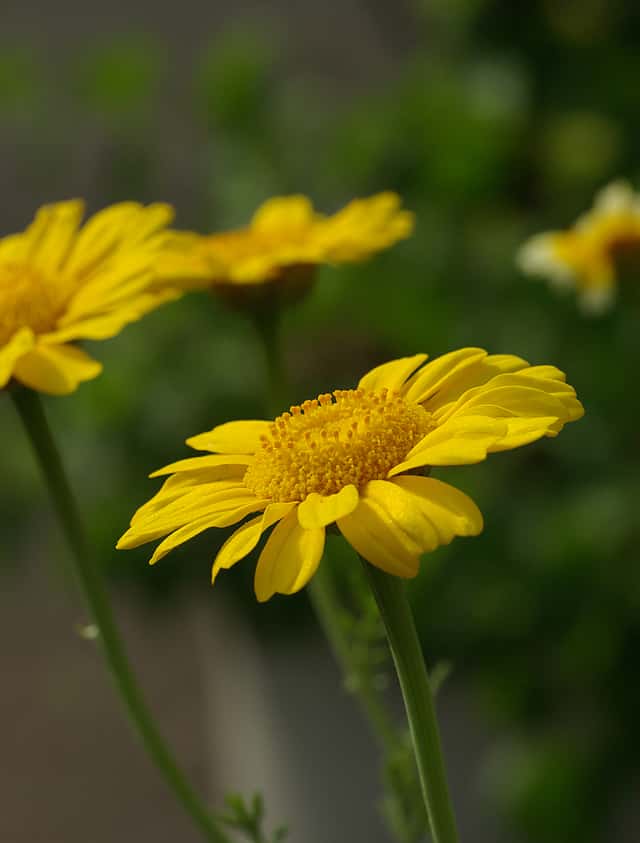
Garland chrysanthemum (Glebionis coronaria) is a easy-care plant from the Asteraceae family. Glebionis coronaria, the garland chrysanthemum, is an annual herb in the Asteraceae family native to the Mediterranean. It features aromatic, deeply serrated leaves and yellow to white daisy-like flowers. While grown as an ornamental garden plant, it is highly valued in East Asian cuisine as a leafy...
Garland chrysanthemum grows up to 1.0m, spread of 40cm, watering every 3 days, 10°C – 24°C, 40–60% humidity. It is not suitable for indoor environments and safe for pets.
Unlike many tropical plants, Garland chrysanthemum tolerates watering mistakes. Best for beginners. Unlike many popular species, Garland chrysanthemum is safe to keep around pets.
How to Care for Garland chrysanthemum?
TLDR: Garland chrysanthemum needs Direct sun, watering every 3 days, and temperatures between 10-24°C with 40-60% humidity.
How Often Should You Water Garland chrysanthemum?
Keep the soil evenly moist, but allow the top layer to dry slightly between waterings. Avoid waterlogged, soggy soil, which promotes root rot.
How Much Light Does Garland chrysanthemum Need?
Requires full sun, ideally at least 6 hours of direct sunlight per day. In shade, the plant becomes leggy and produces fewer blooms.
What Is the Best Soil for Garland chrysanthemum?
Prefers loose, well-drained loamy soil with a slightly acidic to neutral pH (6.0–7.0). It tolerates sandy, clay, or calcareous soils as long as good drainage is provided.
What Pot Should You Use for Garland chrysanthemum?
When growing in a container, choose a wider, shallower pot with drainage holes to allow the leafy vegetable's root system to develop; a terracotta pot is suitable as it helps wick away excess moisture.
Care Schedule
Fertilize
Every 35 days
What Is Garland chrysanthemum and Where Does It Come From?
Glebionis coronaria, the garland chrysanthemum, is an annual herb in the Asteraceae family native to the Mediterranean. It features aromatic, deeply serrated leaves and yellow to white daisy-like flowers. While grown as an ornamental garden plant, it is highly valued in East Asian cuisine as a leafy vegetable (Japanese shungiku, Chinese tong hao, Korean ssukgat) added to soups, stews, and salads.
How to Propagate Garland chrysanthemum?
Direct sowing of seeds
- Sow seeds shallowly, about 0.5–1 cm deep, as they need light to germinate
- Keep the soil evenly moist until germination
- Sow in spring when the risk of heavy frost has passed, or in fall in milder climates
- 1 Bed preparation
Prepare a sunny spot with loose, well-drained loamy soil and remove any weeds.
- 2 Sowing
Scatter seeds evenly and press gently into the surface, covering shallowly with a thin layer of soil.
- 3 Seedling care
Keep the substrate moist; once seedlings emerge, thin them to a distance of approximately 15–20 cm.
Materials needed:
Stem cuttings
- Root cuttings in moist substrate or in water in a bright spot without direct sun
- 1 Taking the cutting
Cut a healthy terminal shoot 8–10 cm long.
- 2 Rooting
Place in moist substrate or a glass of water and maintain high humidity.
- 3 Transplanting
Once roots have formed, transplant into a garden bed or a larger container.
Materials needed:
How Big Does Garland chrysanthemum Grow?
TLDR: Garland chrysanthemum can reach up to 1.0m tall with Fast growth rate.
Max height
1.0m
Spread
40cm
Growth rate
Fast
Foliage
Deciduous
Plant Uses
Ornamental
Great for decoration
Edible
Can be consumed
Medicinal
Medicinal properties
Medicinal Uses
- In traditional medicine, the leaves were used as a tonic for the liver, blood, and digestive tract
- Traditionally used to support the reduction of high blood pressure
- Contains flavonoids and antioxidants with anti-inflammatory and antibacterial properties
Culinary Uses
- Leaves are added to soups and stews (Japanese nabemono, sukiyaki)
- In Chinese cuisine, they are stir-fried or steamed in tong hao dishes
- In Korean cuisine, they are used in soups and as namul (ssukgat)
- Young leaves can be eaten raw in salads, while older leaves are better cooked to prevent bitterness
Is your plant showing symptoms?
Click on the symptom to discover possible causes:
What Diseases Commonly Affect Garland chrysanthemum?
TLDR: Garland chrysanthemum is susceptible to 5 known diseases. Monitor regularly for early detection.
Powdery Mildew
Powdery mildew is a common fungal disease caused by various fungi species including Erysiphe, Podosphaera, Oïdium, and Leveillula. It affects over 10,000 plant species worldwide. The disease thrives in warm, dry climates with high humidity and appears as a distinctive white powdery coating on plant surfaces.
Whiteflies
Whiteflies are small, soft-bodied, winged insects closely related to aphids and mealybugs. They are moth-like in appearance, about 1/16 inch long, triangular in shape, and gray-white in color. These sap-sucking pests feed on plant tissue, causing yellowing, stunted growth, and wilting. They also excrete honeydew, which attracts ants and promotes sooty mold growth. Whiteflies can transmit serious plant viruses.
Aphids
Aphids are small, soft-bodied, pear-shaped insects (1/16 to 1/8 inch long) that feed by sucking nutrient-rich sap from plants. They reproduce rapidly and can quickly weaken plants, causing distorted growth and transmitting plant viruses. Aphids come in various colors including green, black, red, yellow, brown, and gray. They secrete honeydew, a sticky substance that attracts ants and encourages sooty mold growth.
Slugs and Snails
Slugs and snails are mollusks that feed on plant tissue, causing irregular holes in leaves and damage to young seedlings. They are most active at night and in moist conditions, leaving characteristic silvery slime trails. These pests can quickly devastate gardens, especially during wet seasons.
Meaning & Symbolism
In Japan, it is called shungiku ("spring chrysanthemum") and is associated with the arrival of spring, renewal, and the simplicity of the home table. In Asian culture, chrysanthemums generally symbolize longevity, joy, and life force.
Compare with similar plants
| Attribute | Difficulty | Light | Watering | Pet Safe |
|---|---|---|---|---|
| Field Maple | Easy | Bright indirect | 14d | ✓ |
| Silver Birch | Easy | Direct sun | 14d | ✓ |
| Common Blanketflower | Easy | Direct sun | 10d | ✓ |
| Cushion Bush | Easy | Direct sun | 14d | ✓ |





