Asparagaceae
Dracaena stuckyi (Elephant Tusk)
Dracaena stuckyi
An extremely drought-tolerant succulent that thrives on neglect. Provide bright indirect light, water only when the soil is completely dry, and use a fast-draining succulent or cactus mix. Avoid overwatering, which is the leading cause of failure in this species.
Every 21 days
Bright indirect
10° - 29°C
30% - 50%
Categories
What is Elephant Tusk?
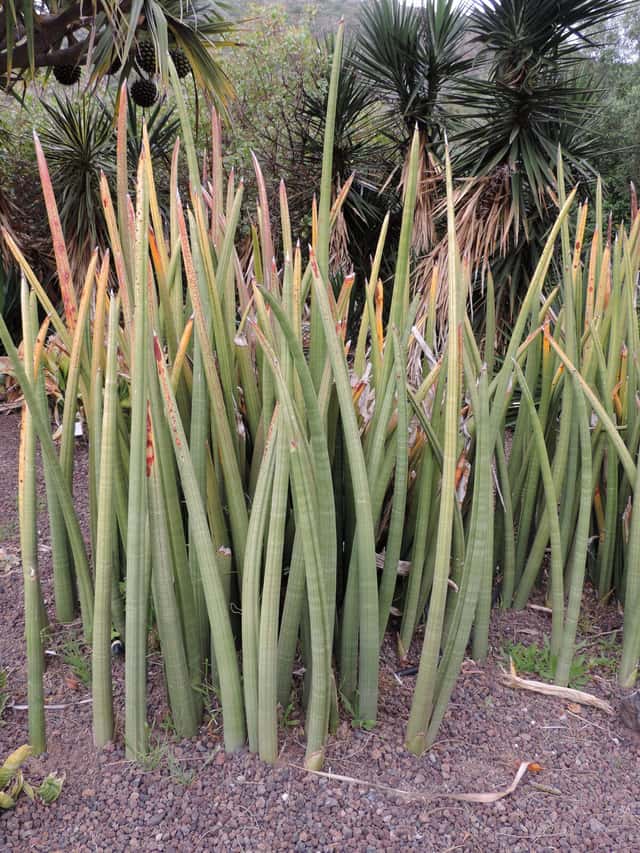
Elephant Tusk (Dracaena stuckyi) is a easy-care plant from the Asparagaceae family. Dracaena stuckyi, formerly classified as Sansevieria stuckyi, is a tree-like succulent native to the dry woodlands of East and Southern Africa (Kenya, Mozambique, Zimbabwe, and South Africa). Unlike the fan-shaped rosettes of common snake plants, it grows tall, cylindrical, gray-green leaves that ri...
Elephant Tusk grows up to 2.1m, watering every 21 days, 10°C – 29°C, 30–50% humidity. It is suitable for indoor environments and not safe for pets.
Unlike many tropical plants, Elephant Tusk tolerates watering mistakes. Best for beginners. Without precautions, ingestion can cause irritation in pets. Keep out of reach of cats and dogs. Without adequate drainage, root rot can develop within 42 days.
How to Care for Elephant Tusk?
TLDR: Elephant Tusk needs Bright indirect, watering every 21 days, and temperatures between 10-29°C with 30-50% humidity.
How Often Should You Water Elephant Tusk?
Let the soil dry out completely between waterings — roughly every 3 weeks in the growing season and even less often in winter. Always check the soil with a finger before watering.
How Much Light Does Elephant Tusk Need?
Place in bright, indirect light for the best growth and leaf color, though it tolerates low light. Avoid intense direct midday sun indoors, which can scorch the leaves.
What Is the Best Soil for Elephant Tusk?
Use a loose, well-draining mix such as a cactus or succulent blend amended with coarse sand or perlite to prevent waterlogging around the rhizome.
What Pot Should You Use for Elephant Tusk?
Terracotta or unglazed clay pots with drainage holes help wick away excess moisture and are ideal for this drought-tolerant succulent.
Care Schedule
Fertilize
Every 30 days
What Is Elephant Tusk and Where Does It Come From?
Dracaena stuckyi, formerly classified as Sansevieria stuckyi, is a tree-like succulent native to the dry woodlands of East and Southern Africa (Kenya, Mozambique, Zimbabwe, and South Africa). Unlike the fan-shaped rosettes of common snake plants, it grows tall, cylindrical, gray-green leaves that rise like spears or tusks directly from a thick rhizome, eventually reaching up to 2 meters in height. Reclassified into the genus Dracaena in 2017 following molecular studies, it is prized as a dramatic, low-maintenance architectural houseplant.
How to Propagate Elephant Tusk?
Division
Always use sterilized tools to prevent rot, and avoid watering newly divided plants for at least a week to let cut surfaces heal.
- 1 Remove the plant from its pot and gently shake off excess soil to expose the rhizome
- 2 Locate natural offsets or clumps with their own root system
- 3 Use a clean, sharp knife to cut the rhizome between sections, ensuring each division has roots attached
- 4 Let the cut surfaces callus over for 24-48 hours in a dry, shaded spot
- 5 Pot each division in well-draining succulent mix and water sparingly until new growth appears
Materials needed:
Leaf Cutting in Water
Cuttings may root but sometimes fail to produce true offsets with the parent variegation; division is more reliable for named cultivars.
- 1 Cut a healthy leaf near the base using a clean, sharp knife with an upside-down V-shaped cut to mark orientation
- 2 Allow the cut end to air-dry and callus for 2-4 days
- 3 Submerge the bottom third of the cutting in distilled water
- 4 Place in bright, indirect light and change the water weekly
- 5 Once roots and small plantlets form at the base, transplant into well-draining soil
Materials needed:
How Big Does Elephant Tusk Grow?
TLDR: Elephant Tusk can reach up to 2.1m tall with Slow growth rate.
Max height
2.1m
Growth rate
Slow
Foliage
Evergreen
Warning: Toxic Plant
This plant can be toxic if ingested. Keep out of reach of:
Plant Uses
Ornamental
Great for decoration
Is your plant showing symptoms?
Click on the symptom to discover possible causes:
What Diseases Commonly Affect Elephant Tusk?
TLDR: Elephant Tusk is susceptible to 8 known diseases. Monitor regularly for early detection.
Root Rot
Root rot is a serious fungal disease that affects the root system of plants, causing them to decay and die. It is primarily caused by overwatering, poor drainage, or soil-borne fungi such as Pythium, Phytophthora, Rhizoctonia, and Fusarium. The disease thrives in waterlogged conditions where roots are deprived of oxygen, making them susceptible to fungal infection.
Leaf Spot
Leaf spot is a common fungal disease caused by various pathogens including Alternaria, Ascochyta, Colletotrichum, Septoria, and Venturia. It primarily affects leaves, causing discolored spots that can lead to premature leaf drop if left untreated.
Powdery Mildew
Powdery mildew is a common fungal disease caused by various fungi species including Erysiphe, Podosphaera, Oïdium, and Leveillula. It affects over 10,000 plant species worldwide. The disease thrives in warm, dry climates with high humidity and appears as a distinctive white powdery coating on plant surfaces.
Mealybugs
Mealybugs are small, soft-bodied insects covered with a white, waxy, cottony material. They are common pests of houseplants and outdoor plants in mild climates. These sap-sucking insects feed on plant tissue, causing damage, stunted growth, and can lead to plant death if left untreated. They produce sticky honeydew which attracts sooty mold.
Fun Facts
Its cylindrical, spear-like leaves inspired the common name 'Elephant Tusk.'
The species was formally moved from Sansevieria to Dracaena in 2017 after DNA studies showed Sansevieria nested within Dracaena.
It rarely flowers indoors, but when it does, it produces fragrant, cream-colored blossoms on tall stalks.
A single thick leaf can be cut and rooted to grow an entirely new plant.
Frequently asked questions
Is Dracaena stuckyi toxic to cats and dogs?
How often should I water Dracaena stuckyi?
How tall does Dracaena stuckyi grow?
How do I propagate Dracaena stuckyi?
Does Dracaena stuckyi need a lot of light?
Compare with similar plants
| Attribute | Difficulty | Light | Watering | Pet Safe |
|---|---|---|---|---|
| Field Maple | Easy | Bright indirect | 14d | ✓ |
| Silver Birch | Easy | Direct sun | 14d | ✓ |
| Common Blanketflower | Easy | Direct sun | 10d | ✓ |
| Cushion Bush | Easy | Direct sun | 14d | ✓ |





