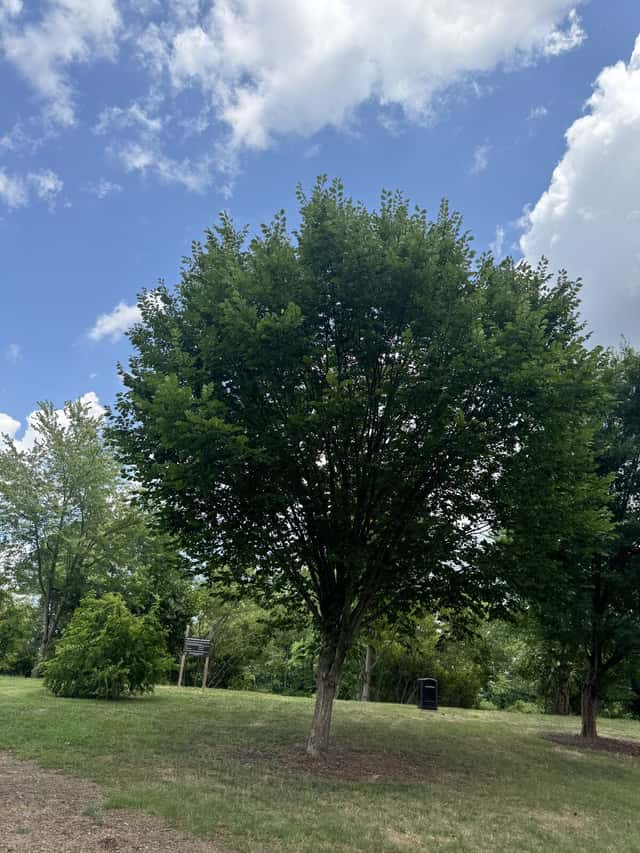
Ulmaceae
Elms (genus Ulmus)
Ulmus
A tree for streets, parks and big gardens. It wants full sun, free-draining soil and watering in dry spells while young. Once established it copes well with city life.
Every 10 days
Bright indirect
-35° - 38°C
% - %
Categories
What is Elms?
Elms (Ulmus) is a medium-care plant from the Ulmaceae family. Ulmus is the elm genus, deciduous or semi-deciduous trees in the family Ulmaceae. There are about 30 to 40 species across the temperate parts of North America, Europe and Asia. The leaves are alternate, double-toothed and lopsided at the base: one side starts lower than the other, the easiest way to...
Elms grows up to 30.0m, watering every 10 days, -35°C – 38°C. It is not suitable for indoor environments and safe for pets.
Unlike many popular species, Elms is safe to keep around pets.
How to Care for Elms?
TLDR: Elms needs Bright indirect, watering every 10 days, and temperatures between -35-38°C with 40-70% humidity.
How Often Should You Water Elms?
For the first two years, water every 7 to 10 days in dry weather, giving a deep soak. A mature tree only needs water in a long drought.
How Much Light Does Elms Need?
Full sun. In shade the crown thins and the tree leans towards the light.
What Is the Best Soil for Elms?
Grows in almost any soil, acid to chalky, as long as it drains. Most elms dislike ground that stays waterlogged in winter.
What Is Elms and Where Does It Come From?
Ulmus is the elm genus, deciduous or semi-deciduous trees in the family Ulmaceae. There are about 30 to 40 species across the temperate parts of North America, Europe and Asia. The leaves are alternate, double-toothed and lopsided at the base: one side starts lower than the other, the easiest way to tell an elm. In late winter, before the leaves, tufts of tiny reddish flowers with no petals appear. Then come the seeds, round flat discs with a thin papery wing that the wind carries off. American elm can top 30 metres. Most mature elms in Europe and North America died in recent decades from Dutch elm disease, and resistant cultivars are now planted instead. Chinese elm (Ulmus parvifolia) is one of the most popular bonsai trees.
How to Propagate Elms?
Seed
Elms do not set good seed every year; the best crops follow a warm spring. Disease-resistant cultivars only come true from cuttings or grafting, not seed.
- 1 Collect the winged seeds as soon as they turn pale brown in late spring
- 2 Sow straight away, as the seed of many elms loses viability within weeks
- 3 Cover with a very thin layer of soil
- 4 Keep moist and in part shade until seedlings appear
Materials needed:
Softwood cuttings
This is how Chinese elm and named garden cultivars are usually multiplied.
- 1 Take soft shoot tips 10 to 15 cm long in early summer
- 2 Strip the lower leaves and dip the base in rooting hormone
- 3 Insert in a light, moist mix
- 4 Keep humid under a plastic bag or propagator, out of direct sun
Materials needed:
How Big Does Elms Grow?
TLDR: Elms can reach up to 30.0m tall with Fast growth rate.
Max height
30.0m
Growth rate
Fast
Foliage
Deciduous
Plant Uses
Ornamental
Great for decoration
Medicinal
Medicinal properties
Medicinal Uses
- The inner bark of slippery elm (Ulmus rubra) is a traditional remedy for sore throats and upset stomachs
Is your plant showing symptoms?
Click on the symptom to discover possible causes:
What Diseases Commonly Affect Elms?
TLDR: Elms is susceptible to 9 known diseases. Monitor regularly for early detection.
Verticillium Wilt
Verticillium wilt is a soil-borne fungal disease caused primarily by the fungi Verticillium dahliae and V. albo-atrum. These pathogens infect plant roots and grow within the vascular tissues, blocking water and nutrient transport, resulting in wilting and eventual plant death. The disease affects over 350 plant species including vegetables, fruits, ornamental flowers, and trees. The fungi can survive in soil for more than 10 years as resistant structures called microsclerotia.
Phytoplasma
Canker
Canker is a disease caused by various fungi and bacteria that create necrotic, sunken areas on bark of branches, stems, and trunks. Pathogens enter through wounds and natural openings, especially when plants are stressed. Canker can gradually weaken or kill branches by disrupting water and nutrient flow.
Aphids
Aphids are small, soft-bodied, pear-shaped insects (1/16 to 1/8 inch long) that feed by sucking nutrient-rich sap from plants. They reproduce rapidly and can quickly weaken plants, causing distorted growth and transmitting plant viruses. Aphids come in various colors including green, black, red, yellow, brown, and gray. They secrete honeydew, a sticky substance that attracts ants and encourages sooty mold growth.
Fun Facts
Elm seeds are green and photosynthesise, feeding the tree before its leaves open.
A pound of English elm seed holds around 50,000 seeds.
Since about 1990, disease-resistant cultivars have brought elms back to streets in Europe and North America.
Frequently asked questions
How do I recognise an elm?
What is Dutch elm disease?
When should I prune an elm?
Can I grow an elm in a pot?
Compare with similar plants
| Attribute | Difficulty | Light | Watering | Pet Safe |
|---|---|---|---|---|
| Dark Fieldcap | Medium | Low light | 2d | ⚠️ |
| Azalea | Medium | Partial shade | 3d | ⚠️ |
| Muriel's Bamboo | Medium | Partial shade | 3d | ✓ |
| Bougainvillea | Medium | Direct sun | 7d | ⚠️ |




