Fagaceae
English Oak (Quercus robur)
Quercus robur
A very low-maintenance tree once established. Prefers full sun and moist, well-drained soil, and tolerates cold well and, once mature, periods of drought. Not suitable for pots or indoor growing given its eventual size.
Every 14 days
Direct sun
-25° - 35°C
30% - 70%
Categories
What is English Oak?
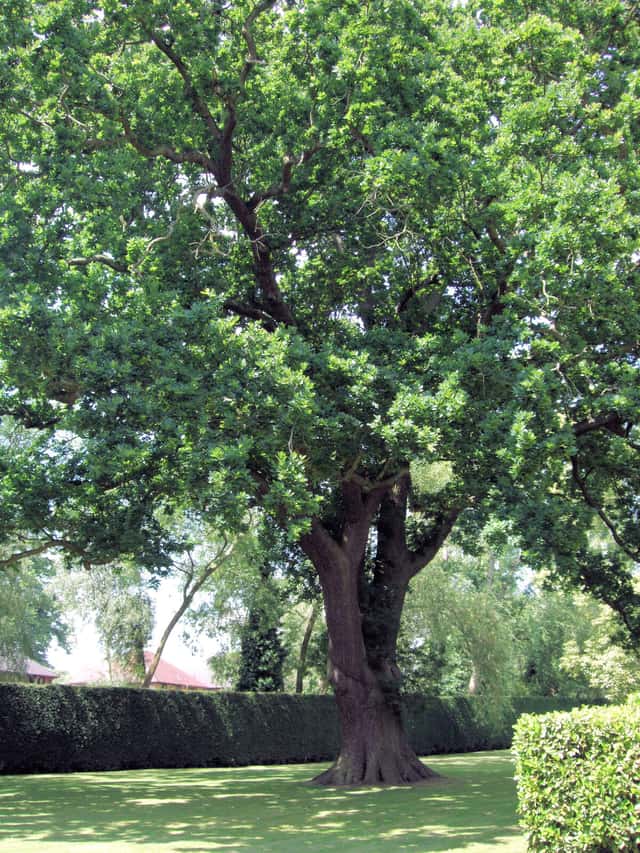
English Oak (Quercus robur) is a easy-care plant from the Fagaceae family. The English oak (Quercus robur) is a large deciduous tree native to Europe and parts of western Asia, belonging to the family Fagaceae. It can exceed 30 meters in both height and spread, with a broad, rounded crown, a stout trunk, and deeply furrowed bark. Its common name comes from the long stalks...
English Oak grows up to 30.0m, spread of 3000cm, watering every 14 days, -25°C – 35°C, 30–70% humidity. It is not suitable for indoor environments and not safe for pets.
Unlike many tropical plants, English Oak tolerates watering mistakes. Best for beginners. Without precautions, ingestion can cause irritation in pets. Keep out of reach of cats and dogs.
How to Care for English Oak?
TLDR: English Oak needs Direct sun, watering every 14 days, and temperatures between -25-35°C with 30-70% humidity.
How Often Should You Water English Oak?
Water regularly for the first 2-3 years after planting to help establish the root system; afterward, a mature tree usually relies on rainfall alone, except during prolonged drought.
How Much Light Does English Oak Need?
Plant in full sun with at least 6 hours of direct light daily. It tolerates partial shade when young but grows denser and healthier with full sun exposure.
What Is the Best Soil for English Oak?
Adapts to clay, sandy, or loamy soils, but performs best in deep, moist, well-drained loam with a pH between 4.5 and 8.5.
What Pot Should You Use for English Oak?
Not suitable for container growing given its mature size (up to 30 m); plant directly in the ground in a spacious, permanent location away from foundations and pipes.
What Is English Oak and Where Does It Come From?
The English oak (Quercus robur) is a large deciduous tree native to Europe and parts of western Asia, belonging to the family Fagaceae. It can exceed 30 meters in both height and spread, with a broad, rounded crown, a stout trunk, and deeply furrowed bark. Its common name comes from the long stalks (peduncles) that bear its acorns, a feature that distinguishes it from close relatives like the sessile oak (Quercus petraea). It is an extremely long-lived tree, capable of living for several centuries, and plays a vital ecological role, supporting hundreds of species of insects, fungi, and lichens.
How to Propagate English Oak?
Propagation by seed (acorn)
Acorns lose viability quickly if allowed to dry out, so plant them as soon as possible after collection. Choose a spacious permanent location early, since oaks develop a deep taproot and tolerate late transplanting poorly.
- 1 Collect ripe, viable acorns as soon as they drop in autumn, discarding any that float in water (a sign of insect damage)
- 2 Cold-stratify the acorns by storing them in slightly moist substrate in the refrigerator for 4-6 weeks
- 3 Plant acorns about 1 inch (2.5 cm) deep in deep pots or directly in the ground
- 4 Keep the substrate moist but never waterlogged until germination
- 5 Transplant the seedling to its permanent spot once it has an established root system, ideally within the first or second year
Materials needed:
How Big Does English Oak Grow?
TLDR: English Oak can reach up to 30.0m tall with Slow growth rate.
Max height
30.0m
Spread
30.0m
Growth rate
Slow
Foliage
Deciduous
Warning: Toxic Plant
This plant can be toxic if ingested. Keep out of reach of:
Plant Uses
Ornamental
Great for decoration
Medicinal
Medicinal properties
Edible
Can be consumed
Medicinal Uses
- Bark traditionally used as an astringent to treat diarrhea and inflammation
- Bark tea used externally for skin conditions and as a gargle
Culinary Uses
- Acorns edible after prolonged leaching to remove tannins, historically used as a coffee substitute or ground into flour
Is your plant showing symptoms?
Click on the symptom to discover possible causes:
What Diseases Commonly Affect English Oak?
TLDR: English Oak is susceptible to 7 known diseases. Monitor regularly for early detection.
Powdery Mildew
Powdery mildew is a common fungal disease caused by various fungi species including Erysiphe, Podosphaera, Oïdium, and Leveillula. It affects over 10,000 plant species worldwide. The disease thrives in warm, dry climates with high humidity and appears as a distinctive white powdery coating on plant surfaces.
Phytophthora Root Rot
Disease caused by fungus-like organisms (oomycetes) that live in soil and can survive for years. It affects roots, stem, and crown of plants, being especially severe in waterlogged or poorly drained soils. It is the second most common cause of root rot in trees and shrubs.
Canker
Canker is a disease caused by various fungi and bacteria that create necrotic, sunken areas on bark of branches, stems, and trunks. Pathogens enter through wounds and natural openings, especially when plants are stressed. Canker can gradually weaken or kill branches by disrupting water and nutrient flow.
Caterpillars
Caterpillars are the larval stage of moths and butterflies that feed voraciously on plant foliage, stems, flowers, and fruits. Common species include cabbage loopers, tomato hornworms, armyworms, and cutworms. These pests can cause extensive damage by consuming large amounts of plant tissue in a short time. They vary in size from small (1/4 inch) to large (5 inches), with colors ranging from green to brown, often featuring stripes or spots. Caterpillars are highly mobile and can quickly spread throughout gardens, making them one of the most destructive common pests.
Meaning & Symbolism
A symbol of strength, endurance, wisdom, and longevity; the English oak is the national tree of the United Kingdom and appears in coats of arms, coinage, and folklore across Europe as an emblem of protection and permanence.
Fun Facts
Can live for over 500 years, with some European specimens exceeding a thousand years old.
Its acorns only start forming once the tree is around 40 years old.
It is the national tree of the United Kingdom and a symbol of the Royal Navy.
A single mature oak can host hundreds of species of insects and lichens.
Frequently asked questions
How long does an English oak take to grow?
Are English oak acorns toxic to dogs and cats?
What soil does English oak prefer?
Does English oak need full sun?
What diseases most commonly affect English oak?
Compare with similar plants
| Attribute | Difficulty | Light | Watering | Pet Safe |
|---|---|---|---|---|
| Field Maple | Easy | Bright indirect | 14d | ✓ |
| Silver Birch | Easy | Direct sun | 14d | ✓ |
| Common Blanketflower | Easy | Direct sun | 10d | ✓ |
| Cushion Bush | Easy | Direct sun | 14d | ✓ |





