Arecaceae
European Fan Palm (Chamaerops humilis): Europe's Hardiest Native Palm
Chamaerops humilis
One of the hardiest and lowest-maintenance palms available. Requires full sun or very bright light, infrequent watering (every 7-14 days), well-draining sandy soil, and temperatures from -12°C to 40°C. Extremely slow-growing; becomes highly drought-tolerant once established.
Every 10 days
Direct sun
-12° - 40°C
30% - 60%
Categories
What is European Fan Palm?
European Fan Palm (Chamaerops humilis) is a easy-care plant from the Arecaceae family. Chamaerops humilis, commonly known as the European Fan Palm or Mediterranean Fan Palm, is the only palm species native to mainland Europe. Indigenous to the western Mediterranean basin — spanning Spain, Portugal, and North Africa — this slow-growing, clumping shrub palm is celebrated for its excepti...
European Fan Palm grows up to 5.0m, spread of 400cm, watering every 10 days, -12°C – 40°C, 30–60% humidity. It is suitable for indoor environments and safe for pets.
Unlike many tropical plants, European Fan Palm tolerates watering mistakes. Best for beginners. Unlike many popular species, European Fan Palm is safe to keep around pets. Without adequate drainage, root rot can develop within 20 days.
How to Care for European Fan Palm?
TLDR: European Fan Palm needs Direct sun, watering every 10 days, and temperatures between -12-40°C with 30-60% humidity.
How Often Should You Water European Fan Palm?
Water every 7-10 days in summer, allowing the top 2 inches of soil to dry between waterings. Reduce to every 14-21 days in winter. Avoid waterlogged soil — root rot is the most common problem. Use filtered or rain water if possible to avoid chlorine and fluoride buildup.
How Much Light Does European Fan Palm Need?
Place in full sun with at least 6 hours of direct sunlight daily. Indoors, position near a south- or west-facing window. Insufficient light will further slow its already very slow growth rate.
What Is the Best Soil for European Fan Palm?
Use a well-draining, sandy or loamy mix with a pH of 6.0–8.0. A blend of potting soil, coarse sand, and perlite works well. Tolerates calcareous and slightly saline soils. Avoid heavy clay that retains moisture.
What Pot Should You Use for European Fan Palm?
Terracotta or ceramic pot with large drainage holes. Outdoors, can be planted directly in the ground or in large containers. Avoid plastic pots that retain moisture.
Care Schedule
Fertilize
Every 60 days
Repot
Every 730 days
What Is European Fan Palm and Where Does It Come From?
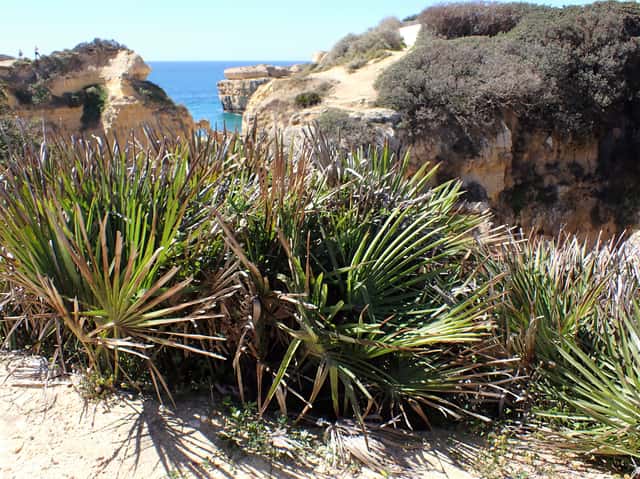
Chamaerops humilis, commonly known as the European Fan Palm or Mediterranean Fan Palm, is the only palm species native to mainland Europe. Indigenous to the western Mediterranean basin — spanning Spain, Portugal, and North Africa — this slow-growing, clumping shrub palm is celebrated for its exceptional hardiness: it tolerates frost down to -12°C, prolonged drought, and poor soils. Its striking silver-green fan-shaped fronds and multi-stemmed habit make it a prized specimen in Mediterranean gardens and a handsome indoor plant for bright spaces.
How to Propagate European Fan Palm?
Offset Division
Spring is the best time when the plant resumes growth. Ensure the offset has its own roots before separating. Do not overwater during establishment.
- 1 Identify a mature offset (sucker) at the base of the parent plant, at least 30 cm tall
- 2 Use a clean, sharp spade or knife to separate the offset together with its root system
- 3 Allow the cut to dry for 24 hours to prevent infection
- 4 Plant in well-draining sandy mix and water lightly
- 5 Keep in partial shade for the first few weeks until established
Materials needed:
Seed Propagation
Use fresh seeds for best germination rates. This is a slow process — do not let the substrate dry out completely.
- 1 Soak fresh seeds in warm water for 24-48 hours
- 2 Sow 1 cm deep in moist sandy substrate
- 3 Maintain temperature of 20-25°C and keep substrate slightly moist
- 4 Germination can take 2-6 months — patience is essential
- 5 Transplant when seedling reaches 10-15 cm in height
Materials needed:
How Big Does European Fan Palm Grow?
TLDR: European Fan Palm can reach up to 5.0m tall with Slow growth rate.
Max height
5.0m
Spread
4.0m
Growth rate
Slow
Foliage
Evergreen
Plant Uses
Ornamental
Great for decoration
Is your plant showing symptoms?
Click on the symptom to discover possible causes:
What Diseases Commonly Affect European Fan Palm?
TLDR: European Fan Palm is susceptible to 10 known diseases. Monitor regularly for early detection.
Root Rot
Root rot is a serious fungal disease that affects the root system of plants, causing them to decay and die. It is primarily caused by overwatering, poor drainage, or soil-borne fungi such as Pythium, Phytophthora, Rhizoctonia, and Fusarium. The disease thrives in waterlogged conditions where roots are deprived of oxygen, making them susceptible to fungal infection.
Phytophthora Root Rot
Disease caused by fungus-like organisms (oomycetes) that live in soil and can survive for years. It affects roots, stem, and crown of plants, being especially severe in waterlogged or poorly drained soils. It is the second most common cause of root rot in trees and shrubs.
Overwatering
Overwatering occurs when plants receive too much water, depriving roots of oxygen and causing root rot. This environmental stress is one of the most common causes of houseplant death, as waterlogged soil prevents roots from breathing and functioning properly.
Scale Insects
Scale insects are small sap-sucking pests that appear as brown, shell-like bumps on plant stems and leaves. There are over 25 species, divided into armored (hard) and unarmored (soft) scales. They feed by piercing plant tissue and extracting sap, which weakens the plant and can lead to yellowing, stunted growth, and even death if left untreated. They also excrete honeydew, which attracts ants and promotes sooty mold growth.
Meaning & Symbolism
A symbol of Mediterranean resilience and longevity. As the only palm native to European mainland soil, it represents the ancient flora of the Mediterranean landscape and the enduring beauty of sun-drenched coastlines.
Fun Facts
It is the only palm species native to mainland Europe
Some specimens in Spain are over 200 years old, making it one of the longest-lived ornamental palms
The young leaf buds are edible — the harvested heart of palm is a traditional ingredient in Mediterranean cuisine
It tolerates frost down to -12°C, an exceptional trait among palm species
Frequently asked questions
How often should I water a European Fan Palm?
Can Chamaerops humilis survive frost?
Can I grow a European Fan Palm indoors?
Why are the leaves of my European Fan Palm turning yellow?
How fast does a European Fan Palm grow?
Compare with similar plants
| Attribute | Difficulty | Light | Watering | Pet Safe |
|---|---|---|---|---|
| Field Maple | Easy | Bright indirect | 14d | ✓ |
| Silver Birch | Easy | Direct sun | 14d | ✓ |
| Common Blanketflower | Easy | Direct sun | 10d | ✓ |
| Cushion Bush | Easy | Direct sun | 14d | ✓ |





