Begoniaceae
Exotica Begonia (Begonia brevirimosa) Care Guide
Begonia brevirimosa
Exotica Begonia thrives in bright, indirect light, high humidity (60-80%), and consistently moist but well-draining soil. Let the top of the soil dry slightly between waterings and avoid wetting the textured leaves to prevent fungal issues. Feed lightly during the growing season and repot annually as the plant fills its pot.
Every 9 days
Partial shade
16° - 29°C
50% - 80%
Categories
What is Exotica Begonia?
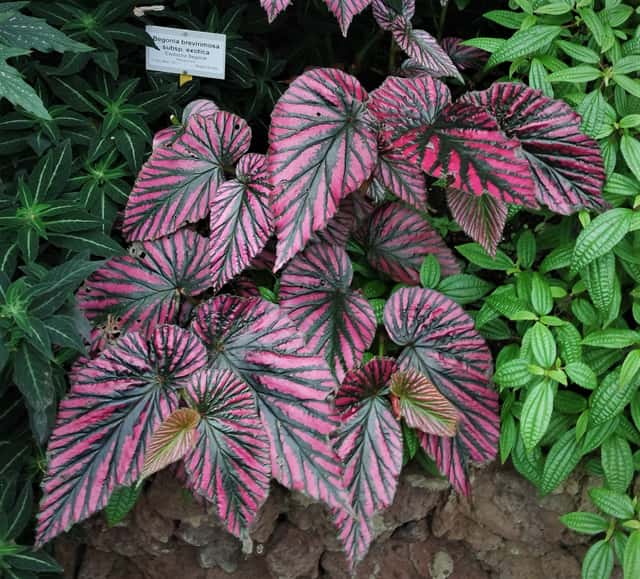
Exotica Begonia (Begonia brevirimosa) is a medium-care plant from the Begoniaceae family. Begonia brevirimosa is a striking rhizomatous species native to the rainforest understories of Papua New Guinea, prized for its large, elliptic leaves splashed with iridescent bands of fuchsia pink and deep olive green. Grown mainly as a foliage houseplant, it produces small pink flowers on terminal...
Exotica Begonia grows up to 60cm, spread of 60cm, watering every 9 days, 16°C – 29°C, 50–80% humidity. It is suitable for indoor environments and not safe for pets.
Without precautions, ingestion can cause irritation in pets. Keep out of reach of cats and dogs. Without adequate drainage, root rot can develop within 18 days.
How to Care for Exotica Begonia?
TLDR: Exotica Begonia needs Partial shade, watering every 9 days, and temperatures between 16-29°C with 50-80% humidity.
How Often Should You Water Exotica Begonia?
Water when the top 2-3 cm of soil feels dry, roughly every 9 days in the growing season and monthly in winter. Always water at the base to keep moisture off the leaves.
How Much Light Does Exotica Begonia Need?
Place within a few feet of an east- or west-facing window for bright, indirect light. Direct sun scorches the leaves, while too little light causes leggy growth and leaf drop.
What Is the Best Soil for Exotica Begonia?
Use a chunky, well-draining mix of orchid bark, potting soil, and perlite to mimic its native forest-floor habitat and prevent waterlogged roots.
What Pot Should You Use for Exotica Begonia?
A terracotta or nursery pot with ample drainage holes; terrariums or humidity domes suit it especially well.
Care Schedule
Fertilize
Every 21 days
Repot
Every 365 days
What Is Exotica Begonia and Where Does It Come From?
Begonia brevirimosa is a striking rhizomatous species native to the rainforest understories of Papua New Guinea, prized for its large, elliptic leaves splashed with iridescent bands of fuchsia pink and deep olive green. Grown mainly as a foliage houseplant, it produces small pink flowers on terminal clusters when light and humidity are ample. Its shrub-like habit and vividly patterned leaves make it a standout in humid terrariums, greenhouses, and bright indoor spaces.
How to Propagate Exotica Begonia?
Stem Cutting
Change the water every few days if rooting in water, and transition gradually to soil once roots appear.
- 1 Cut a healthy stem section with at least one node using clean, sharp scissors
- 2 Let the cut end callus for a few hours in a dry spot
- 3 Place the cutting in water or moist, well-draining substrate
- 4 Keep in bright, indirect light and high humidity until roots form
- 5 Pot up once roots reach 2-3 cm long
Materials needed:
Leaf Cutting
Keep the environment humid but not soggy, and provide bright, indirect light to speed rooting.
- 1 Select a healthy leaf and cut it into sections with visible veins
- 2 Lay the pieces on moist paper towel or substrate
- 3 Seal in a clear bag or propagation box to keep humidity high
- 4 Mist lightly and check regularly for mold
- 5 Transplant plantlets once small roots and leaves appear
Materials needed:
How Big Does Exotica Begonia Grow?
TLDR: Exotica Begonia can reach up to 60cm tall with Medium growth rate.
Max height
60cm
Spread
60cm
Growth rate
Medium
Foliage
Evergreen
Warning: Toxic Plant
This plant can be toxic if ingested. Keep out of reach of:
Plant Uses
Ornamental
Great for decoration
Is your plant showing symptoms?
Click on the symptom to discover possible causes:
What Diseases Commonly Affect Exotica Begonia?
TLDR: Exotica Begonia is susceptible to 10 known diseases. Monitor regularly for early detection.
Powdery Mildew
Powdery mildew is a common fungal disease caused by various fungi species including Erysiphe, Podosphaera, Oïdium, and Leveillula. It affects over 10,000 plant species worldwide. The disease thrives in warm, dry climates with high humidity and appears as a distinctive white powdery coating on plant surfaces.
Bacterial Leaf Spot
Bacterial leaf spot is a plant disease caused by bacteria in the Xanthomonas and Pseudomonas genera that affects various ornamental and edible plants. The bacteria infect leaves through wounds or natural openings, causing characteristic lesions that can lead to premature leaf drop and plant weakening.
Root Rot
Root rot is a serious fungal disease that affects the root system of plants, causing them to decay and die. It is primarily caused by overwatering, poor drainage, or soil-borne fungi such as Pythium, Phytophthora, Rhizoctonia, and Fusarium. The disease thrives in waterlogged conditions where roots are deprived of oxygen, making them susceptible to fungal infection.
Spider Mites
Spider mites are tiny arachnids (less than 1/20 inch long) related to spiders and ticks that feed on plant sap. They thrive in hot, dry conditions and can cause significant damage to ornamental and vegetable plants. During severe infestations, crop losses can reach 14% or higher as these pests disrupt vital plant processes including photosynthesis, carbon dioxide absorption, and transpiration.
Meaning & Symbolism
In the language of flowers, begonias represent caution and individuality - fitting for a species whose vividly patterned leaves are entirely one of a kind.
Fun Facts
Its leaves shift from fuchsia pink to deep burgundy depending on the angle and intensity of light.
Begonia brevirimosa was first described from the rainforests of Papua New Guinea and the Bismarck Archipelago.
The 'exotica' form is prized in terrarium culture for its compact, jewel-toned foliage.
Frequently asked questions
Is Exotica Begonia toxic to pets?
How much humidity does Begonia brevirimosa need?
Why are my Begonia brevirimosa leaves losing color?
How do I propagate Exotica Begonia?
Compare with similar plants
| Attribute | Difficulty | Light | Watering | Pet Safe |
|---|---|---|---|---|
| Dark Fieldcap | Medium | Low light | 2d | ⚠️ |
| Azalea | Medium | Partial shade | 3d | ⚠️ |
| Muriel's Bamboo | Medium | Partial shade | 3d | ✓ |
| Bougainvillea | Medium | Direct sun | 7d | ⚠️ |
Choose & Compare
Sources & References
- How to Grow and Care for Exotica begonia - PictureThis
- Exotica Begonia: How Much Water & Light Does it Need to Thrive? - Greg App
- Begonia Brevirimosa Care - Things You Didn't Know - Plantophiles
- Begonia brevirimosa - Wikipedia
- Begonia brevirimosa subsp. exotica Tebbitt - Plants of the World Online, Kew Science
- Exotica Begonia - Plant Addicts
- Begonia brevirimosa subsp. exotica - Gabriella Plants
- Common Begonia Problems (Diseases and Pests) - The Practical Planter




