Asparagaceae
Maianthemum: False Lily of the Valley Care Guide
Maianthemum
Grow in part to full shade in consistently moist, humus-rich, well-draining soil. Water regularly through the growing season and keep the soil evenly moist -- most species dislike drying out completely. Essentially free of serious pests and diseases, making it an easy, low-maintenance woodland groundcover.
Every 7 days
Low light
10° - 24°C
50% - 70%
Categories
What is False Lily of the Valley?
False Lily of the Valley (Maianthemum) is a easy-care plant from the Asparagaceae family. Maianthemum is a genus of 35+ rhizomatous woodland perennials in the asparagus family (Asparagaceae, subfamily Nolinoideae), native across North America, Europe, and East Asia. This is a GENUS-level profile covering multiple species -- including M. racemosum (False Solomon's Seal, North America) and...
False Lily of the Valley grows up to 45cm, spread of 45cm, watering every 7 days, 10°C – 24°C, 50–70% humidity. It is not suitable for indoor environments and not safe for pets.
Unlike many tropical plants, False Lily of the Valley tolerates watering mistakes. Best for beginners. Without precautions, ingestion can cause irritation in pets. Keep out of reach of cats and dogs.
How to Care for False Lily of the Valley?
TLDR: False Lily of the Valley needs Low light, watering every 7 days, and temperatures between 10-24°C with 50-70% humidity.
How Often Should You Water False Lily of the Valley?
Keep soil evenly moist in spring and summer, watering about once a week during dry spells. Reduce watering in winter while plants are dormant.
How Much Light Does False Lily of the Valley Need?
Best in part shade to full shade, such as beneath a deciduous tree canopy. Avoid direct hot sun, which can scorch the leaves.
What Is the Best Soil for False Lily of the Valley?
Use loose, humus-rich soil that drains well but retains moisture -- amend with compost or leaf mold for best results.
What Is False Lily of the Valley and Where Does It Come From?
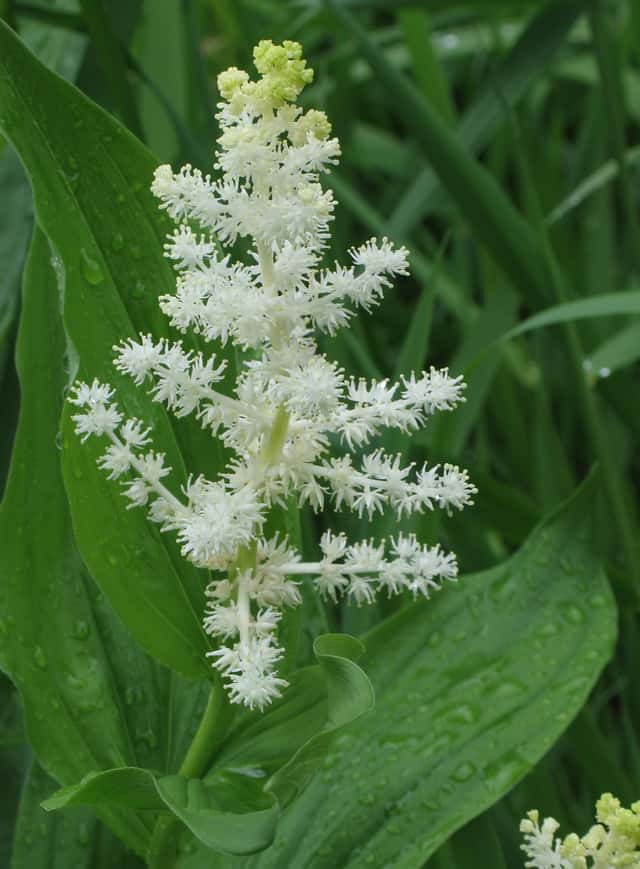
Maianthemum is a genus of 35+ rhizomatous woodland perennials in the asparagus family (Asparagaceae, subfamily Nolinoideae), native across North America, Europe, and East Asia. This is a GENUS-level profile covering multiple species -- including M. racemosum (False Solomon's Seal, North America) and M. bifolium (May Lily, Europe/Asia) -- rather than a single species. Plants spread slowly into colonies via thick creeping rhizomes, bearing heart-shaped to lance-shaped leaves and clusters of small white star-shaped flowers followed by red berries in fall.
How to Propagate False Lily of the Valley?
Rhizome Division
Divide only well-established colonies; young plants resent disturbance. Keep divisions consistently moist until new growth appears in spring.
- 1 In early autumn, dig up an established clump after flowering has finished.
- 2 Gently separate the thick creeping rhizomes into sections, each with at least one growing point.
- 3 Replant divisions immediately at the same depth in moist, humus-rich shaded soil.
- 4 Water well and mulch lightly to retain moisture through winter.
Materials needed:
Seed Propagation
Seed propagation is slow and unreliable -- division is the preferred method for most gardeners.
- 1 Collect ripe red berries in late summer to fall and remove the pulp.
- 2 Sow fresh seed immediately in pots of moist, humus-rich soil, as seed loses viability quickly if dried.
- 3 Place pots outdoors in a shaded cold frame to receive winter chilling (stratification).
- 4 Keep soil moist; germination can take one to two years and seedlings are slow to reach flowering size.
Materials needed:
How Big Does False Lily of the Valley Grow?
TLDR: False Lily of the Valley can reach up to 45cm tall with Slow growth rate.
Max height
45cm
Spread
45cm
Growth rate
Slow
Foliage
Deciduous
Warning: Toxic Plant
This plant can be toxic if ingested. Keep out of reach of:
Plant Uses
Ornamental
Great for decoration
Ground Cover
Soil coverage
Is your plant showing symptoms?
Click on the symptom to discover possible causes:
What Diseases Commonly Affect False Lily of the Valley?
TLDR: False Lily of the Valley is susceptible to 3 known diseases. Monitor regularly for early detection.
Powdery Mildew
Powdery mildew is a common fungal disease caused by various fungi species including Erysiphe, Podosphaera, Oïdium, and Leveillula. It affects over 10,000 plant species worldwide. The disease thrives in warm, dry climates with high humidity and appears as a distinctive white powdery coating on plant surfaces.
Aphids
Aphids are small, soft-bodied, pear-shaped insects (1/16 to 1/8 inch long) that feed by sucking nutrient-rich sap from plants. They reproduce rapidly and can quickly weaken plants, causing distorted growth and transmitting plant viruses. Aphids come in various colors including green, black, red, yellow, brown, and gray. They secrete honeydew, a sticky substance that attracts ants and encourages sooty mold growth.
Slugs and Snails
Slugs and snails are mollusks that feed on plant tissue, causing irregular holes in leaves and damage to young seedlings. They are most active at night and in moist conditions, leaving characteristic silvery slime trails. These pests can quickly devastate gardens, especially during wet seasons.
Fun Facts
The genus name comes from Greek "Maios" (May) and "anthemon" (flower), referring to its spring bloom time.
Maianthemum absorbed the former genus Smilacina after DNA studies showed they were the same lineage.
Its red berries are eaten by birds, which help disperse the seeds.
Frequently asked questions
Is Maianthemum toxic to pets?
How much sun does Maianthemum need?
How fast does Maianthemum spread?
What is the difference between Maianthemum and true lily of the valley?
Compare with similar plants
| Attribute | Difficulty | Light | Watering | Pet Safe |
|---|---|---|---|---|
| Field Maple | Easy | Bright indirect | 14d | ✓ |
| Silver Birch | Easy | Direct sun | 14d | ✓ |
| Common Blanketflower | Easy | Direct sun | 10d | ✓ |
| Cushion Bush | Easy | Direct sun | 14d | ✓ |
Choose & Compare
Sources & References
- Maianthemum racemosum - NC State Extension Plant Toolbox
- Maianthemum bifolium - Missouri Botanical Garden Plant Finder
- Maianthemum racemosum - Missouri Botanical Garden Plant Finder
- May lily (Maianthemum bifolium) Care Guide - ForwardPlant
- False lily of the valley (Maianthemum bifolium) - Walnut Lane Gardens
- Maianthemum racemosum - Online Flower Garden
- Phylogeny and biogeography of Maianthemum (Asparagaceae: Nolinoideae) - PMC
- Maianthemum - Wikipedia





