Equisetaceae
Field Horsetail (Equisetum arvense)
Equisetum arvense
Low-maintenance and extremely hardy, field horsetail thrives in consistently moist to wet, loamy soil in full sun to partial shade. It spreads aggressively via deep rhizomes, so it is best grown in a contained bed, bottomless bog pot, or large container with a water-filled saucer.
Every 2 days
Bright indirect
15° - 25°C
60% - 90%
Categories
What is Field Horsetail?
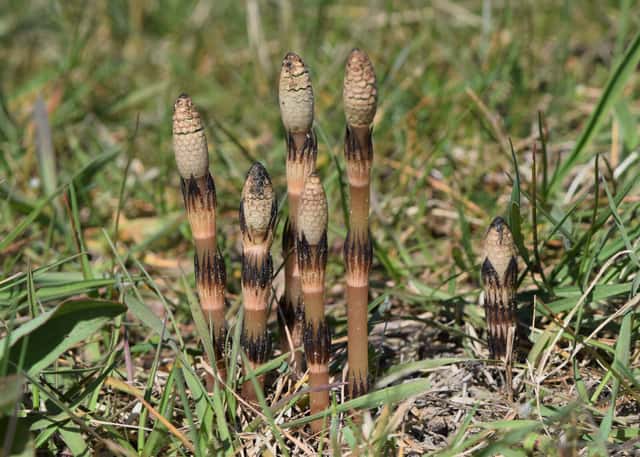
Field Horsetail (Equisetum arvense) is a easy-care plant from the Equisetaceae family. Field horsetail (Equisetum arvense) is an ancient, non-flowering perennial in the Equisetaceae family, part of a plant lineage that predates the dinosaurs. It produces two types of stems: pale, unbranched fertile stems that appear in early spring and bear spore cones, followed by bushy green sterile...
Field Horsetail grows up to 90cm, watering every 2 days, 15°C – 25°C, 60–90% humidity. It is suitable for indoor environments and safe for pets.
Unlike many tropical plants, Field Horsetail tolerates watering mistakes. Best for beginners. Unlike many popular species, Field Horsetail is safe to keep around pets. Without adequate drainage, root rot can develop within 7 days.
How to Care for Field Horsetail?
TLDR: Field Horsetail needs Bright indirect, watering every 2 days, and temperatures between 15-25°C with 60-90% humidity.
How Often Should You Water Field Horsetail?
Keep the soil constantly moist to wet - never let it dry out completely. In containers, stand the pot in a saucer with a few centimeters of water and replenish regularly.
How Much Light Does Field Horsetail Need?
Grows well in full sun to partial shade; more sun encourages denser, greener growth.
What Is the Best Soil for Field Horsetail?
Prefers rich, loamy soil that holds moisture well, with a neutral to slightly alkaline pH (6.0-8.0). Tolerates poor, sandy, or clay soils as long as moisture is consistent.
What Pot Should You Use for Field Horsetail?
Use a bottomless container sunk into the ground, or a solid pot without drainage paired with a deep saucer, to retain the constant moisture horsetail needs while containing its invasive rhizomes.
What Is Field Horsetail and Where Does It Come From?
Field horsetail (Equisetum arvense) is an ancient, non-flowering perennial in the Equisetaceae family, part of a plant lineage that predates the dinosaurs. It produces two types of stems: pale, unbranched fertile stems that appear in early spring and bear spore cones, followed by bushy green sterile stems with whorled branches that persist through summer. Rich in silica, its hollow, jointed stems were historically used to scour pots and polish metal. A vigorous, deep-rooted rhizomatous spreader, it is considered a persistent weed in gardens and farmland but is also valued as a traditional medicinal herb.
How to Propagate Field Horsetail?
Rhizome Division
Wear gloves when handling rhizomes since horsetail spreads aggressively; contain divisions in a bottomless pot sunk into the ground or a bog container to prevent unwanted spread.
- 1 Dig up a section of rhizome with attached stems and roots
- 2 Cut the rhizome into segments, each with at least one node
- 3 Plant segments 5-10 cm deep in consistently moist, loamy soil
- 4 Keep soil saturated until new shoots emerge
Materials needed:
Spore Propagation
Spores are short-lived (viable for only a few hours to days), so sow them the same day they are collected. This method is mainly used by botanists and is impractical for home gardeners.
- 1 Collect ripe, off-white fertile stems with spore cones in early spring
- 2 Tap the cones over paper to release the green spores
- 3 Sow spores immediately onto sterile, damp compost since they lose viability within hours
- 4 Keep the tray covered and constantly moist under bright, indirect light
Materials needed:
How Big Does Field Horsetail Grow?
TLDR: Field Horsetail can reach up to 90cm tall with Fast growth rate.
Max height
90cm
Growth rate
Fast
Foliage
Deciduous
Warning: Toxic Plant
This plant can be toxic if ingested. Keep out of reach of:
Plant Uses
Medicinal
Medicinal properties
Edible
Can be consumed
Medicinal Uses
- Traditional diuretic for mild fluid retention
- Used in folk medicine for urinary tract and kidney support
- Astringent for minor wound care
- Silica-rich supplement traditionally used for hair, nail, skin and bone/connective tissue support
- Anti-inflammatory herbal infusions for rheumatism and gout
Culinary Uses
- Young spring fertile shoots can be peeled and thoroughly boiled before eating in some cultures, though this is uncommon and requires caution due to thiaminase content
Is your plant showing symptoms?
Click on the symptom to discover possible causes:
Meaning & Symbolism
As one of the oldest plant genera on Earth - a living relic of forests that existed alongside dinosaurs over 300 million years ago - horsetail is often seen as a symbol of resilience, endurance, and ancient wisdom.
Fun Facts
Horsetails are "living fossils" - their ancestors were tree-sized plants that formed forests over 300 million years ago, long before the dinosaurs.
Because of its high silica content, dried horsetail stems were historically used to scour pots and polish pewter, earning it the nickname "scouring rush".
It reproduces entirely through spores, with no flowers or seeds involved.
Its rhizomes can burrow up to 2 meters underground, making it nearly impossible to eradicate once established.
Frequently asked questions
Does field horsetail produce flowers?
Is field horsetail toxic?
How do I stop horsetail from spreading?
What is horsetail traditionally used for?
Compare with similar plants
| Attribute | Difficulty | Light | Watering | Pet Safe |
|---|---|---|---|---|
| Field Maple | Easy | Bright indirect | 14d | ✓ |
| Silver Birch | Easy | Direct sun | 14d | ✓ |
| Common Blanketflower | Easy | Direct sun | 10d | ✓ |
| Cushion Bush | Easy | Direct sun | 14d | ✓ |
Choose & Compare
Sources & References
- Equisetum arvense - Wikipedia
- Equisetum arvense (Common Horsetail) | NC State Extension Gardener Plant Toolbox
- Equisetum arvense (horsetail): complete care and use guide
- Equisetum arvense Field Horsetail - PFAF Plant Database
- Toxic and Non-toxic Plants: Field Horsetail - ASPCA
- Thiaminase-Containing Plants and Other Substances - IVIS
- Common Horsetail (Equisetum Arvense) Care Guide - Plantiary





