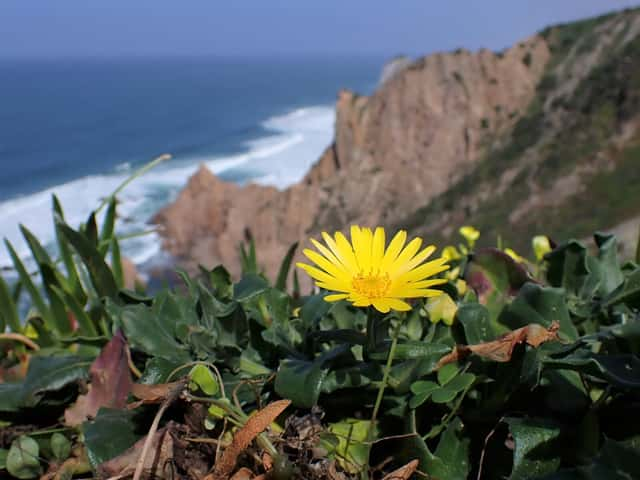
Asteraceae
Field Marigold: Complete Care Guide
Calendula arvensis
Grow in full sun or partial shade in any well-drained soil, even a poor one. It tolerates drought and flowers best in lean soil. Sow directly outdoors in spring and deadhead regularly to extend flowering.
Every 7 days
Bright indirect
° - °C
% - %
Categories
What is Field marigold?
Field marigold (Calendula arvensis) is a easy-care plant from the Asteraceae family. Field marigold (Calendula arvensis) is a wild annual marigold in the daisy family, native to southern and central Europe, North Africa and the Middle East. It forms clumps 10 to 50 cm tall with hairy, lance-shaped leaves and small bright yellow to yellow-orange flower heads up to 4 cm across, produc...
Field marigold grows up to 50cm, spread of 50cm, watering every 7 days. It is not suitable for indoor environments and safe for pets.
Unlike many tropical plants, Field marigold tolerates watering mistakes. Best for beginners. Unlike many popular species, Field marigold is safe to keep around pets.
How to Care for Field marigold?
TLDR: Field marigold needs Bright indirect, watering every 7 days, and temperatures between 15-30°C with 40-70% humidity.
How Often Should You Water Field marigold?
Water about once a week when the soil is dry a few centimetres down. Once established it tolerates dry soil; avoid waterlogging.
How Much Light Does Field marigold Need?
Full sun is ideal; it tolerates partial shade but flowers less in low light.
What Is the Best Soil for Field marigold?
Any well-drained sandy or loamy soil, acid, neutral or alkaline. It flowers best in poor soil without fertiliser.
What Pot Should You Use for Field marigold?
Pot or window box with drainage holes and a gritty mix; it does best sown straight into a border
What Is Field marigold and Where Does It Come From?
Field marigold (Calendula arvensis) is a wild annual marigold in the daisy family, native to southern and central Europe, North Africa and the Middle East. It forms clumps 10 to 50 cm tall with hairy, lance-shaped leaves and small bright yellow to yellow-orange flower heads up to 4 cm across, produced from spring into autumn. It grows on its own in fields, vineyards, roadsides and dry ground, and self-sows freely.
How to Propagate Field marigold?
Seed
It self-sows readily; leave a few flower heads to set seed if you want it to come back next year.
- 1 Prepare a fine, level seedbed
- 2 Sow directly outdoors about 0.5 cm deep in spring or autumn
- 3 Keep the soil lightly moist until the seedlings appear
- 4 Thin the seedlings to give each plant room
Materials needed:
How Big Does Field marigold Grow?
TLDR: Field marigold can reach up to 50cm tall with Fast growth rate.
Max height
50cm
Spread
50cm
Growth rate
Fast
Plant Uses
Ornamental
Great for decoration
Edible
Can be consumed
Medicinal
Medicinal properties
Medicinal Uses
- Leaves traditionally used as a diaphoretic
- Flowers traditionally used much like pot marigold (Calendula officinalis) for skin complaints
Culinary Uses
- Young shoots and leaves, raw or cooked
- Pickled flower heads
Is your plant showing symptoms?
Click on the symptom to discover possible causes:
What Diseases Commonly Affect Field marigold?
TLDR: Field marigold is susceptible to 3 known diseases. Monitor regularly for early detection.
Powdery Mildew
Powdery mildew is a common fungal disease caused by various fungi species including Erysiphe, Podosphaera, Oïdium, and Leveillula. It affects over 10,000 plant species worldwide. The disease thrives in warm, dry climates with high humidity and appears as a distinctive white powdery coating on plant surfaces.
Aphids
Aphids are small, soft-bodied, pear-shaped insects (1/16 to 1/8 inch long) that feed by sucking nutrient-rich sap from plants. They reproduce rapidly and can quickly weaken plants, causing distorted growth and transmitting plant viruses. Aphids come in various colors including green, black, red, yellow, brown, and gray. They secrete honeydew, a sticky substance that attracts ants and encourages sooty mold growth.
Viruses
Viral diseases are infectious conditions caused by tiny intracellular parasites that require host cells to survive. Viruses are typically transmitted to plants by insects and mites. Some viruses are severe plant pathogens, such as Rose Rosette Virus or Tobacco Rattle Virus.
Fun Facts
It produces three different kinds of seed-like fruit: some travel far, others drop close to the parent plant.
It is treated as a weed in vineyards and rangelands in several countries, including California.
Its strong smell seems to put off grazing animals.
Frequently asked questions
How is field marigold different from pot marigold?
How often should I water field marigold?
Is field marigold toxic?
What pests affect field marigold?
Compare with similar plants
| Attribute | Difficulty | Light | Watering | Pet Safe |
|---|---|---|---|---|
| Field Maple | Easy | Bright indirect | 14d | ✓ |
| Iberian Houseleek | Easy | Direct sun | 14d | ✓ |
| Silver Birch | Easy | Direct sun | 14d | ✓ |
| Common Blanketflower | Easy | Direct sun | 10d | ✓ |





