Saxifragaceae
Chestnut-leaf Rodgersia: Ground Cover Plant
Rodgersia aesculifolia
Chestnut-leaf Rodgersia is a relatively easy-care perennial as long as it receives its essential needs: consistently moist, nutrient-rich soil and shelter from drying winds. It thrives best in partial to full shade but can tolerate sun if the soil is kept moist. Water regularly during dry periods, fertilize in spring and again mid-season, and cut back flower stalks after blooming. Slugs are the most common pest, while fungal diseases such as powdery mildew, leaf spot, and root rot rarely occur.
Every 3 days
Partial shade
-20° - 30°C
60% - 90%
Categories
What is Chestnut-leaf Rodgersia?
Chestnut-leaf Rodgersia (Rodgersia aesculifolia) is a medium-care plant from the Saxifragaceae family. Chestnut-leaf Rodgersia is a large, clump-forming perennial with creeping rhizomes, native to moist forests and stream banks in Northern China. Its palmate leaves can grow up to 40 cm long, are deeply lobed with 5–9 coarsely toothed leaflets resembling chestnut leaves, and have a bronze sheen when y...
Chestnut-leaf Rodgersia grows up to 1.8m, spread of 130cm, watering every 3 days, -20°C – 30°C, 60–90% humidity. It is not suitable for indoor environments and safe for pets.
Unlike many popular species, Chestnut-leaf Rodgersia is safe to keep around pets.
How to Care for Chestnut-leaf Rodgersia?
TLDR: Chestnut-leaf Rodgersia needs Partial shade, watering every 3 days, and temperatures between -20-30°C with 60-90% humidity.
How Often Should You Water Chestnut-leaf Rodgersia?
Keep the soil consistently moist throughout the growing season – the plant tolerates poorly if the soil dries out completely, and leaf edges easily turn brown under drought stress. Water generously during dry periods, and consider applying a layer of mulch in spring to retain moisture and regulate soil temperature.
How Much Light Does Chestnut-leaf Rodgersia Need?
Thrives best in partial or full shade. It can also tolerate sun if the soil is kept constantly moist, but protect the plant from strong afternoon sun and drying winds to prevent scorched leaf edges.
What Is the Best Soil for Chestnut-leaf Rodgersia?
Prefers deep, nutrient-rich, and humus-rich soil that is well-drained yet moisture-retentive. It tolerates clay, moraine, and sandy soils, and thrives in everything from slightly acidic to slightly alkaline soil (pH approx. 5.5–7.5).
What Pot Should You Use for Chestnut-leaf Rodgersia?
Best suited for garden beds, but can be grown in a large, deep pot (at least 40 cm in diameter) with good drainage at the bottom, as the rhizome spreads and needs space. Place the pot in a shady spot and water frequently, as pots dry out faster than garden beds.
Care Schedule
Fertilize
Every 180 days
What Is Chestnut-leaf Rodgersia and Where Does It Come From?
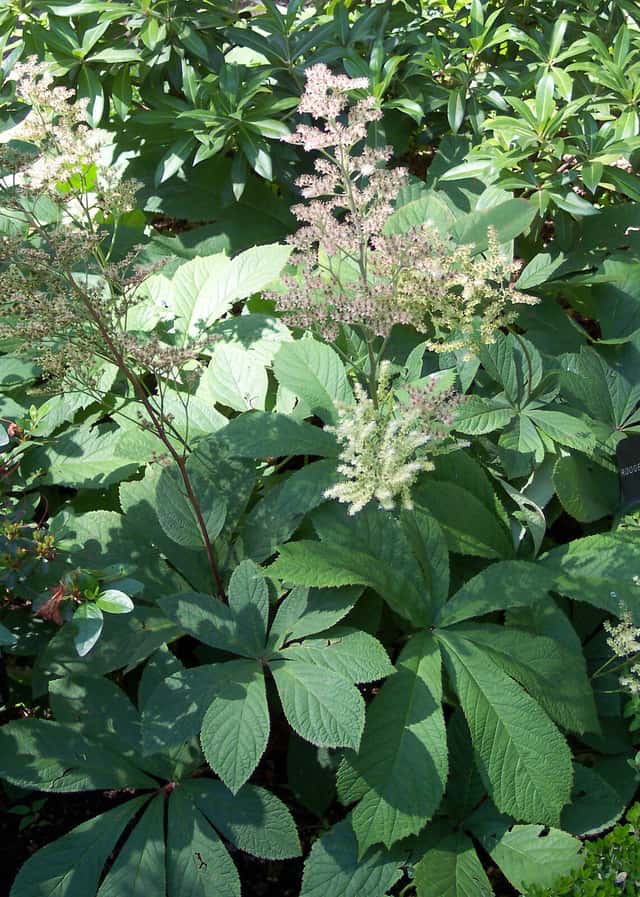
Chestnut-leaf Rodgersia is a large, clump-forming perennial with creeping rhizomes, native to moist forests and stream banks in Northern China. Its palmate leaves can grow up to 40 cm long, are deeply lobed with 5–9 coarsely toothed leaflets resembling chestnut leaves, and have a bronze sheen when young before darkening to green throughout the season. In summer, the plant produces large, feathery flower spikes up to 60 cm tall with creamy white or pale pink flowers that eventually turn green. This species is widely used as an ornamental plant in shady perennial beds, near ponds and streams, and eventually forms large, stately colonies.
How Big Does Chestnut-leaf Rodgersia Grow?
TLDR: Chestnut-leaf Rodgersia can reach up to 1.8m tall with Medium growth rate.
Max height
1.8m
Spread
1.3m
Growth rate
Medium
Foliage
Deciduous
Plant Uses
Ornamental
Great for decoration
Ground Cover
Soil coverage
Is your plant showing symptoms?
Click on the symptom to discover possible causes:
What Diseases Commonly Affect Chestnut-leaf Rodgersia?
TLDR: Chestnut-leaf Rodgersia is susceptible to 6 known diseases. Monitor regularly for early detection.
Powdery Mildew
Powdery mildew is a common fungal disease caused by various fungi species including Erysiphe, Podosphaera, Oïdium, and Leveillula. It affects over 10,000 plant species worldwide. The disease thrives in warm, dry climates with high humidity and appears as a distinctive white powdery coating on plant surfaces.
Root Rot
Root rot is a serious fungal disease that affects the root system of plants, causing them to decay and die. It is primarily caused by overwatering, poor drainage, or soil-borne fungi such as Pythium, Phytophthora, Rhizoctonia, and Fusarium. The disease thrives in waterlogged conditions where roots are deprived of oxygen, making them susceptible to fungal infection.
Leaf Spot
Leaf spot is a common fungal disease caused by various pathogens including Alternaria, Ascochyta, Colletotrichum, Septoria, and Venturia. It primarily affects leaves, causing discolored spots that can lead to premature leaf drop if left untreated.
Spider Mites
Spider mites are tiny arachnids (less than 1/20 inch long) related to spiders and ticks that feed on plant sap. They thrive in hot, dry conditions and can cause significant damage to ornamental and vegetable plants. During severe infestations, crop losses can reach 14% or higher as these pests disrupt vital plant processes including photosynthesis, carbon dioxide absorption, and transpiration.
Meaning & Symbolism
Represents strength and protection in shady gardens.
Compare with similar plants
| Attribute | Difficulty | Light | Watering | Pet Safe |
|---|---|---|---|---|
| Dark Fieldcap | Medium | Low light | 2d | ⚠️ |
| Azalea | Medium | Partial shade | 3d | ⚠️ |
| Muriel's Bamboo | Medium | Partial shade | 3d | ✓ |
| Bougainvillea | Medium | Direct sun | 7d | ⚠️ |
Choose & Compare
Sources & References
- Rodgersia aesculifolia - Missouri Botanical Garden Plant Finder
- Rodgersia aesculifolia - RHS Cultivation Details
- Bold, Shade-Loving Rodgersias - Fine Gardening
- Rodgersia aesculifolia - BBC Gardeners World Magazine
- Growing Fingerleaf Rodgersia Plants - Gardening Know How
- The Complete Rodgersia aesculifolia Plant Care Guide - Greg
- How to Grow Rodgersia - Harvest to Table
- Rodgersia aesculifolia - Kastanjebronseblad - Stauderiket
- Rodgersia aesculifolia - Artsdatabanken (norsk navn)
- How to Propagate Rodgersia aesculifolia




