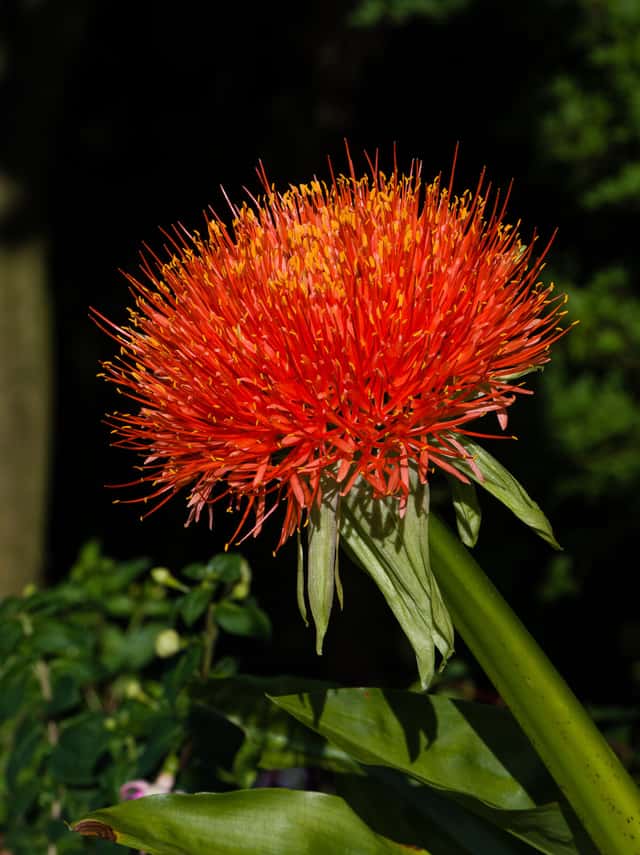
Amaryllidaceae
Fireball Lily: Medicinal Uses & Care Tips
Scadoxus
Grow Scadoxus in bright, indirect light with rich, well-draining soil, watering generously through the spring and summer growing season. As foliage yellows in late summer, taper off watering and let the bulb rest through a dry winter dormancy, resuming care when new growth appears in spring.
Every 7 days
Partial shade
10° - °C
% - %
Categories
What is Fireball Lily?
Fireball Lily (Scadoxus) is a medium-care plant from the Amaryllidaceae family. Scadoxus is a small genus of bulbous perennials native to tropical and southern Africa, prized for dramatic globe-shaped flower heads made up of hundreds of tiny red florets with prominent yellow-tipped stamens, resembling a burst of fireworks or a paintbrush dipped in scarlet paint. Strap-shaped le...
Fireball Lily grows up to 60cm, spread of 46cm, watering every 7 days. It is suitable for indoor environments and not safe for pets.
Without precautions, ingestion can cause irritation in pets. Keep out of reach of cats and dogs. Without adequate drainage, root rot can develop within 14 days.
How to Care for Fireball Lily?
TLDR: Fireball Lily needs Partial shade, watering every 7 days, and temperatures between 10-30°C with 40-70% humidity.
How Often Should You Water Fireball Lily?
Keep soil evenly moist during active growth, watering as soon as the top inch dries out, then gradually reduce watering as leaves die back and withhold water almost entirely during winter dormancy.
How Much Light Does Fireball Lily Need?
Place in bright, indirect light or dappled shade; direct midday sun can scorch the leaves and fade the vivid red blooms, while too little light reduces flowering.
What Is the Best Soil for Fireball Lily?
Use a rich, well-draining mix of garden loam, compost, and coarse grit or sand; the bulb is highly prone to rot in soggy or heavy soil, so drainage is essential.
What Pot Should You Use for Fireball Lily?
An unglazed terracotta pot with ample drainage holes works best, sized just slightly larger than the bulb itself, since blood lilies tend to flower more reliably when a little pot-bound.
Care Schedule
Fertilize
Every 30 days
What Is Fireball Lily and Where Does It Come From?
Scadoxus is a small genus of bulbous perennials native to tropical and southern Africa, prized for dramatic globe-shaped flower heads made up of hundreds of tiny red florets with prominent yellow-tipped stamens, resembling a burst of fireworks or a paintbrush dipped in scarlet paint. Strap-shaped leaves emerge in a loose rosette from an underground bulb, and in several species the flowers appear on a bare stalk before the foliage unfurls. The plant dies back to the bulb during a dry dormant season, then re-emerges with fresh leaves and blooms the following year.
How to Propagate Fireball Lily?
Offset Division
Handle bulbs with gloves since the sap can irritate skin, and expect flowering to pause for a season or two after division, since removing offsets redirects energy away from the parent bulb and into vegetative growth.
- 1 Lift the parent bulb during dormancy and gently brush away soil
- 2 Locate small offset bulbs attached at the base of the parent bulb
- 3 Separate offsets by hand or with a clean knife, keeping roots attached where possible
- 4 Pot each offset in well-draining mix with the neck at or just above soil level
- 5 Water sparingly until new growth appears, then resume regular watering
Materials needed:
Seed Sowing
Sow seeds as soon as they ripen since viability drops quickly once dried, and keep the growing medium warm and lightly moist rather than wet.
- 1 Harvest bright red, ripe seeds from spent flower heads
- 2 Remove the fleshy outer pulp, which can inhibit germination
- 3 Press seeds lightly onto the surface of a sandy compost mix without burying them
- 4 Keep in a warm, brightly lit spot out of direct sun and maintain light moisture
- 5 Transplant seedlings once they have a few true leaves and a small bulb has formed
Materials needed:
How Big Does Fireball Lily Grow?
TLDR: Fireball Lily can reach up to 60cm tall with Medium growth rate.
Max height
60cm
Spread
46cm
Growth rate
Medium
Foliage
Deciduous
Warning: Toxic Plant
This plant can be toxic if ingested. Keep out of reach of:
Plant Uses
Ornamental
Great for decoration
Medicinal
Medicinal properties
Medicinal Uses
- Traditional remedy for coughs and febrile colds
- Traditional treatment for gastrointestinal ailments
- Topical application on wounds and ulcers as an antiseptic
Is your plant showing symptoms?
Click on the symptom to discover possible causes:
What Diseases Commonly Affect Fireball Lily?
TLDR: Fireball Lily is susceptible to 4 known diseases. Monitor regularly for early detection.
Root Rot
Root rot is a serious fungal disease that affects the root system of plants, causing them to decay and die. It is primarily caused by overwatering, poor drainage, or soil-borne fungi such as Pythium, Phytophthora, Rhizoctonia, and Fusarium. The disease thrives in waterlogged conditions where roots are deprived of oxygen, making them susceptible to fungal infection.
Spider Mites
Spider mites are tiny arachnids (less than 1/20 inch long) related to spiders and ticks that feed on plant sap. They thrive in hot, dry conditions and can cause significant damage to ornamental and vegetable plants. During severe infestations, crop losses can reach 14% or higher as these pests disrupt vital plant processes including photosynthesis, carbon dioxide absorption, and transpiration.
Mealybugs
Mealybugs are small, soft-bodied insects covered with a white, waxy, cottony material. They are common pests of houseplants and outdoor plants in mild climates. These sap-sucking insects feed on plant tissue, causing damage, stunted growth, and can lead to plant death if left untreated. They produce sticky honeydew which attracts sooty mold.
Slugs and Snails
Slugs and snails are mollusks that feed on plant tissue, causing irregular holes in leaves and damage to young seedlings. They are most active at night and in moist conditions, leaving characteristic silvery slime trails. These pests can quickly devastate gardens, especially during wet seasons.
Meaning & Symbolism
The blood lily flower head, formed from hundreds of tiny florets fused into one radiant globe, is often read as a symbol of passion, vitality, and strength through unity.
Compare with similar plants
| Attribute | Difficulty | Light | Watering | Pet Safe |
|---|---|---|---|---|
| Dark Fieldcap | Medium | Low light | 2d | ⚠️ |
| Azalea | Medium | Partial shade | 3d | ⚠️ |
| Muriel's Bamboo | Medium | Partial shade | 3d | ✓ |
| Bougainvillea | Medium | Direct sun | 7d | ⚠️ |




