Lamiaceae
Five-lobed Motherwort: Aromatic Plant
Leonurus quinquelobatus
Requires a sunny or slightly partially shaded location in well-drained, nutrient-rich soil. Water regularly but moderately during the growing season, avoiding standing water. It is a frost-tolerant perennial species that requires minimal care; it is advisable to cut it back after flowering to keep it compact and prevent excessive self-seeding.
Every 7 days
Bright indirect
-34° - 35°C
% - %
Categories
What is Five-lobed Motherwort?
Five-lobed Motherwort (Leonurus quinquelobatus) is a easy-care plant from the Lamiaceae family. Leonurus quinquelobatus is a perennial herbaceous medicinal plant belonging to the mint family (Lamiaceae), found across much of Eurasia, from Sakhalin to Central Europe and Italy. It is a close relative of Common Motherwort (Leonurus cardiaca), with which it is often confused, but its palmately div...
Five-lobed Motherwort grows up to 1.5m, spread of 60cm, watering every 7 days, -34°C – 35°C. It is suitable for indoor environments and safe for pets.
Unlike many tropical plants, Five-lobed Motherwort tolerates watering mistakes. Best for beginners. Unlike many popular species, Five-lobed Motherwort is safe to keep around pets. Without adequate drainage, root rot can develop within 14 days.
How to Care for Five-lobed Motherwort?
TLDR: Five-lobed Motherwort needs Bright indirect, watering every 7 days, and temperatures between -34-35°C with 40-70% humidity.
How Often Should You Water Five-lobed Motherwort?
Keep the soil evenly moist but not waterlogged from spring to late summer—allow the top 2-3 cm of soil to dry out before watering. Overwatering can easily lead to root rot, so always plant in well-draining soil or pots.
How Much Light Does Five-lobed Motherwort Need?
It blooms most profusely in full sun but also develops well in partially shaded areas. When kept in a pot, choose a south-facing, light-filled windowsill for compact, vigorous growth.
What Is the Best Soil for Five-lobed Motherwort?
Prefers well-drained, moderately nutrient-rich soil with a slightly acidic to neutral pH (6.0-7.5). When planting, mix mature compost or organic matter into the soil to increase fertility.
What Pot Should You Use for Five-lobed Motherwort?
Since the plant can grow up to 1-1.5 meters tall, a deep pot at least 30-40 cm deep and wide with good drainage holes is recommended. A terracotta pot helps wick away excess moisture, reducing the risk of root rot.
Care Schedule
Fertilize
Every 60 days
Repot
Every 365 days
What Is Five-lobed Motherwort and Where Does It Come From?
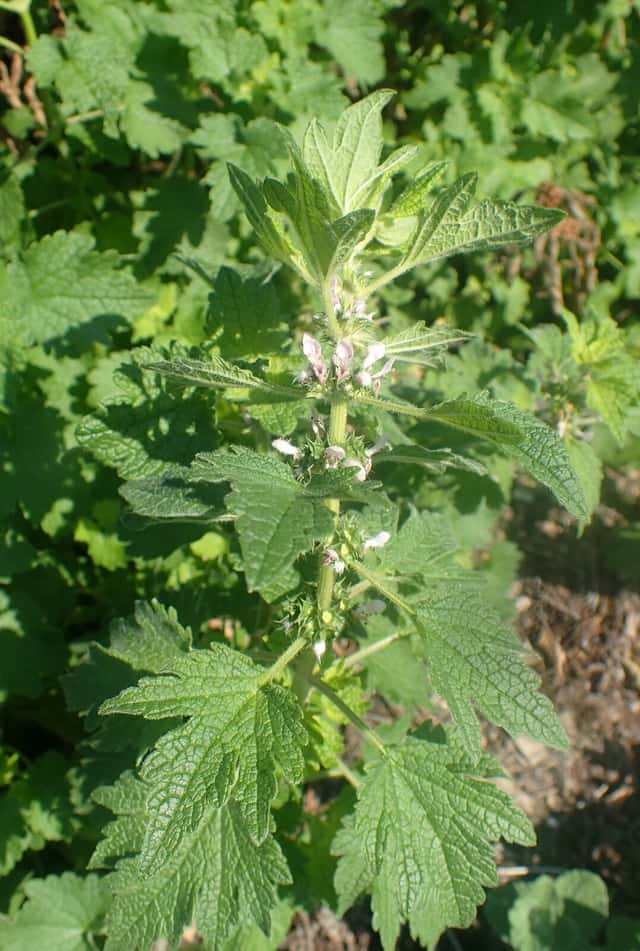
Leonurus quinquelobatus is a perennial herbaceous medicinal plant belonging to the mint family (Lamiaceae), found across much of Eurasia, from Sakhalin to Central Europe and Italy. It is a close relative of Common Motherwort (Leonurus cardiaca), with which it is often confused, but its palmately divided leaves with five distinct lobes serve as a characteristic identifier. The plant can grow up to 1-1.5 meters tall, featuring square, pubescent stems and pale pink-purple flowers that bloom in axillary whorls between June and August. It thrives best in sunny to partially shaded locations with nutrient-rich, well-drained soil and can live in the same spot for decades. Traditionally known as 'heartwort' or 'strengthening herb,' its flowering shoots have been used since ancient times to soothe heart palpitations and support the female reproductive system.
How to Propagate Five-lobed Motherwort?
Sowing seeds
The plant self-seeds abundantly, so it often emerges spontaneously in the garden.
- 1 Sow seeds directly into the garden or into seed trays after the last frosts or in autumn
- 2 Cover the seeds only lightly with soil, as they require light for germination
- 3 Keep evenly moist until sprouts appear
- 4 After emergence, thin out the seedlings and transplant them to their final location with 30-40 cm spacing
Materials needed:
Division
Division can be performed every 3-4 years to renew the plant and keep its spread under control.
- 1 Dig up the mature, multi-year-old clump in early spring or autumn
- 2 Divide into 2-3 sections using a sharp spade or knife, ensuring each piece has roots and shoots
- 3 Plant immediately in a new location in well-aerated soil improved with compost
- 4 Water thoroughly after planting to help establishment
Materials needed:
How Big Does Five-lobed Motherwort Grow?
TLDR: Five-lobed Motherwort can reach up to 1.5m tall with Fast growth rate.
Max height
1.5m
Spread
60cm
Growth rate
Fast
Foliage
Deciduous
Plant Uses
Medicinal
Medicinal properties
Ornamental
Great for decoration
Aromatic
Pleasant fragrance
Medicinal Uses
- Sedative effect, used to soothe heart palpitations and mild anxiety
- Traditionally used as an antihypertensive, especially for stress-induced high blood pressure
- Contains bitter compounds that aid digestion when consumed before meals
- To alleviate menstrual complaints and regulate the monthly cycle (forbidden during pregnancy!)
- Treatment of sleep disorders and nervousness as a tea or tincture
Culinary Uses
- Preparation of medicinal tea from dried flowering shoots
- Used as a bitter flavoring agent mixed with other herbal teas
Is your plant showing symptoms?
Click on the symptom to discover possible causes:
What Diseases Commonly Affect Five-lobed Motherwort?
TLDR: Five-lobed Motherwort is susceptible to 5 known diseases. Monitor regularly for early detection.
Aphids
Aphids are small, soft-bodied, pear-shaped insects (1/16 to 1/8 inch long) that feed by sucking nutrient-rich sap from plants. They reproduce rapidly and can quickly weaken plants, causing distorted growth and transmitting plant viruses. Aphids come in various colors including green, black, red, yellow, brown, and gray. They secrete honeydew, a sticky substance that attracts ants and encourages sooty mold growth.
Spider Mites
Spider mites are tiny arachnids (less than 1/20 inch long) related to spiders and ticks that feed on plant sap. They thrive in hot, dry conditions and can cause significant damage to ornamental and vegetable plants. During severe infestations, crop losses can reach 14% or higher as these pests disrupt vital plant processes including photosynthesis, carbon dioxide absorption, and transpiration.
Powdery Mildew
Powdery mildew is a common fungal disease caused by various fungi species including Erysiphe, Podosphaera, Oïdium, and Leveillula. It affects over 10,000 plant species worldwide. The disease thrives in warm, dry climates with high humidity and appears as a distinctive white powdery coating on plant surfaces.
Rust
Rust is a common fungal disease caused by fungi in the order Pucciniales that affects a wide variety of plants. The disease gets its name from the characteristic orange, yellow, or reddish-brown pustules that appear on leaves, resembling metal rust. This obligate fungal parasite requires living plants to survive and can cause significant economic losses in agricultural crops.
Meaning & Symbolism
Motherwort species, including Leonurus quinquelobatus, have long been symbols of maternal care, tranquility, and the strength of the heart. Known throughout Europe as 'heartwort,' it was traditionally used to calm anxiety and palpitations, as well as to soothe mothers in midwifery.
Compare with similar plants
| Attribute | Difficulty | Light | Watering | Pet Safe |
|---|---|---|---|---|
| Field Maple | Easy | Bright indirect | 14d | ✓ |
| Silver Birch | Easy | Direct sun | 14d | ✓ |
| Common Blanketflower | Easy | Direct sun | 10d | ✓ |
| Cushion Bush | Easy | Direct sun | 14d | ✓ |





