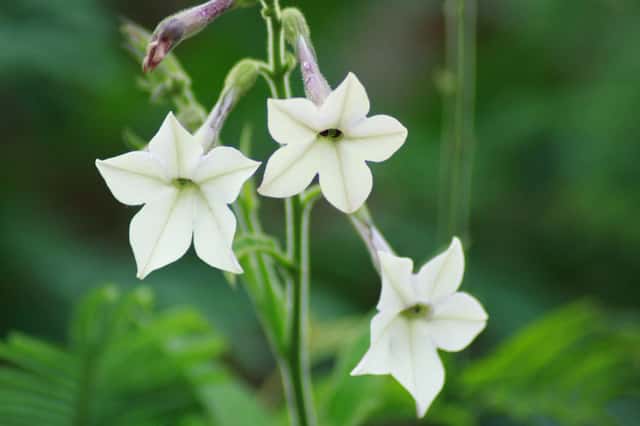
Solanaceae
Flowering Tobacco (Nicotiana)
Nicotiana
Grow in full sun to part shade, in fertile, well-drained soil, with regular watering that avoids waterlogging. Feed monthly with a phosphorus-rich fertilizer during bloom and deadhead spent flowers to encourage continuous flowering.
Every 4 days
Bright indirect
10° - 30°C
40% - 70%
Categories
What is Flowering Tobacco?
Flowering Tobacco (Nicotiana) is a easy-care plant from the Solanaceae family. Nicotiana, commonly known as flowering tobacco, is a genus of herbaceous plants in the Solanaceae family, grown for its trumpet-shaped, sweetly scented flowers that open in the evening. Native to the Americas, it is cultivated worldwide as an annual or short-lived tender perennial in warm climates.
Flowering Tobacco grows up to 1.5m, spread of 45cm, watering every 4 days, 10°C – 30°C, 40–70% humidity. It is not suitable for indoor environments and not safe for pets.
Unlike many tropical plants, Flowering Tobacco tolerates watering mistakes. Best for beginners. Without precautions, ingestion can cause irritation in pets. Keep out of reach of cats and dogs.
How to Care for Flowering Tobacco?
TLDR: Flowering Tobacco needs Bright indirect, watering every 4 days, and temperatures between 10-30°C with 40-70% humidity.
How Often Should You Water Flowering Tobacco?
Water regularly to keep soil evenly moist but never soggy. Avoid wetting the foliage and flowers to help prevent fungal disease.
How Much Light Does Flowering Tobacco Need?
Prefers full sun for the best bloom show; tolerates partial shade but flowers less profusely.
What Is the Best Soil for Flowering Tobacco?
Use fertile, light, well-draining soil enriched with organic matter.
What Pot Should You Use for Flowering Tobacco?
Medium to large pot with good drainage, suited for containers and garden beds
Care Schedule
Fertilize
Every 28 days
What Is Flowering Tobacco and Where Does It Come From?
Nicotiana, commonly known as flowering tobacco, is a genus of herbaceous plants in the Solanaceae family, grown for its trumpet-shaped, sweetly scented flowers that open in the evening. Native to the Americas, it is cultivated worldwide as an annual or short-lived tender perennial in warm climates.
How to Propagate Flowering Tobacco?
Seed Sowing
Seeds are very fine and should not be buried; they germinate best between 65-75F (18-24C).
- 1 Sow directly outdoors or start indoors 6-8 weeks before the last frost
- 2 Press seeds lightly into the surface, as they need light to germinate
- 3 Keep the growing medium consistently moist until germination
- 4 Transplant seedlings once they have 3-4 true leaves
Materials needed:
How Big Does Flowering Tobacco Grow?
TLDR: Flowering Tobacco can reach up to 1.5m tall with Medium growth rate.
Max height
1.5m
Spread
45cm
Growth rate
Medium
Foliage
Evergreen
Warning: Toxic Plant
This plant can be toxic if ingested. Keep out of reach of:
Plant Uses
Ornamental
Great for decoration
Aromatic
Pleasant fragrance
Is your plant showing symptoms?
Click on the symptom to discover possible causes:
What Diseases Commonly Affect Flowering Tobacco?
TLDR: Flowering Tobacco is susceptible to 12 known diseases. Monitor regularly for early detection.
Powdery Mildew
Powdery mildew is a common fungal disease caused by various fungi species including Erysiphe, Podosphaera, Oïdium, and Leveillula. It affects over 10,000 plant species worldwide. The disease thrives in warm, dry climates with high humidity and appears as a distinctive white powdery coating on plant surfaces.
Root Rot
Root rot is a serious fungal disease that affects the root system of plants, causing them to decay and die. It is primarily caused by overwatering, poor drainage, or soil-borne fungi such as Pythium, Phytophthora, Rhizoctonia, and Fusarium. The disease thrives in waterlogged conditions where roots are deprived of oxygen, making them susceptible to fungal infection.
Flea beetle damage
Flea beetles are small, jumping insects that feed on the leaves of many vegetable crops. They chew numerous small, circular holes, creating a characteristic 'shothole' appearance. While established plants can often tolerate the damage, young seedlings are highly susceptible and can be stunted or killed if the infestation is severe.
Whiteflies
Whiteflies are small, soft-bodied, winged insects closely related to aphids and mealybugs. They are moth-like in appearance, about 1/16 inch long, triangular in shape, and gray-white in color. These sap-sucking pests feed on plant tissue, causing yellowing, stunted growth, and wilting. They also excrete honeydew, which attracts ants and promotes sooty mold growth. Whiteflies can transmit serious plant viruses.
Fun Facts
Nicotiana flowers open in the evening and release an intense jasmine-like scent to attract pollinating moths.
The genus is named after Jean Nicot, the French diplomat who introduced tobacco to Europe in the 16th century.
Nicotine in the leaves is a natural defense mechanism against herbivorous insects.
Frequently asked questions
Is Nicotiana toxic?
How long does Nicotiana take to bloom?
Does Nicotiana need full sun?
How do I prevent fungal disease on Nicotiana?
Compare with similar plants
| Attribute | Difficulty | Light | Watering | Pet Safe |
|---|---|---|---|---|
| Field Maple | Easy | Bright indirect | 14d | ✓ |
| Silver Birch | Easy | Direct sun | 14d | ✓ |
| Common Blanketflower | Easy | Direct sun | 10d | ✓ |
| Cushion Bush | Easy | Direct sun | 14d | ✓ |





