Apocynaceae
Fockea: Complete Care Guide
Fockea
Bright, indirect light with some morning sun; deep waterings only once the soil is fully dry, drastically reduced in winter; fast-draining mineral substrate; protect the caudex from intense midday sun and cold below 7°C (45°F).
Every 14 days
Bright indirect
7° - 35°C
30% - 50%
Categories
What is Fockea?
Fockea (Fockea) is a medium-care plant from the Apocynaceae family. Fockea is a genus of caudiciform succulent vines in the family Apocynaceae, native mainly to South Africa (the Cape Provinces and KwaZulu-Natal). The most widely cultivated species, Fockea edulis, commonly known as "Hottentot bread," develops a sculptural, grey, tuberous caudex that can reach up to...
Fockea grows up to 4.0m, watering every 14 days, 7°C – 35°C, 30–50% humidity. It is suitable for indoor environments and safe for pets.
Unlike many popular species, Fockea is safe to keep around pets. Without adequate drainage, root rot can develop within 28 days.
How to Care for Fockea?
TLDR: Fockea needs Bright indirect, watering every 14 days, and temperatures between 7-35°C with 30-50% humidity.
How Often Should You Water Fockea?
Water deeply only once the substrate is completely dry (roughly every 10-20 days during spring/summer); reduce to once a month or withhold entirely in winter. A firm caudex signals proper hydration; a soft caudex indicates rot risk.
How Much Light Does Fockea Need?
Prefers bright, indirect light to lightly filtered sun; tolerates a few hours of direct morning sun, but the caudex should be shielded from intense midday sun to avoid scorching.
What Is the Best Soil for Fockea?
Use a fast-draining mineral mix (pumice, perlite, coarse sand, minimal organic matter). Deep terracotta pots help excess moisture evaporate.
What Pot Should You Use for Fockea?
Deep terracotta pot with multiple drainage holes
Care Schedule
Fertilize
Every 30 days
What Is Fockea and Where Does It Come From?
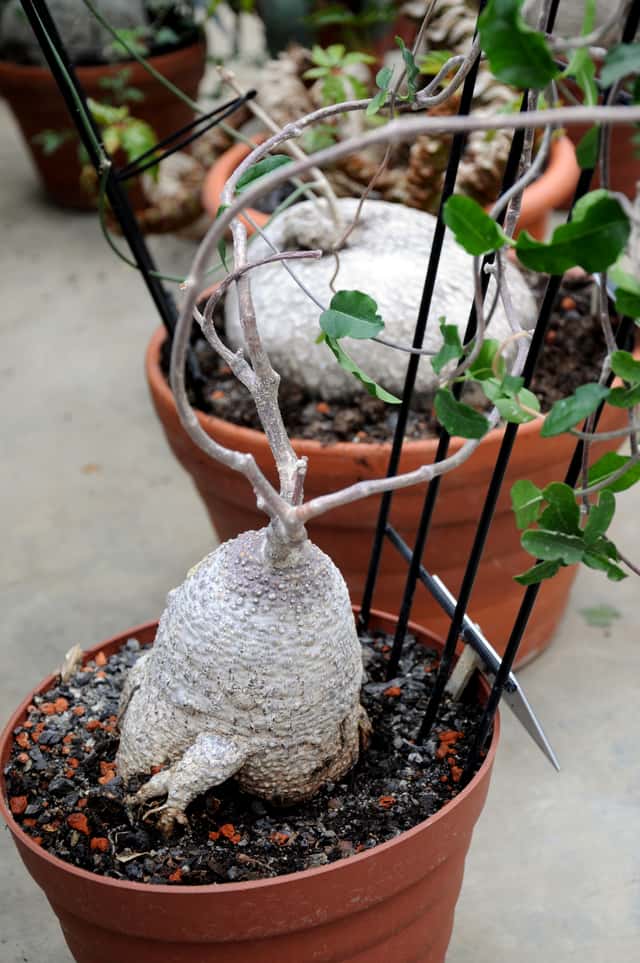
Fockea is a genus of caudiciform succulent vines in the family Apocynaceae, native mainly to South Africa (the Cape Provinces and KwaZulu-Natal). The most widely cultivated species, Fockea edulis, commonly known as "Hottentot bread," develops a sculptural, grey, tuberous caudex that can reach up to 60 cm in diameter, acting as a water reservoir that helps the plant survive long dry periods. Thin, twining stems emerge from the caudex and can stretch several meters under good conditions. The plant is semi-deciduous, slowing down and sometimes shedding part of its foliage during the cooler, drier winter months, though it rarely goes fully dormant. Small, star-shaped, greenish-white, lightly scented flowers appear in late spring and summer. The milky latex sap is toxic and can irritate skin and eyes; the tuberous root, while historically eaten by indigenous peoples after processing, should not be consumed without proper preparation. Fockea is slow-growing and highly prized among caudiciform succulent collectors for its unique sculptural form.
How to Propagate Fockea?
Seed propagation
Cutting propagation is extremely difficult and rarely successful in this species; fresh seed germinates much more reliably.
- 1 Soak seeds in warm water for a few hours before sowing
- 2 Sow in a light mix of equal parts sand, perlite and peat
- 3 Keep the substrate lightly moist in a warm, bright spot until germination
- 4 Gradually reduce watering frequency as the seedling develops its caudex
Materials needed:
How Big Does Fockea Grow?
TLDR: Fockea can reach up to 4.0m tall with Slow growth rate.
Max height
4.0m
Growth rate
Slow
Foliage
Semi-evergreen
Warning: Toxic Plant
This plant can be toxic if ingested. Keep out of reach of:
Plant Uses
Ornamental
Great for decoration
Edible
Can be consumed
Is your plant showing symptoms?
Click on the symptom to discover possible causes:
What Diseases Commonly Affect Fockea?
TLDR: Fockea is susceptible to 5 known diseases. Monitor regularly for early detection.
Root Rot
Root rot is a serious fungal disease that affects the root system of plants, causing them to decay and die. It is primarily caused by overwatering, poor drainage, or soil-borne fungi such as Pythium, Phytophthora, Rhizoctonia, and Fusarium. The disease thrives in waterlogged conditions where roots are deprived of oxygen, making them susceptible to fungal infection.
Aphids
Aphids are small, soft-bodied, pear-shaped insects (1/16 to 1/8 inch long) that feed by sucking nutrient-rich sap from plants. They reproduce rapidly and can quickly weaken plants, causing distorted growth and transmitting plant viruses. Aphids come in various colors including green, black, red, yellow, brown, and gray. They secrete honeydew, a sticky substance that attracts ants and encourages sooty mold growth.
Mealybugs
Mealybugs are small, soft-bodied insects covered with a white, waxy, cottony material. They are common pests of houseplants and outdoor plants in mild climates. These sap-sucking insects feed on plant tissue, causing damage, stunted growth, and can lead to plant death if left untreated. They produce sticky honeydew which attracts sooty mold.
Whiteflies
Whiteflies are small, soft-bodied, winged insects closely related to aphids and mealybugs. They are moth-like in appearance, about 1/16 inch long, triangular in shape, and gray-white in color. These sap-sucking pests feed on plant tissue, causing yellowing, stunted growth, and wilting. They also excrete honeydew, which attracts ants and promotes sooty mold growth. Whiteflies can transmit serious plant viruses.
Meaning & Symbolism
Associated with resilience and resourcefulness, thanks to its water-storing caudex that helps it endure hardship.
Fun Facts
Fockea's caudex can store enough water to help the plant survive extended droughts.
Fockea edulis' root is historically known as "Hottentot bread," gathered by indigenous South African peoples.
Fockea is dioecious - both male and female plants are needed to produce seed.
Frequently asked questions
Is Fockea toxic to pets?
How often should I water my Fockea?
Why is my Fockea losing leaves?
How do I propagate Fockea?
Compare with similar plants
| Attribute | Difficulty | Light | Watering | Pet Safe |
|---|---|---|---|---|
| Dark Fieldcap | Medium | Low light | 2d | ⚠️ |
| Azalea | Medium | Partial shade | 3d | ⚠️ |
| Muriel's Bamboo | Medium | Partial shade | 3d | ✓ |
| Bougainvillea | Medium | Direct sun | 7d | ⚠️ |




