Droseraceae
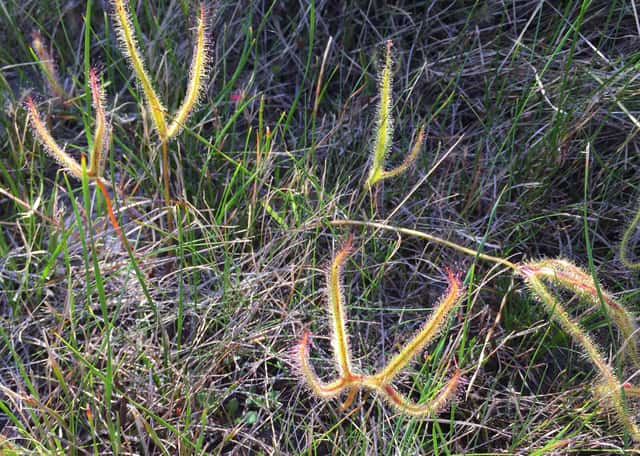
Drosera binata — Fork-leaved Sundew
Drosera binata
Grow Drosera binata like other temperate sundews: bright, direct light, constantly moist nutrient-poor peaty soil, and only pure water. Stand the pot in a shallow tray of distilled, reverse-osmosis, or rainwater at all times, and never add fertilizer or use tap/mineral water, which will damage the roots. It rewards correct care with rapid, vigorous growth and continuous production of new dewy leaves.
Every 2 days
Direct sun
5° - 35°C
50% - 80%
Categories
What is Fork-leaved Sundew?
Fork-leaved Sundew (Drosera binata) is a medium-care plant from the Droseraceae family. Drosera binata, known as the fork-leaved or forked sundew, is a carnivorous perennial in the family Droseraceae, native to boggy heathlands and wetlands of southeastern Australia and New Zealand. Its narrow leaves repeatedly split into Y- or fork-shaped segments, each covered in red glandular hairs...
Fork-leaved Sundew grows up to 40cm, spread of 30cm, watering every 2 days, 5°C – 35°C, 50–80% humidity. It is suitable for indoor environments and safe for pets.
Unlike many popular species, Fork-leaved Sundew is safe to keep around pets. Without adequate drainage, root rot can develop within 7 days.
How to Care for Fork-leaved Sundew?
TLDR: Fork-leaved Sundew needs Direct sun, watering every 2 days, and temperatures between 5-35°C with 50-80% humidity.
How Often Should You Water Fork-leaved Sundew?
Keep the soil constantly moist by standing the pot in a saucer with 2-3 cm of distilled, rainwater, or reverse-osmosis water at all times; never let it dry out and never use tap or mineral water.
How Much Light Does Fork-leaved Sundew Need?
Provide bright, direct sunlight for at least several hours a day, such as a sunny windowsill or under strong grow lights; low light causes leaves to lose their sticky dew and stop trapping insects.
What Is the Best Soil for Fork-leaved Sundew?
Use a nutrient-poor, acidic mix of pure sphagnum peat and horticultural sand or perlite (about 1:1 to 1:2 peat to sand); never use potting soil, compost, or fertilizer.
What Pot Should You Use for Fork-leaved Sundew?
A plastic pot with drainage holes standing in a water tray works best; avoid glazed ceramic or terracotta that can leach minerals, and avoid decorative pots without drainage.
Care Schedule
Repot
Every 365 days
What Is Fork-leaved Sundew and Where Does It Come From?
Drosera binata, known as the fork-leaved or forked sundew, is a carnivorous perennial in the family Droseraceae, native to boggy heathlands and wetlands of southeastern Australia and New Zealand. Its narrow leaves repeatedly split into Y- or fork-shaped segments, each covered in red glandular hairs that secrete glistening, sticky mucilage to trap and digest small insects. In spring and summer it sends up tall flower stalks topped with clusters of small white blooms, held well above the sticky foliage so pollinators are not caught.
How to Propagate Fork-leaved Sundew?
Leaf cutting
Use a whole leaf rather than segments for best results, and avoid letting the leaf dry out even briefly.
- 1 Select a healthy, mature leaf and remove it carefully at the base
- 2 Lay the leaf flat, sticky side up, on top of moist peat/sand mix or pure sphagnum
- 3 Keep it in a humid, bright, shaded-from-harsh-sun spot and keep the medium constantly moist with pure water
- 4 Small plantlets will emerge along the leaf edges within a few weeks
Materials needed:
Division
Established plants form clumps that divide easily every 1-2 years without stressing the plant.
- 1 Remove the mature clump from its pot
- 2 Gently separate rooted offshoots or crowns by hand, keeping roots intact
- 3 Repot each division into fresh peat/sand mix and water with pure water
Materials needed:
Seed propagation
Seeds need light to germinate and can take several weeks; be patient and keep humidity high.
- 1 Sow seeds on the surface of moist peat/sand mix, do not bury them
- 2 Keep under a humidity dome in bright, indirect light
- 3 Maintain constant moisture with pure water until germination
Materials needed:
How Big Does Fork-leaved Sundew Grow?
TLDR: Fork-leaved Sundew can reach up to 40cm tall with Fast growth rate.
Max height
40cm
Spread
30cm
Growth rate
Fast
Foliage
Semi-evergreen
Plant Uses
Ornamental
Great for decoration
Is your plant showing symptoms?
Click on the symptom to discover possible causes:
What Diseases Commonly Affect Fork-leaved Sundew?
TLDR: Fork-leaved Sundew is susceptible to 5 known diseases. Monitor regularly for early detection.
Root Rot
Root rot is a serious fungal disease that affects the root system of plants, causing them to decay and die. It is primarily caused by overwatering, poor drainage, or soil-borne fungi such as Pythium, Phytophthora, Rhizoctonia, and Fusarium. The disease thrives in waterlogged conditions where roots are deprived of oxygen, making them susceptible to fungal infection.
Gray Mold (Botrytis Blight)
Gray mold, caused by the fungus Botrytis cinerea, is a widespread necrotrophic pathogen affecting over 1,400 plant species. It thrives in cool, humid conditions and attacks weakened or aging plant tissues, causing soft rot and characteristic gray fuzzy growth.
Aphids
Aphids are small, soft-bodied, pear-shaped insects (1/16 to 1/8 inch long) that feed by sucking nutrient-rich sap from plants. They reproduce rapidly and can quickly weaken plants, causing distorted growth and transmitting plant viruses. Aphids come in various colors including green, black, red, yellow, brown, and gray. They secrete honeydew, a sticky substance that attracts ants and encourages sooty mold growth.
Thrips
Thrips are tiny cigar-shaped insects (1/25-inch long) that damage plants by sucking plant juices and scraping at fruits, flowers, and leaves. With over 6,000 species and rapid reproduction (lifecycle as short as 14 days), they can quickly infest plants and transmit viruses like tomato spotted wilt virus.
Meaning & Symbolism
The fork-leaved sundew symbolizes patient allure and quiet resourcefulness, a plant that survives by turning beauty into a trap rather than force.
Fun Facts
Its leaves fork repeatedly into Y and V shapes, giving rise to popular cultivar names like Angel Wings.
A single leaf cutting can produce several new plantlets in just a few weeks.
It traps prey using sticky mucilage rather than the snap-traps of its cousin, the Venus flytrap.
Frequently asked questions
Can I water Drosera binata with tap water?
Does Drosera binata need fertilizer?
Why are the leaves losing their sticky dew?
Is Drosera binata dangerous to pets or humans?
Does this sundew need a winter dormancy?
Compare with similar plants
| Attribute | Difficulty | Light | Watering | Pet Safe |
|---|---|---|---|---|
| Dark Fieldcap | Medium | Low light | 2d | ⚠️ |
| Azalea | Medium | Partial shade | 3d | ⚠️ |
| Muriel's Bamboo | Medium | Partial shade | 3d | ✓ |
| Bougainvillea | Medium | Direct sun | 7d | ⚠️ |




