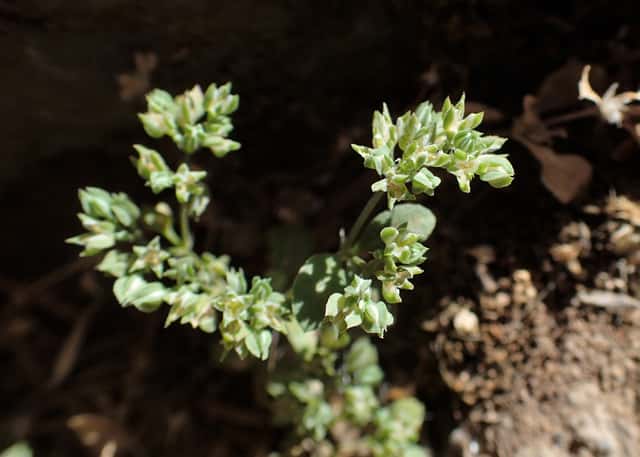
Caryophyllaceae
Four-leaved Allseed: Ground Cover Plant
Polycarpon tetraphyllum
An easy-to-care-for plant, tolerant of poor soils and difficult conditions. It prefers full sun to bright partial shade and moderate watering, allowing the soil to dry out between waterings—it is sensitive to excess water, which can lead to root rot. Hardy to approximately -10°C in well-drained soil (USDA hardiness zones 8a-10b). It can be grown both outdoors and in pots near a bright window.
Every 9 days
Bright indirect
-10° - °C
% - %
Categories
What is Four-leaved Allseed?
Four-leaved Allseed (Polycarpon tetraphyllum) is a easy-care plant from the Caryophyllaceae family. Polycarpon tetraphyllum is a low-growing, herbaceous annual plant with branched, prostrate stems that typically reach 15-20 cm in height. The leaves are obovate, glossy, and arranged in pseudo-whorls of four (hence the name "tetraphyllum" - four-leaved). The small, white flowers, sometimes tinged wi...
Four-leaved Allseed grows up to 20cm, watering every 9 days. It is suitable for indoor environments and safe for pets.
Unlike many tropical plants, Four-leaved Allseed tolerates watering mistakes. Best for beginners. Unlike many popular species, Four-leaved Allseed is safe to keep around pets. Without adequate drainage, root rot can develop within 18 days.
How to Care for Four-leaved Allseed?
TLDR: Four-leaved Allseed needs Bright indirect, watering every 9 days, and temperatures between -10-30°C with 40-70% humidity.
How Often Should You Water Four-leaved Allseed?
Water when the surface soil is dry to the touch, approximately once every 9 days. Once established, the plant tolerates drought well—avoid excess water and stagnant soil, which promote root rot.
How Much Light Does Four-leaved Allseed Need?
Needs a minimum of 5-6 hours of direct light per day for optimal flowering and compact growth, but also tolerates bright partial shade well.
What Is the Best Soil for Four-leaved Allseed?
Prefers sandy, well-drained soil with a slightly acidic to neutral pH (5.5-6.5). It tolerates poor and infertile soils as long as drainage is good.
What Pot Should You Use for Four-leaved Allseed?
A clay or terracotta pot with many drainage holes is recommended—the porous material helps excess moisture evaporate from the sandy soil, preventing root rot.
Care Schedule
Repot
Every 365 days
What Is Four-leaved Allseed and Where Does It Come From?
Polycarpon tetraphyllum is a low-growing, herbaceous annual plant with branched, prostrate stems that typically reach 15-20 cm in height. The leaves are obovate, glossy, and arranged in pseudo-whorls of four (hence the name "tetraphyllum" - four-leaved). The small, white flowers, sometimes tinged with pink, are clustered in compact inflorescences at the tips of the stems, and the round seeds are tiny (0.4-0.5 mm). Native to Southern Europe, the Mediterranean region, Great Britain, the Middle East, and the Indian subcontinent, the plant has naturalized on nearly every continent. It typically grows in sandy soils in coastal areas, disturbed sites, sidewalk cracks, gardens, and vacant lots, often behaving as a weed.
How Big Does Four-leaved Allseed Grow?
TLDR: Four-leaved Allseed can reach up to 20cm tall with Medium growth rate.
Max height
20cm
Growth rate
Medium
Plant Uses
Ground Cover
Soil coverage
Ornamental
Great for decoration
Medicinal
Medicinal properties
Medicinal Uses
- Plant extracts exhibit antioxidant properties studied in laboratory research, comparable (though slightly lower) to those of vitamin C.
- Identified phenolic compounds (resveratrol, quercetin, ellagic acid, luteolin) have been associated in studies with antibacterial, antifungal, and antiproliferative effects.
Is your plant showing symptoms?
Click on the symptom to discover possible causes:
What Diseases Commonly Affect Four-leaved Allseed?
TLDR: Four-leaved Allseed is susceptible to 1 known diseases. Monitor regularly for early detection.
Meaning & Symbolism
By colonizing sidewalk cracks and poor soils, Polycarpon tetraphyllum symbolizes adaptability, modesty, and quiet perseverance in the face of harsh conditions.
Compare with similar plants
| Attribute | Difficulty | Light | Watering | Pet Safe |
|---|---|---|---|---|
| Field Maple | Easy | Bright indirect | 14d | ✓ |
| Silver Birch | Easy | Direct sun | 14d | ✓ |
| Common Blanketflower | Easy | Direct sun | 10d | ✓ |
| Cushion Bush | Easy | Direct sun | 14d | ✓ |





