Onagraceae
Fringed Willowherb (Epilobium ciliatum)
Epilobium ciliatum
Undemanding and adaptable, fringed willowherb thrives in consistently moist, loamy soil in full sun to partial shade. It tolerates occasional flooding and a wide range of light conditions, needs no fertilizing, and largely takes care of itself. Deadhead spent flower spikes to control its vigorous, sometimes weedy self-seeding.
Every 4 days
Partial shade
-15° - 35°C
40% - 70%
Categories
What is Fringed Willowherb?
Fringed Willowherb (Epilobium ciliatum) is a easy-care plant from the Onagraceae family. Epilobium ciliatum, known as fringed willowherb, is a fast-growing herbaceous perennial in the evening primrose family (Onagraceae), native to North America and eastern Asia and now naturalized across Europe and other temperate regions. It forms upright, often branching stems covered in fine bristly...
Fringed Willowherb grows up to 1.5m, spread of 50cm, watering every 4 days, -15°C – 35°C, 40–70% humidity. It is not suitable for indoor environments and safe for pets.
Unlike many tropical plants, Fringed Willowherb tolerates watering mistakes. Best for beginners. Unlike many popular species, Fringed Willowherb is safe to keep around pets.
How to Care for Fringed Willowherb?
TLDR: Fringed Willowherb needs Partial shade, watering every 4 days, and temperatures between -15-35°C with 40-70% humidity.
How Often Should You Water Fringed Willowherb?
Keep the soil evenly moist, especially during the growing season; it tolerates wet, boggy spots better than drought.
How Much Light Does Fringed Willowherb Need?
Grows best with several hours of direct sun but tolerates partial to full shade without trouble.
What Is the Best Soil for Fringed Willowherb?
Use moist, well-draining loamy soil; it adapts to sandy, clay, or chalky ground as long as moisture is available.
What Pot Should You Use for Fringed Willowherb?
If grown in a container, choose a wide pot with generous drainage holes and a saucer to retain some moisture; terracotta works well outdoors.
What Is Fringed Willowherb and Where Does It Come From?
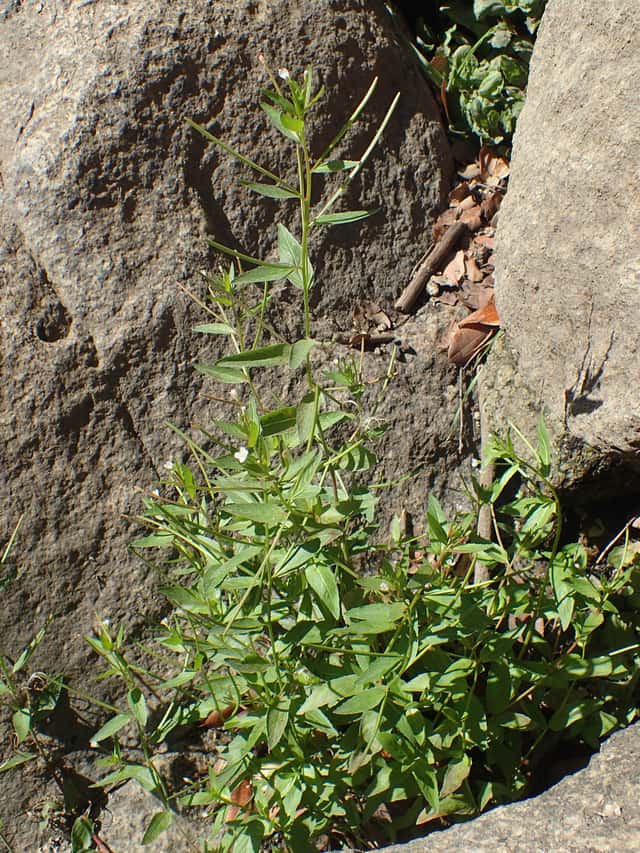
Epilobium ciliatum, known as fringed willowherb, is a fast-growing herbaceous perennial in the evening primrose family (Onagraceae), native to North America and eastern Asia and now naturalized across Europe and other temperate regions. It forms upright, often branching stems covered in fine bristly hairs, topped with small four-petaled white to pale pink flowers with deeply notched petals and dark veining. Blooming from summer into fall, it is a magnet for pollinators and readily colonizes disturbed soil, roadsides, and moist waste ground.
How to Propagate Fringed Willowherb?
Seed sowing
Seeds need light to germinate, so do not bury them; self-sown seedlings often appear on their own nearby.
- 1 Collect the fluffy, wind-dispersed seeds after the seed pods split open
- 2 Sow thinly on the surface of moist, loamy soil
- 3 Keep the soil consistently damp until seedlings emerge
Materials needed:
Clump division
Water well after dividing to help the new sections re-establish quickly.
- 1 Dig up an established clump while dormant
- 2 Split the root mass into sections with several shoots each
- 3 Replant divisions immediately in moist soil
Materials needed:
How Big Does Fringed Willowherb Grow?
TLDR: Fringed Willowherb can reach up to 1.5m tall with Fast growth rate.
Max height
1.5m
Spread
50cm
Growth rate
Fast
Foliage
Deciduous
Plant Uses
Ornamental
Great for decoration
Medicinal
Medicinal properties
Edible
Can be consumed
Medicinal Uses
- Traditionally used as a tea for digestive complaints and diarrhea
- Used topically as a soothing ointment for minor skin irritations
- Valued for anti-inflammatory and astringent tannins and flavonoids
Culinary Uses
- Young shoots and leaves can be cooked as a potherb, similar to other willowherbs
Is your plant showing symptoms?
Click on the symptom to discover possible causes:
What Diseases Commonly Affect Fringed Willowherb?
TLDR: Fringed Willowherb is susceptible to 2 known diseases. Monitor regularly for early detection.
Powdery Mildew
Powdery mildew is a common fungal disease caused by various fungi species including Erysiphe, Podosphaera, Oïdium, and Leveillula. It affects over 10,000 plant species worldwide. The disease thrives in warm, dry climates with high humidity and appears as a distinctive white powdery coating on plant surfaces.
Rust
Rust is a common fungal disease caused by fungi in the order Pucciniales that affects a wide variety of plants. The disease gets its name from the characteristic orange, yellow, or reddish-brown pustules that appear on leaves, resembling metal rust. This obligate fungal parasite requires living plants to survive and can cause significant economic losses in agricultural crops.
Meaning & Symbolism
As one of the first plants to reclaim disturbed or burned ground, willowherbs are often seen as symbols of resilience, renewal, and recovery after hardship.
Fun Facts
Its wind-dispersed, cottony seeds can travel long distances, letting it colonize bare ground within a single season.
It is self-compatible and often self-pollinates, guaranteeing a high seed set.
It can act as an alternate host for fuchsia rust, alternating with fir trees.
Frequently asked questions
Is fringed willowherb invasive?
Does fringed willowherb need full sun?
Is Epilobium ciliatum toxic to pets?
What diseases affect fringed willowherb?
Compare with similar plants
| Attribute | Difficulty | Light | Watering | Pet Safe |
|---|---|---|---|---|
| Field Maple | Easy | Bright indirect | 14d | ✓ |
| Silver Birch | Easy | Direct sun | 14d | ✓ |
| Common Blanketflower | Easy | Direct sun | 10d | ✓ |
| Cushion Bush | Easy | Direct sun | 14d | ✓ |
Choose & Compare
Sources & References
- Epilobium ciliatum | NC State Extension Gardener Plant Toolbox
- Epilobium ciliatum | American willowherb - RHS
- Fringed Willowherb Plant Care & Growing Basics - PlantIn
- Epilobium ciliatum (fringed willow-herb) - Go Botany
- Fringed Willowherb Uses for Food and Medicine - ScienceInsights
- Epilobium ciliatum - GBIF





