Asteraceae
Fuki (Petasites japonicus)
Petasites japonicus
Plant in moist to wet, rich soil in part or full shade. Never let it dry out: the big leaves wilt fast in sun and drought. It needs no feeding or pruning, but its rhizomes spread hard, so contain it with a root barrier or grow it in a large tub.
Every 3 days
Low light
-29° - 30°C
% - %
Categories
What is Fuki?
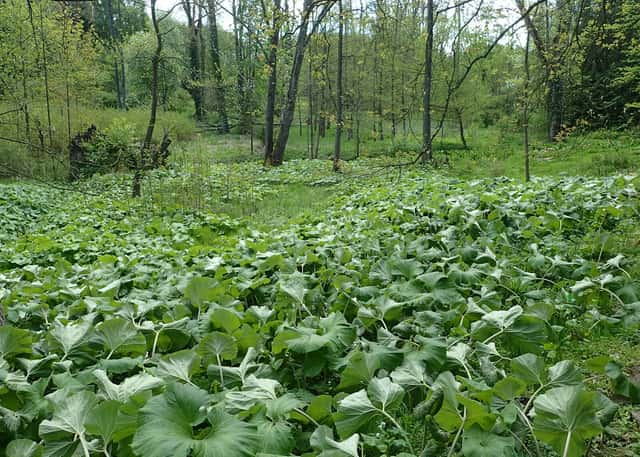
Fuki (Petasites japonicus) is a easy-care plant from the Asteraceae family. Petasites japonicus, known in Japan as fuki, is a perennial of the daisy family from Japan, Korea, China and Sakhalin. It spreads by thick underground rhizomes and forms large colonies of round, kidney-shaped leaves up to 1 m across on long stalks. In late winter, before the leaves, it sends up shor...
Fuki grows up to 1.5m, spread of 150cm, watering every 3 days, -29°C – 30°C. It is not suitable for indoor environments and not safe for pets.
Unlike many tropical plants, Fuki tolerates watering mistakes. Best for beginners. Without precautions, ingestion can cause irritation in pets. Keep out of reach of cats and dogs.
How to Care for Fuki?
TLDR: Fuki needs Low light, watering every 3 days, and temperatures between -29-30°C with 40-70% humidity.
How Often Should You Water Fuki?
Keep the soil constantly moist. It thrives at pond edges and in boggy ground; in hot weather water every 2 to 3 days.
How Much Light Does Fuki Need?
Part shade to full shade. It tolerates sun only in cool climates with wet soil; otherwise the leaves scorch and flop.
What Is the Best Soil for Fuki?
Deep, humus-rich soil that stays wet but not stagnant. It grows in sand, loam or clay if water is plentiful.
What Pot Should You Use for Fuki?
A large, wide tub without drainage holes or one standing in a saucer of water, so the soil stays wet and the rhizomes are contained.
What Is Fuki and Where Does It Come From?
Petasites japonicus, known in Japan as fuki, is a perennial of the daisy family from Japan, Korea, China and Sakhalin. It spreads by thick underground rhizomes and forms large colonies of round, kidney-shaped leaves up to 1 m across on long stalks. In late winter, before the leaves, it sends up short, dense clusters of creamy white flowers wrapped in pale green bracts; male and female flowers grow on separate plants. The variety giganteus reaches 2 m. In Japan and Korea the flower buds and leaf stalks are a spring vegetable, eaten only after boiling to remove bitter, liver-toxic compounds. Outside its native range it can become invasive along shady streams.
How to Propagate Fuki?
Rhizome division
Any small piece of rhizome left in the ground will regrow, so lift carefully if you want to remove it from a spot.
- 1 Dig up a section of the clump in early spring or autumn
- 2 Cut the rhizome into pieces, each with at least one bud
- 3 Replant 5 cm deep in moist, rich soil
- 4 Water well and keep the soil wet until new leaves appear
Materials needed:
Seed
Plants are male or female, so seed only forms if both are grown together. Division is far easier.
- 1 Sow fresh seed on the surface of moist compost
- 2 Barely cover the seed
- 3 Keep the compost wet in a cold frame
- 4 Pot up seedlings once they can be handled
Materials needed:
How Big Does Fuki Grow?
TLDR: Fuki can reach up to 1.5m tall with Fast growth rate.
Max height
1.5m
Spread
1.5m
Growth rate
Fast
Foliage
Deciduous
Warning: Toxic Plant
This plant can be toxic if ingested. Keep out of reach of:
Plant Uses
Edible
Can be consumed
Medicinal
Medicinal properties
Ornamental
Great for decoration
Ground Cover
Soil coverage
Medicinal Uses
- Used in traditional East Asian medicine for coughs and asthma
- Not safe for self-medication: it contains liver-toxic pyrrolizidine alkaloids
Culinary Uses
- Flower buds (fukinotō) in tempura or fuki-miso
- Boiled and peeled leaf stalks simmered in soy sauce and dashi
- Always boil with baking soda or ash and soak before eating
Is your plant showing symptoms?
Click on the symptom to discover possible causes:
What Diseases Commonly Affect Fuki?
TLDR: Fuki is susceptible to 5 known diseases. Monitor regularly for early detection.
Slugs and Snails
Slugs and snails are mollusks that feed on plant tissue, causing irregular holes in leaves and damage to young seedlings. They are most active at night and in moist conditions, leaving characteristic silvery slime trails. These pests can quickly devastate gardens, especially during wet seasons.
Aphids
Aphids are small, soft-bodied, pear-shaped insects (1/16 to 1/8 inch long) that feed by sucking nutrient-rich sap from plants. They reproduce rapidly and can quickly weaken plants, causing distorted growth and transmitting plant viruses. Aphids come in various colors including green, black, red, yellow, brown, and gray. They secrete honeydew, a sticky substance that attracts ants and encourages sooty mold growth.
Sunburn (Sun Scorch)
Sunburn or sun scorch is an environmental condition that occurs when plants are exposed to intense, direct sunlight beyond their tolerance level. This causes the breakdown of chlorophyll in the leaves, resulting in bleached, dried, and damaged foliage. The damage can happen rapidly, sometimes within just a few hours of exposure.
Underwatering
Water deficiency occurs when a plant cannot absorb enough moisture to meet its transpiration and metabolic demands. Also known as drought stress or underwatering, this condition deprives cells of turgor pressure, leading to wilting, leaf scorch, and — if prolonged — permanent root and tissue damage. It is one of the most common causes of houseplant decline and is fully reversible when caught early.
Meaning & Symbolism
In Japan the first fuki buds, called fukinotō, are one of the first signs of spring and a classic seasonal flavour.
Fun Facts
Japanese children have used the giant leaves of the variety giganteus as umbrellas
The flowers appear in late winter, before any leaves
A plant is either male or female, so a single clump never sets seed
Frequently asked questions
Is fuki edible?
Is fuki invasive?
Why are my fuki leaves wilting in the afternoon?
Is fuki toxic to cats and dogs?
Compare with similar plants
| Attribute | Difficulty | Light | Watering | Pet Safe |
|---|---|---|---|---|
| Field Maple | Easy | Bright indirect | 14d | ✓ |
| Iberian Houseleek | Easy | Direct sun | 14d | ✓ |
| Silver Birch | Easy | Direct sun | 14d | ✓ |
| Common Blanketflower | Easy | Direct sun | 10d | ✓ |





