Asphodelaceae
Aloe succotrina (Fynbos Aloe)
Aloe succotrina
An easy-care, drought-tolerant succulent that rewards benign neglect. Give it full sun to light shade, sandy well-drained soil, and let the soil dry out completely between waterings. Winter flowering makes it a striking accent for rock gardens and containers in mild, dry-winter climates.
Every 12 days
Bright indirect
-6.7° - °C
% - %
Categories
What is Fynbos Aloe?
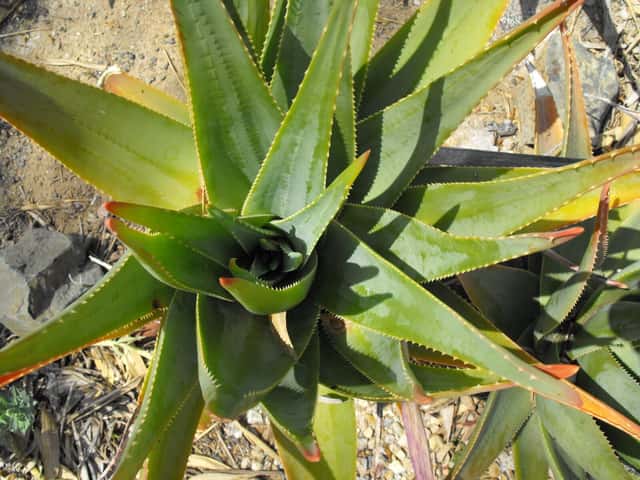
Fynbos Aloe (Aloe succotrina) is a easy-care plant from the Asphodelaceae family. Aloe succotrina is a clump-forming succulent shrub native to the rocky, quartzitic sandstone slopes of South Africa's Cape Fold Mountains, from the Cape Peninsula to Hermanus. Stiff grey-green leaves form dense rosettes, with older outer leaves turning a distinctive purplish hue — a key identificati...
Fynbos Aloe grows up to 1.5m, spread of 200cm, watering every 12 days. It is suitable for indoor environments and not safe for pets.
Unlike many tropical plants, Fynbos Aloe tolerates watering mistakes. Best for beginners. Without precautions, ingestion can cause irritation in pets. Keep out of reach of cats and dogs. Without adequate drainage, root rot can develop within 24 days.
How to Care for Fynbos Aloe?
TLDR: Fynbos Aloe needs Bright indirect, watering every 12 days, and temperatures between -6.7-30°C with 40-70% humidity.
How Often Should You Water Fynbos Aloe?
Water deeply then let the soil dry out completely before watering again — roughly every 10-14 days in active growth, much less in winter dormancy. Overwatering quickly causes root and crown rot.
How Much Light Does Fynbos Aloe Need?
Provide full sun to semi-shade outdoors, or the brightest spot available indoors (a south-facing window). It does not tolerate low light, which causes weak, stretched growth.
What Is the Best Soil for Fynbos Aloe?
Use a sandy, gritty, fast-draining mix — a cactus/succulent blend with extra perlite or coarse sand. Avoid rich, moisture-retentive soils.
What Pot Should You Use for Fynbos Aloe?
Terracotta or other unglazed, porous pots with generous drainage holes, which help excess moisture evaporate and protect the shallow root system from rot.
What Is Fynbos Aloe and Where Does It Come From?
Aloe succotrina is a clump-forming succulent shrub native to the rocky, quartzitic sandstone slopes of South Africa's Cape Fold Mountains, from the Cape Peninsula to Hermanus. Stiff grey-green leaves form dense rosettes, with older outer leaves turning a distinctive purplish hue — a key identification trait. In winter it produces striking spikes of dark orange-red, green-tipped tubular flowers that attract sunbirds. Reaching up to 1.5 m tall, it thrives in full sun to semi-shade and well-drained sandy soil, tolerating drought but not frost or waterlogged roots.
How to Propagate Fynbos Aloe?
Division of offsets
Wait until offsets are at least a few centimeters wide with their own roots before separating for best survival.
- 1 Locate small offset pups growing at the base of the mother plant
- 2 Cut them away with a clean, sharp knife, keeping some roots attached if possible
- 3 Let the cut surface callus for 2-3 days in a dry, shaded spot
- 4 Plant the offset in well-draining succulent mix and water sparingly until established
Materials needed:
Leaf cutting
This method is slower and less reliable than offsets; not all leaf cuttings will root.
- 1 Select a healthy, mature leaf and remove it cleanly at the base
- 2 Allow the cut end to callus for several days in a dry, shaded area
- 3 Lay or partially insert the callused end into a gritty, well-draining substrate
- 4 Mist lightly and keep in bright, indirect light until roots and a new rosette form
Materials needed:
Seed propagation
Growth from seed is slow, often taking 3-4 years to reach flowering size, so offsets are preferred.
- 1 Sow fresh seed on the surface of a sandy, well-draining seed mix
- 2 Keep lightly moist and warm until germination
- 3 Grow seedlings on in bright, indirect light for at least a year before transplanting
Materials needed:
How Big Does Fynbos Aloe Grow?
TLDR: Fynbos Aloe can reach up to 1.5m tall with Medium growth rate.
Max height
1.5m
Spread
2.0m
Growth rate
Medium
Foliage
Evergreen
Warning: Toxic Plant
This plant can be toxic if ingested. Keep out of reach of:
Plant Uses
Ornamental
Great for decoration
Is your plant showing symptoms?
Click on the symptom to discover possible causes:
What Diseases Commonly Affect Fynbos Aloe?
TLDR: Fynbos Aloe is susceptible to 10 known diseases. Monitor regularly for early detection.
Scale Insects
Scale insects are small sap-sucking pests that appear as brown, shell-like bumps on plant stems and leaves. There are over 25 species, divided into armored (hard) and unarmored (soft) scales. They feed by piercing plant tissue and extracting sap, which weakens the plant and can lead to yellowing, stunted growth, and even death if left untreated. They also excrete honeydew, which attracts ants and promotes sooty mold growth.
Aphids
Aphids are small, soft-bodied, pear-shaped insects (1/16 to 1/8 inch long) that feed by sucking nutrient-rich sap from plants. They reproduce rapidly and can quickly weaken plants, causing distorted growth and transmitting plant viruses. Aphids come in various colors including green, black, red, yellow, brown, and gray. They secrete honeydew, a sticky substance that attracts ants and encourages sooty mold growth.
Mealybugs
Mealybugs are small, soft-bodied insects covered with a white, waxy, cottony material. They are common pests of houseplants and outdoor plants in mild climates. These sap-sucking insects feed on plant tissue, causing damage, stunted growth, and can lead to plant death if left untreated. They produce sticky honeydew which attracts sooty mold.
Spider Mites
Spider mites are tiny arachnids (less than 1/20 inch long) related to spiders and ticks that feed on plant sap. They thrive in hot, dry conditions and can cause significant damage to ornamental and vegetable plants. During severe infestations, crop losses can reach 14% or higher as these pests disrupt vital plant processes including photosynthesis, carbon dioxide absorption, and transpiration.
Meaning & Symbolism
Like many aloes, it is popularly associated with healing, protection, and resilience — qualities drawn from its tough, drought-surviving nature.
Fun Facts
Its old leaves turn a deep purple, a trait once used to help distinguish it from similar aloe species.
Historically the sap of Aloe succotrina was harvested to produce a purple dye rather than for medicine.
It's endemic to a small pocket of South Africa's Cape Fold Mountains, from the Cape Peninsula to Hermanus.
Its winter flowers are an important nectar source for sunbirds in its native fynbos habitat.
Frequently asked questions
Is Aloe succotrina easy to care for?
Why do the leaves turn purple?
Is Aloe succotrina toxic to pets?
When does Aloe succotrina flower?
Compare with similar plants
| Attribute | Difficulty | Light | Watering | Pet Safe |
|---|---|---|---|---|
| Field Maple | Easy | Bright indirect | 14d | ✓ |
| Silver Birch | Easy | Direct sun | 14d | ✓ |
| Common Blanketflower | Easy | Direct sun | 10d | ✓ |
| Cushion Bush | Easy | Direct sun | 14d | ✓ |





