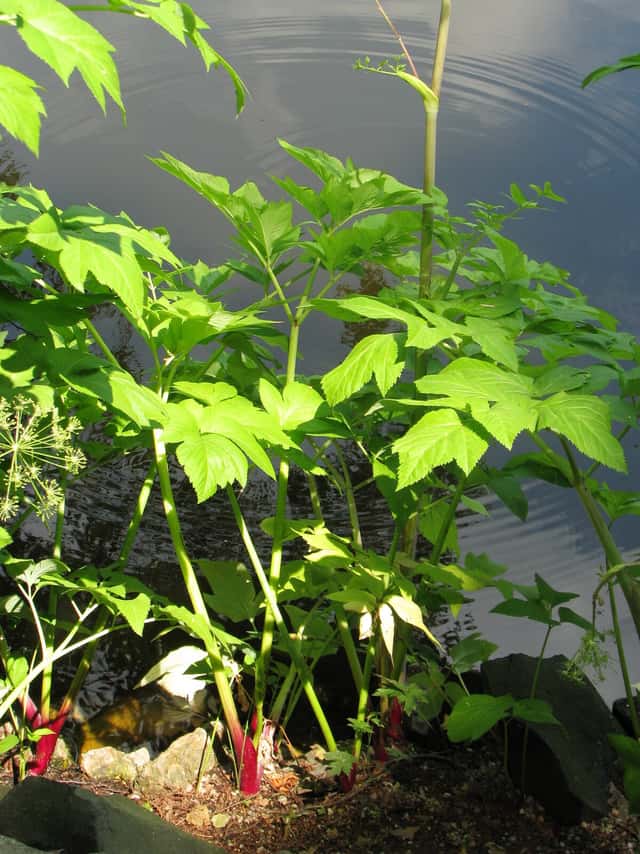
Apiaceae
Garden Angelica Care Guide
Angelica archangelica
Grow in consistently moist, fertile soil in partial shade to full sun, keeping the soil from drying out; expect a two-year life cycle ending in seed set and death of the plant.
Every 3 days
Partial shade
° - °C
% - %
Categories
What is Garden Angelica?
Garden Angelica (Angelica archangelica) is a easy-care plant from the Apiaceae family. Garden angelica is a tall, aromatic biennial herb native to Northern and Eastern Europe, prized for centuries in folk medicine, herbal liqueurs, and confectionery. Its hollow, ridged stems can reach up to 2.5 m in its second year, topped with large umbels of greenish-yellow flowers in summer.
Garden Angelica grows up to 2.5m, spread of 120cm, watering every 3 days. It is not suitable for indoor environments and safe for pets.
Unlike many tropical plants, Garden Angelica tolerates watering mistakes. Best for beginners. Unlike many popular species, Garden Angelica is safe to keep around pets.
How to Care for Garden Angelica?
TLDR: Garden Angelica needs Partial shade, watering every 3 days, and temperatures between 15-30°C with 40-70% humidity.
How Often Should You Water Garden Angelica?
Keep soil evenly moist at all times, watering deeply every 2-3 days especially during dry spells; never let it dry out completely.
How Much Light Does Garden Angelica Need?
Thrives in partial shade in warmer regions or full sun in cooler, northern climates; provide some afternoon shade during hot summers.
What Is the Best Soil for Garden Angelica?
Plant in rich, moisture-retentive loam near a water source; ensure good drainage to avoid waterlogging while keeping the soil consistently damp.
What Pot Should You Use for Garden Angelica?
Best grown directly in the ground; if potted, use a very large, deep container (at least 40-50cm deep) with excellent drainage.
What Is Garden Angelica and Where Does It Come From?
Garden angelica is a tall, aromatic biennial herb native to Northern and Eastern Europe, prized for centuries in folk medicine, herbal liqueurs, and confectionery. Its hollow, ridged stems can reach up to 2.5 m in its second year, topped with large umbels of greenish-yellow flowers in summer.
How to Propagate Garden Angelica?
Seed sowing
Angelica seed loses viability fast, so sow fresh seed as soon as possible after collecting; plants are biennial and die after flowering and setting seed in their second year.
- 1 Sow fresh seed immediately after harvest, as viability drops quickly in storage
- 2 Sow directly outdoors in autumn or stratify seed in a fridge for 4 weeks before spring sowing
- 3 Press seed lightly into moist, rich soil without covering, as light aids germination
- 4 Keep soil consistently moist until seedlings emerge
- 5 Thin seedlings to 45-60cm apart once they have several true leaves
Materials needed:
How Big Does Garden Angelica Grow?
TLDR: Garden Angelica can reach up to 2.5m tall with Medium growth rate.
Max height
2.5m
Spread
1.2m
Growth rate
Medium
Foliage
Deciduous
Warning: Toxic Plant
This plant can be toxic if ingested. Keep out of reach of:
Plant Uses
Edible
Can be consumed
Medicinal
Medicinal properties
Aromatic
Pleasant fragrance
Ornamental
Great for decoration
Medicinal Uses
- Traditionally used to aid digestion and relieve bloating
- Roots used in herbal teas for coughs and colds
- Used in bitters and tonics to stimulate appetite
Culinary Uses
- Stems candied in sugar syrup for cake decoration and confectionery
- Roots and seeds used to flavor liqueurs like Chartreuse and Benedictine
- Roots used as a botanical in gin distillation
- Young stems occasionally cooked and eaten like celery after boiling
Is your plant showing symptoms?
Click on the symptom to discover possible causes:
What Diseases Commonly Affect Garden Angelica?
TLDR: Garden Angelica is susceptible to 9 known diseases. Monitor regularly for early detection.
Aphids
Aphids are small, soft-bodied, pear-shaped insects (1/16 to 1/8 inch long) that feed by sucking nutrient-rich sap from plants. They reproduce rapidly and can quickly weaken plants, causing distorted growth and transmitting plant viruses. Aphids come in various colors including green, black, red, yellow, brown, and gray. They secrete honeydew, a sticky substance that attracts ants and encourages sooty mold growth.
Leaf Spot
Leaf spot is a common fungal disease caused by various pathogens including Alternaria, Ascochyta, Colletotrichum, Septoria, and Venturia. It primarily affects leaves, causing discolored spots that can lead to premature leaf drop if left untreated.
Powdery Mildew
Powdery mildew is a common fungal disease caused by various fungi species including Erysiphe, Podosphaera, Oïdium, and Leveillula. It affects over 10,000 plant species worldwide. The disease thrives in warm, dry climates with high humidity and appears as a distinctive white powdery coating on plant surfaces.
Root Rot
Root rot is a serious fungal disease that affects the root system of plants, causing them to decay and die. It is primarily caused by overwatering, poor drainage, or soil-borne fungi such as Pythium, Phytophthora, Rhizoctonia, and Fusarium. The disease thrives in waterlogged conditions where roots are deprived of oxygen, making them susceptible to fungal infection.
Meaning & Symbolism
Known as the "herb of angels" or "herb of the Holy Spirit" in Northern European folklore, garden angelica symbolizes protection, healing, and divine guardianship against illness.
Fun Facts
Its genus name comes from the Latin for "angelic," after a legend that an angel revealed the plant's healing powers to a monk during a plague.
A single second-year plant can shoot up to 2.5 meters tall, towering over most garden herbs.
Its candied stems have decorated cakes and pastries in Europe since at least the 16th century.
Despite its wholesome reputation, garden angelica closely resembles poisonous hemlock and must never be foraged without expert identification.
Frequently asked questions
Is garden angelica toxic?
How long does garden angelica live?
Can garden angelica be confused with poisonous plants?
How is garden angelica used in the kitchen?
Compare with similar plants
| Attribute | Difficulty | Light | Watering | Pet Safe |
|---|---|---|---|---|
| Field Maple | Easy | Bright indirect | 14d | ✓ |
| Silver Birch | Easy | Direct sun | 14d | ✓ |
| Common Blanketflower | Easy | Direct sun | 10d | ✓ |
| Cushion Bush | Easy | Direct sun | 14d | ✓ |





