Rubiaceae
Genipap: Edible Plant
Genipa americana
It prefers full sun and deep, well-drained soil rich in organic matter. Water regularly to keep the soil moist but not waterlogged, as the genipap tree is sensitive to root rot. It does not tolerate frost and thrives best in humid tropical and subtropical climates, between 20°C and 30°C.
Every 5 days
Direct sun
15° - 35°C
60% - 90%
Categories
What is Genipap?
Genipap (Genipa americana) is a medium-care plant from the Rubiaceae family. The genipap tree (Genipa americana) is a fruit-bearing tree native to tropical Americas, belonging to the Rubiaceae family. It can reach up to 15 meters in height, with a dense canopy and large, shiny leaves. It produces fragrant white flowers that turn yellow over time, and globose fruits with arom...
Genipap grows up to 15.0m, spread of 800cm, watering every 5 days, 15°C – 35°C, 60–90% humidity. It is not suitable for indoor environments and safe for pets.
Unlike many popular species, Genipap is safe to keep around pets.
How to Care for Genipap?
TLDR: Genipap needs Direct sun, watering every 5 days, and temperatures between 15-35°C with 60-90% humidity.
How Often Should You Water Genipap?
Keep the soil consistently slightly moist, watering frequently, especially during the plant's first few years. Avoid waterlogging and ensure good drainage to prevent root rot.
How Much Light Does Genipap Need?
Requires full sun, with at least 6 hours of direct light daily. Young seedlings tolerate partial shade, but development is best in full sun exposure.
What Is the Best Soil for Genipap?
Prefers deep, well-drained soils, from sandy to clayey texture, enriched with organic matter. The ideal pH is between 5.5 and 6.8.
What Pot Should You Use for Genipap?
For the seedling stage, use large containers with good drainage, as the plant grows quickly and will require transplanting to a permanent location or larger pots within a few years.
Care Schedule
Fertilize
Every 60 days
What Is Genipap and Where Does It Come From?
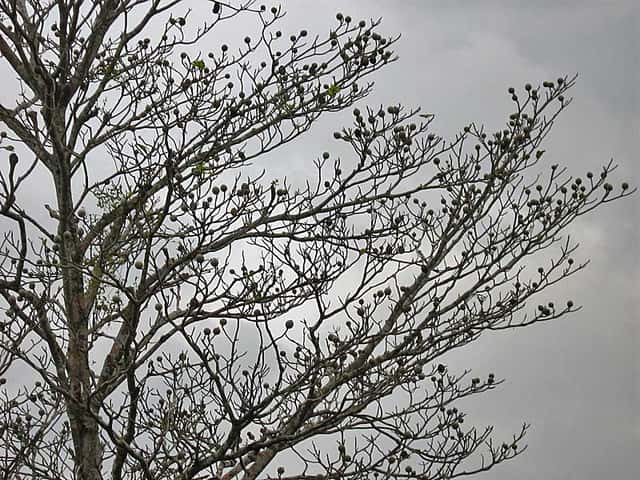
The genipap tree (Genipa americana) is a fruit-bearing tree native to tropical Americas, belonging to the Rubiaceae family. It can reach up to 15 meters in height, with a dense canopy and large, shiny leaves. It produces fragrant white flowers that turn yellow over time, and globose fruits with aromatic pulp, widely used in cuisine and traditional medicine. It is also valued for the traditional use of its sap by indigenous Amazonian peoples to produce body paint.
How Big Does Genipap Grow?
TLDR: Genipap can reach up to 15.0m tall with Medium growth rate.
Max height
15.0m
Spread
8.0m
Growth rate
Medium
Foliage
Evergreen
Plant Uses
Ornamental
Great for decoration
Edible
Can be consumed
Medicinal
Medicinal properties
Medicinal Uses
- Antioxidant and anti-inflammatory properties attributed to the fruit
- Traditional use in Amazonian folk medicine for strengthening the body
- Juice from the green fruit used topically by indigenous peoples in rituals and skin care
Culinary Uses
- Juice and pulp of the ripe fruit
- Sweets, jellies, and preserves
- Genipap liqueur
- Fermented products and traditional beverages
Is your plant showing symptoms?
Click on the symptom to discover possible causes:
What Diseases Commonly Affect Genipap?
TLDR: Genipap is susceptible to 4 known diseases. Monitor regularly for early detection.
Root Rot
Root rot is a serious fungal disease that affects the root system of plants, causing them to decay and die. It is primarily caused by overwatering, poor drainage, or soil-borne fungi such as Pythium, Phytophthora, Rhizoctonia, and Fusarium. The disease thrives in waterlogged conditions where roots are deprived of oxygen, making them susceptible to fungal infection.
Sooty Mold
Sooty mold is a fungal disease that develops on surfaces coated with honeydew, a sticky sweet substance secreted by sap-sucking insects like aphids, scale insects, and whiteflies. While it does not directly infect plant tissue, it reduces photosynthetic capacity by blocking sunlight and diminishes the plant's aesthetic appearance.
Scale Insects
Scale insects are small sap-sucking pests that appear as brown, shell-like bumps on plant stems and leaves. There are over 25 species, divided into armored (hard) and unarmored (soft) scales. They feed by piercing plant tissue and extracting sap, which weakens the plant and can lead to yellowing, stunted growth, and even death if left untreated. They also excrete honeydew, which attracts ants and promotes sooty mold growth.
Mealybugs
Mealybugs are small, soft-bodied insects covered with a white, waxy, cottony material. They are common pests of houseplants and outdoor plants in mild climates. These sap-sucking insects feed on plant tissue, causing damage, stunted growth, and can lead to plant death if left untreated. They produce sticky honeydew which attracts sooty mold.
Meaning & Symbolism
Among indigenous Amazonian peoples, genipap is a sacred element, linked to rites of passage, spiritual protection, and cultural identity. The dark dye extracted from the green fruit, rich in genipin, has been used for centuries in body paintings that mark celebrations, mourning, and life transitions.
Compare with similar plants
| Attribute | Difficulty | Light | Watering | Pet Safe |
|---|---|---|---|---|
| Dark Fieldcap | Medium | Low light | 2d | ⚠️ |
| Azalea | Medium | Partial shade | 3d | ⚠️ |
| Muriel's Bamboo | Medium | Partial shade | 3d | ✓ |
| Bougainvillea | Medium | Direct sun | 7d | ⚠️ |




