Iridaceae
Bearded Iris: Aromatic Plant
Iris germanica
Plant the rhizomes shallowly in full sun with the tops exposed, in sharply drained soil, and this tough, drought-tolerant iris will bloom reliably each spring. Divide congested clumps every few years to keep flowering strong.
Every 10 days
Direct sun
-32° - 29°C
30% - 50%
Categories
What is Bearded Iris?
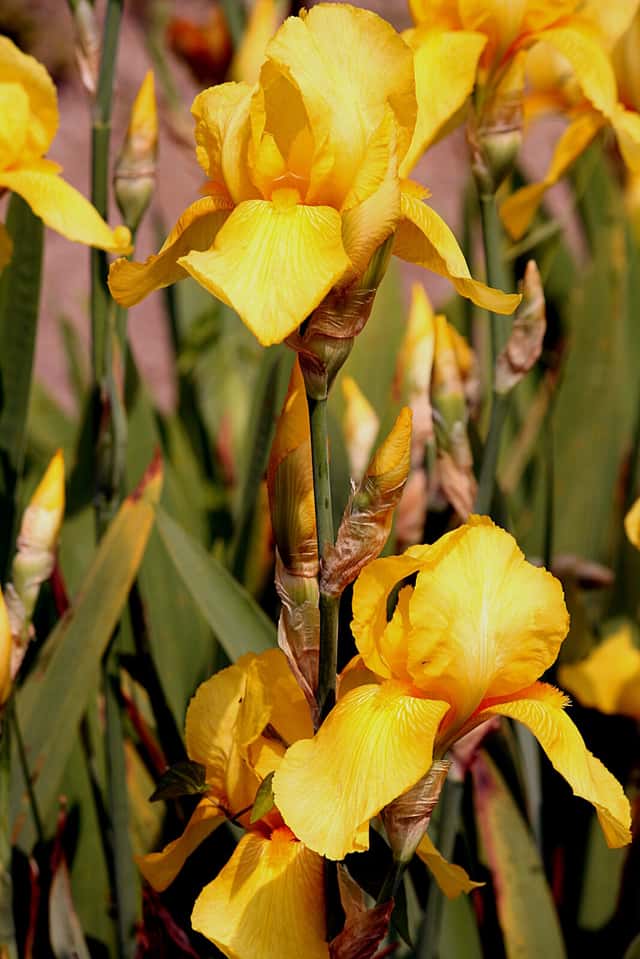
Bearded Iris (Iris germanica) is a easy-care plant from the Iridaceae family. Iris germanica, the bearded iris, is a robust rhizomatous perennial grown for its large, ruffled flowers in late spring. Each bloom carries three upright standard petals and three drooping falls marked with a fuzzy beard, in a huge range of colours from deep purple and blue to white, yellow and pink...
Bearded Iris grows up to 1.2m, spread of 60cm, watering every 10 days, -32°C – 29°C, 30–50% humidity. It is suitable for indoor environments and not safe for pets.
Unlike many tropical plants, Bearded Iris tolerates watering mistakes. Best for beginners. Without precautions, ingestion can cause irritation in pets. Keep out of reach of cats and dogs. Without adequate drainage, root rot can develop within 20 days.
How to Care for Bearded Iris?
TLDR: Bearded Iris needs Direct sun, watering every 10 days, and temperatures between -32-29°C with 30-50% humidity.
How Often Should You Water Bearded Iris?
Water deeply but infrequently, roughly every 7 to 10 days in dry spells, letting the soil dry between waterings. Keep water off the rhizomes and foliage to avoid rot and leaf spot.
How Much Light Does Bearded Iris Need?
Give it at least six hours of direct sun a day for the best flowering; in very hot climates a little afternoon shade prevents leaf scorch.
What Is the Best Soil for Bearded Iris?
Grow in well-drained, neutral to slightly acidic soil. Plant rhizomes horizontally with the top half exposed to the sun, because buried rhizomes rot.
What Pot Should You Use for Bearded Iris?
Choose a wide, shallow pot with drainage holes and a gritty, free-draining mix; set the rhizome just at the surface and expect to divide every couple of years.
Care Schedule
Fertilize
Every 180 days
Repot
Every 730 days
What Is Bearded Iris and Where Does It Come From?
Iris germanica, the bearded iris, is a robust rhizomatous perennial grown for its large, ruffled flowers in late spring. Each bloom carries three upright standard petals and three drooping falls marked with a fuzzy beard, in a huge range of colours from deep purple and blue to white, yellow and pink. Sword-shaped grey-green leaves stand in fans above thick surface rhizomes.
How Big Does Bearded Iris Grow?
TLDR: Bearded Iris can reach up to 1.2m tall with Medium growth rate.
Max height
1.2m
Spread
60cm
Growth rate
Medium
Foliage
Semi-evergreen
Warning: Toxic Plant
This plant can be toxic if ingested. Keep out of reach of:
Plant Uses
Ornamental
Great for decoration
Medicinal
Medicinal properties
Aromatic
Pleasant fragrance
Medicinal Uses
- Orris root traditionally used as a mild diuretic and for coughs and sore throats
Culinary Uses
- Orris root used as a flavouring in confectionery and gin
Is your plant showing symptoms?
Click on the symptom to discover possible causes:
What Diseases Commonly Affect Bearded Iris?
TLDR: Bearded Iris is susceptible to 3 known diseases. Monitor regularly for early detection.
Leaf Spot
Leaf spot is a common fungal disease caused by various pathogens including Alternaria, Ascochyta, Colletotrichum, Septoria, and Venturia. It primarily affects leaves, causing discolored spots that can lead to premature leaf drop if left untreated.
Rust
Rust is a common fungal disease caused by fungi in the order Pucciniales that affects a wide variety of plants. The disease gets its name from the characteristic orange, yellow, or reddish-brown pustules that appear on leaves, resembling metal rust. This obligate fungal parasite requires living plants to survive and can cause significant economic losses in agricultural crops.
Bacterial Soft Rot
Bacterial soft rot is a destructive plant disease caused primarily by bacteria from the genera Pectobacterium (formerly Erwinia) and Dickeya. These bacteria produce enzymes that break down plant cell walls, causing rapid and foul-smelling tissue decomposition. It mainly affects succulent tissues such as tubers, fruits, stems, and bulbs, being especially problematic in warm and humid conditions.
Meaning & Symbolism
The iris inspired the fleur-de-lis and stands for faith, wisdom and royalty.
Compare with similar plants
| Attribute | Difficulty | Light | Watering | Pet Safe |
|---|---|---|---|---|
| Field Maple | Easy | Bright indirect | 14d | ✓ |
| Silver Birch | Easy | Direct sun | 14d | ✓ |
| Common Blanketflower | Easy | Direct sun | 10d | ✓ |
| Cushion Bush | Easy | Direct sun | 14d | ✓ |





