Tamaricaceae
German tamarisk: Ground Cover Plant
Myricaria germanica
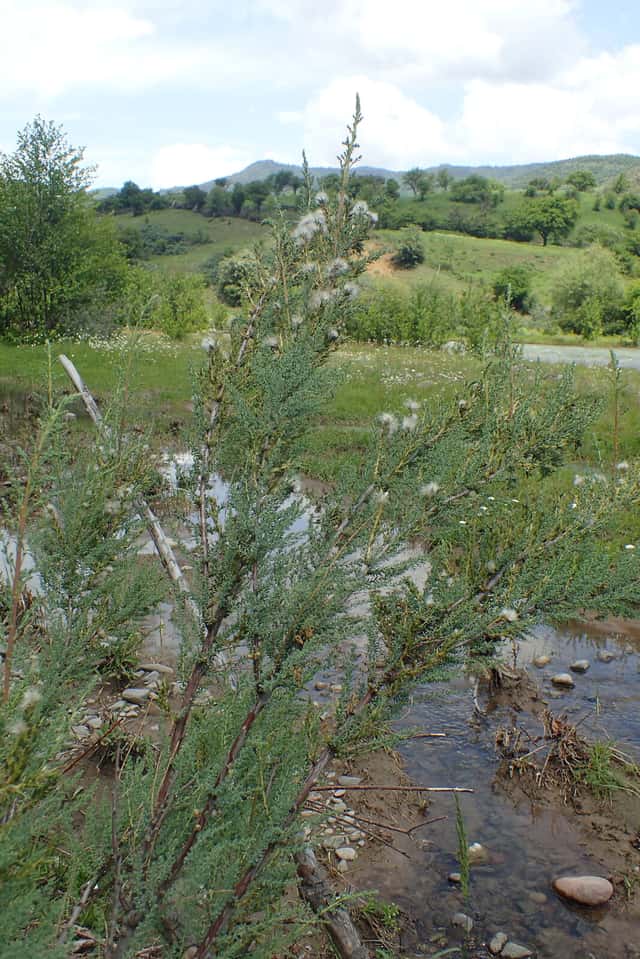
A sun-loving, fast-growing pioneer shrub that thrives best outdoors in well-ventilated, gravelly-sandy soil similar to riverbanks. It requires regular but not stagnant water supply — in its natural habitat, it has adapted to the alternation of flooding and drying out. Its winter hardiness is excellent, but it does not tolerate warm, humid, or shady locations.
Every 5 days
Direct sun
-30° - 35°C
40% - 90%
Categories
What is German tamarisk?
German tamarisk (Myricaria germanica) is a medium-care plant from the Tamaricaceae family. The German tamarisk (Myricaria germanica) is the only species of the Tamaricaceae family native to Central Europe. It is a deciduous shrub growing 60–250 cm tall, featuring rod-like, upright branches and tiny, scale-like leaves. It blooms between June and August, producing small flowers ranging from...
German tamarisk grows up to 2.5m, spread of 150cm, watering every 5 days, -30°C – 35°C, 40–90% humidity. It is not suitable for indoor environments and safe for pets.
Unlike many popular species, German tamarisk is safe to keep around pets.
How to Care for German tamarisk?
TLDR: German tamarisk needs Direct sun, watering every 5 days, and temperatures between -30-35°C with 40-90% humidity.
How Often Should You Water German tamarisk?
Keep the soil consistently moist but avoid waterlogging — good drainage in the root zone is crucial. More frequent watering is recommended in summer, with less frequent watering in winter.
How Much Light Does German tamarisk Need?
It only develops well in full sun; it will not bloom and will weaken in the shade. Choose a sheltered, calm, but light-rich location.
What Is the Best Soil for German tamarisk?
Requires loose, gravelly-sandy, nutrient-poor, well-draining soil with a pH ranging from slightly acidic to alkaline. Compact, clayey soils with stagnant water must be avoided.
What Pot Should You Use for German tamarisk?
If growing in a container, choose a wide, deep pot with excellent drainage and a gravelly-sandy soil mix to mimic its natural riverbank habitat.
Care Schedule
Fertilize
Every 90 days
What Is German tamarisk and Where Does It Come From?
The German tamarisk (Myricaria germanica) is the only species of the Tamaricaceae family native to Central Europe. It is a deciduous shrub growing 60–250 cm tall, featuring rod-like, upright branches and tiny, scale-like leaves. It blooms between June and August, producing small flowers ranging from pale pink to white in dense racemes. A typical pioneer species, it colonizes gravelly and sandy banks of mountain and subalpine rivers, where periodic flooding and drought are common. In Hungary, it is a strictly protected and endangered species, now occurring only in a few, mostly secondary (man-made) habitats.
How to Propagate German tamarisk?
How Big Does German tamarisk Grow?
TLDR: German tamarisk can reach up to 2.5m tall with Fast growth rate.
Max height
2.5m
Spread
1.5m
Growth rate
Fast
Foliage
Deciduous
Warning: Toxic Plant
This plant can be toxic if ingested. Keep out of reach of:
Plant Uses
Ornamental
Great for decoration
Medicinal
Medicinal properties
Ground Cover
Soil coverage
Medicinal Uses
- A decoction of the bark was traditionally used as a mild laxative
- In Spain, it was formerly used to treat jaundice
- It was once used to treat infertility, but is no longer used today due to its toxic effects
Is your plant showing symptoms?
Click on the symptom to discover possible causes:
What Diseases Commonly Affect German tamarisk?
TLDR: German tamarisk is susceptible to 6 known diseases. Monitor regularly for early detection.
Aphids
Aphids are small, soft-bodied, pear-shaped insects (1/16 to 1/8 inch long) that feed by sucking nutrient-rich sap from plants. They reproduce rapidly and can quickly weaken plants, causing distorted growth and transmitting plant viruses. Aphids come in various colors including green, black, red, yellow, brown, and gray. They secrete honeydew, a sticky substance that attracts ants and encourages sooty mold growth.
Spider Mites
Spider mites are tiny arachnids (less than 1/20 inch long) related to spiders and ticks that feed on plant sap. They thrive in hot, dry conditions and can cause significant damage to ornamental and vegetable plants. During severe infestations, crop losses can reach 14% or higher as these pests disrupt vital plant processes including photosynthesis, carbon dioxide absorption, and transpiration.
Scale Insects
Scale insects are small sap-sucking pests that appear as brown, shell-like bumps on plant stems and leaves. There are over 25 species, divided into armored (hard) and unarmored (soft) scales. They feed by piercing plant tissue and extracting sap, which weakens the plant and can lead to yellowing, stunted growth, and even death if left untreated. They also excrete honeydew, which attracts ants and promotes sooty mold growth.
Root Rot
Root rot is a serious fungal disease that affects the root system of plants, causing them to decay and die. It is primarily caused by overwatering, poor drainage, or soil-borne fungi such as Pythium, Phytophthora, Rhizoctonia, and Fusarium. The disease thrives in waterlogged conditions where roots are deprived of oxygen, making them susceptible to fungal infection.
Meaning & Symbolism
A symbol of resilience and renewal — a pioneer shrub that settles even on the crushed gravel of mountain rivers and survives both floods and droughts.
Compare with similar plants
| Attribute | Difficulty | Light | Watering | Pet Safe |
|---|---|---|---|---|
| Dark Fieldcap | Medium | Low light | 2d | ⚠️ |
| Azalea | Medium | Partial shade | 3d | ⚠️ |
| Muriel's Bamboo | Medium | Partial shade | 3d | ✓ |
| Bougainvillea | Medium | Direct sun | 7d | ⚠️ |
Choose & Compare
Sources & References
- Myricaria germanica - PFAF Plant Database
- Myricaria germanica - Wikipedia
- Deutsche Tamariske / Myricaria germanica - NaturaDB
- Myricaria germanica (False Tamarisk) - BOTANY.cz
- German Tamarisk (Myricaria germanica) - PictureThis
- Myricaria (Myricaria germanica) - Botanical Realm
- A csermelyciprus (Myricaria germanica) uj hazai eloafordulasa - MTA REAL




