Plantaginaceae
Germander Speedwell: Ground Cover Plant
Veronica chamaedrys
An easy-to-grow perennial requiring minimal maintenance once established. Thrives in moist but well-drained soil in full sun to partial shade. Tolerates drought conditions after establishment. Prefers loamy or clay soil with neutral to slightly acidic pH. Exceptionally hardy, rated H7 (hardy below -20°C in severe continental climates).
Every 7-10 days
Bright indirect
-20° - °C
% - %
Categories
What is Germander Speedwell?
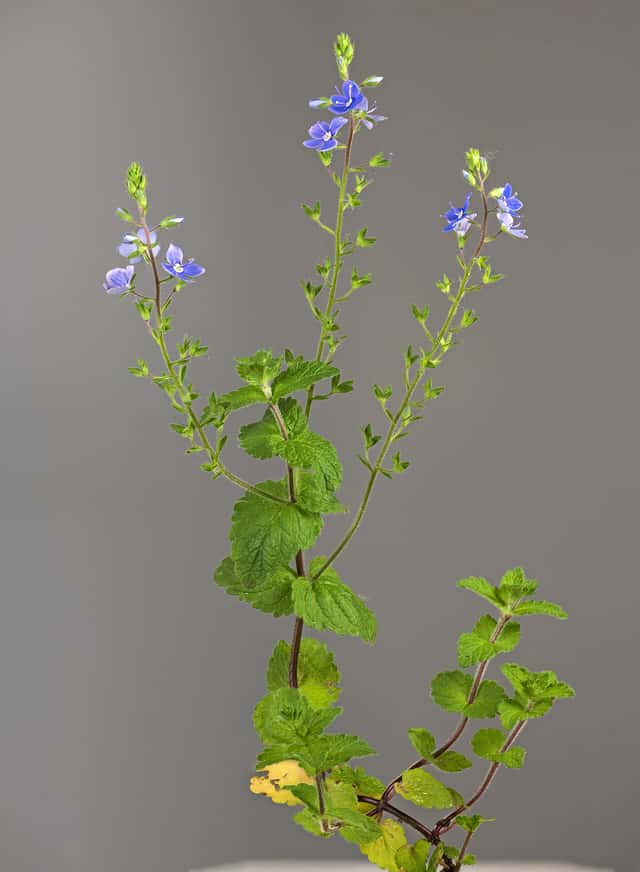
Germander Speedwell (Veronica chamaedrys) is a easy-care plant from the Plantaginaceae family. Veronica chamaedrys is a low-growing herbaceous perennial native to Europe, belonging to the family Plantaginaceae. This hardy wildflower features creeping stems that form dense mats up to 50 cm wide, producing striking deep blue flowers with white centers from spring through early summer. The leave...
Germander Speedwell grows up to 50cm, spread of 50cm. It is not suitable for indoor environments and safe for pets.
Unlike many tropical plants, Germander Speedwell tolerates watering mistakes. Best for beginners. Unlike many popular species, Germander Speedwell is safe to keep around pets.
How to Care for Germander Speedwell?
TLDR: Germander Speedwell needs Bright indirect, watering every 7 days, and temperatures between -20-30°C with 40-70% humidity.
How Often Should You Water Germander Speedwell?
Keep soil consistently moist but well-drained, especially during the growing season. Although drought-tolerant once established, avoid letting soil dry out completely during active growth. Do not allow waterlogging.
How Much Light Does Germander Speedwell Need?
Prefers full sun to partial shade. Performs best in brightly lit locations with south, east, or west-facing aspects. Tolerates light shade but may flower less prolifically.
What Is the Best Soil for Germander Speedwell?
Thrives in loamy or clay soil that is moist but well-drained. Tolerates acidic to neutral pH (5.5-7.0). Amend heavy soils with organic matter if drainage is poor.
What Pot Should You Use for Germander Speedwell?
Not recommended for permanent container cultivation; best grown in garden beds and borders outdoors.
What Is Germander Speedwell and Where Does It Come From?
Veronica chamaedrys is a low-growing herbaceous perennial native to Europe, belonging to the family Plantaginaceae. This hardy wildflower features creeping stems that form dense mats up to 50 cm wide, producing striking deep blue flowers with white centers from spring through early summer. The leaves are opposite, triangular, and finely toothed. Highly adaptable and low-maintenance, it excels as a ground cover in wildlife gardens, wildflower meadows, and natural lawns. Extremely cold-hardy and recognized with the RHS Award of Garden Merit.
How Big Does Germander Speedwell Grow?
TLDR: Germander Speedwell can reach up to 50cm tall with Medium growth rate.
Max height
50cm
Spread
50cm
Growth rate
Medium
Foliage
Deciduous
Plant Uses
Ornamental
Great for decoration
Ground Cover
Soil coverage
Medicinal
Medicinal properties
Medicinal Uses
- Traditional herbal tea for nervous system support
- Respiratory tract support
- Cardiovascular tonic
- Metabolic support
Is your plant showing symptoms?
Click on the symptom to discover possible causes:
What Diseases Commonly Affect Germander Speedwell?
TLDR: Germander Speedwell is susceptible to 4 known diseases. Monitor regularly for early detection.
Downy Mildew
Downy mildew is a fungal-like disease caused by oomycetes (water molds) that thrives in cool, wet conditions. It affects a wide range of plants, causing yellowing leaves with fuzzy white-gray growth underneath, leading to defoliation and reduced yields if left untreated.
Leaf Spot
Leaf spot is a common fungal disease caused by various pathogens including Alternaria, Ascochyta, Colletotrichum, Septoria, and Venturia. It primarily affects leaves, causing discolored spots that can lead to premature leaf drop if left untreated.
Root Rot
Root rot is a serious fungal disease that affects the root system of plants, causing them to decay and die. It is primarily caused by overwatering, poor drainage, or soil-borne fungi such as Pythium, Phytophthora, Rhizoctonia, and Fusarium. The disease thrives in waterlogged conditions where roots are deprived of oxygen, making them susceptible to fungal infection.
Aphids
Aphids are small, soft-bodied, pear-shaped insects (1/16 to 1/8 inch long) that feed by sucking nutrient-rich sap from plants. They reproduce rapidly and can quickly weaken plants, causing distorted growth and transmitting plant viruses. Aphids come in various colors including green, black, red, yellow, brown, and gray. They secrete honeydew, a sticky substance that attracts ants and encourages sooty mold growth.
Compare with similar plants
| Attribute | Difficulty | Light | Watering | Pet Safe |
|---|---|---|---|---|
| Field Maple | Easy | Bright indirect | 14d | ✓ |
| Silver Birch | Easy | Direct sun | 14d | ✓ |
| Common Blanketflower | Easy | Direct sun | 10d | ✓ |
| Cushion Bush | Easy | Direct sun | 14d | ✓ |





