Araceae
Giant Elephant Ear: Edible Plant
Xanthosoma robustum
Needs bright indirect light, frequent watering to keep the substrate moist (never soggy), and high ambient humidity. Grows fast in spring and summer, slowing into semi-dormancy in autumn-winter, when watering and fertilizing should be reduced.
Every 4 days
Partial shade
15° - 32°C
60% - 85%
Categories
What is Giant Elephant Ear?
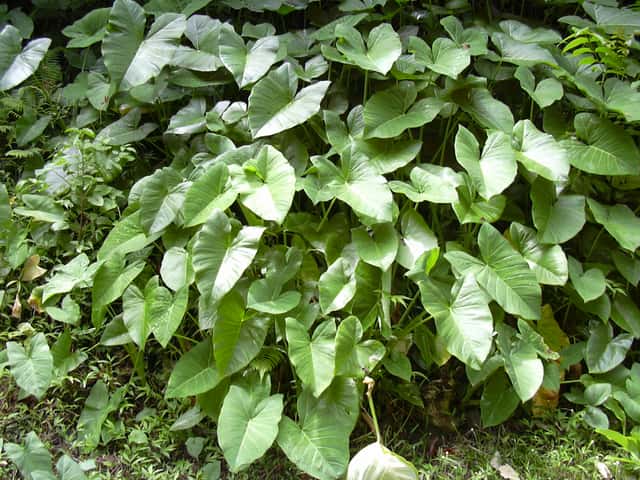
Giant Elephant Ear (Xanthosoma robustum) is a medium-care plant from the Araceae family. The giant elephant ear (Xanthosoma robustum) is a tropical aroid native to Mexico and Central America, prized for its massive shield-shaped leaves in deep emerald green with striking white veining. It can reach up to 3.6 m tall under ideal conditions, forming an imposing clump in tropical gardens or...
Giant Elephant Ear grows up to 3.6m, spread of 180cm, watering every 4 days, 15°C – 32°C, 60–85% humidity. It is suitable for indoor environments and not safe for pets.
Without precautions, ingestion can cause irritation in pets. Keep out of reach of cats and dogs. Without adequate drainage, root rot can develop within 8 days.
How to Care for Giant Elephant Ear?
TLDR: Giant Elephant Ear needs Partial shade, watering every 4 days, and temperatures between 15-32°C with 60-85% humidity.
How Often Should You Water Giant Elephant Ear?
Water when the top 25-30% of the soil is dry, roughly every 3-4 days during the growing season and every 7-8 days in winter. Sensitive to both waterlogging and prolonged drought.
How Much Light Does Giant Elephant Ear Need?
Prefers bright, indirect light; shield from intense direct sun for more than an hour a day to avoid leaf scorch.
What Is the Best Soil for Giant Elephant Ear?
Use a rich, well-draining organic mix (e.g., general potting soil with perlite and worm castings) to prevent root rot from waterlogging.
What Pot Should You Use for Giant Elephant Ear?
A wide, deep pot with good drainage, in terracotta or sturdy plastic, sized to match the plant's large leaves.
Care Schedule
Fertilize
Every 30 days
Misting
Every 3 days
Rotate
Every 14 days
Repot
Every 365 days
What Is Giant Elephant Ear and Where Does It Come From?
The giant elephant ear (Xanthosoma robustum) is a tropical aroid native to Mexico and Central America, prized for its massive shield-shaped leaves in deep emerald green with striking white veining. It can reach up to 3.6 m tall under ideal conditions, forming an imposing clump in tropical gardens or large containers.
How to Propagate Giant Elephant Ear?
Rhizome division
Use clean, disinfected tools to avoid infection; keep substrate barely moist until new growth appears.
- 1 Carefully dig up the mother plant
- 2 Separate rhizome sections, ensuring each has roots attached
- 3 Let cuts callus for a day before planting
- 4 Plant each section in moist, well-draining substrate
Materials needed:
Corm/offset division
Young offsets root easily when kept warm (above 18°C/64°F).
- 1 Remove offset corms growing beside the main corm
- 2 Check each has at least one growth point
- 3 Plant directly into moist substrate
- 4 Keep warm and in indirect light until it sprouts
Materials needed:
How Big Does Giant Elephant Ear Grow?
TLDR: Giant Elephant Ear can reach up to 3.6m tall with Fast growth rate.
Max height
3.6m
Spread
1.8m
Growth rate
Fast
Foliage
Evergreen
Warning: Toxic Plant
This plant can be toxic if ingested. Keep out of reach of:
Plant Uses
Ornamental
Great for decoration
Edible
Can be consumed
Culinary Uses
- Corms are cooked for an extended time (boiled or steamed) and eaten as a substitute for malanga/yautia in traditional Central American soups and stews; never eaten raw due to calcium oxalate content.
Is your plant showing symptoms?
Click on the symptom to discover possible causes:
What Diseases Commonly Affect Giant Elephant Ear?
TLDR: Giant Elephant Ear is susceptible to 11 known diseases. Monitor regularly for early detection.
Root Rot
Root rot is a serious fungal disease that affects the root system of plants, causing them to decay and die. It is primarily caused by overwatering, poor drainage, or soil-borne fungi such as Pythium, Phytophthora, Rhizoctonia, and Fusarium. The disease thrives in waterlogged conditions where roots are deprived of oxygen, making them susceptible to fungal infection.
Spider Mites
Spider mites are tiny arachnids (less than 1/20 inch long) related to spiders and ticks that feed on plant sap. They thrive in hot, dry conditions and can cause significant damage to ornamental and vegetable plants. During severe infestations, crop losses can reach 14% or higher as these pests disrupt vital plant processes including photosynthesis, carbon dioxide absorption, and transpiration.
Mealybugs
Mealybugs are small, soft-bodied insects covered with a white, waxy, cottony material. They are common pests of houseplants and outdoor plants in mild climates. These sap-sucking insects feed on plant tissue, causing damage, stunted growth, and can lead to plant death if left untreated. They produce sticky honeydew which attracts sooty mold.
Scale Insects
Scale insects are small sap-sucking pests that appear as brown, shell-like bumps on plant stems and leaves. There are over 25 species, divided into armored (hard) and unarmored (soft) scales. They feed by piercing plant tissue and extracting sap, which weakens the plant and can lead to yellowing, stunted growth, and even death if left untreated. They also excrete honeydew, which attracts ants and promotes sooty mold growth.
Compare with similar plants
| Attribute | Difficulty | Light | Watering | Pet Safe |
|---|---|---|---|---|
| Dark Fieldcap | Medium | Low light | 2d | ⚠️ |
| Azalea | Medium | Partial shade | 3d | ⚠️ |
| Muriel's Bamboo | Medium | Partial shade | 3d | ✓ |
| Bougainvillea | Medium | Direct sun | 7d | ⚠️ |




