Betulaceae
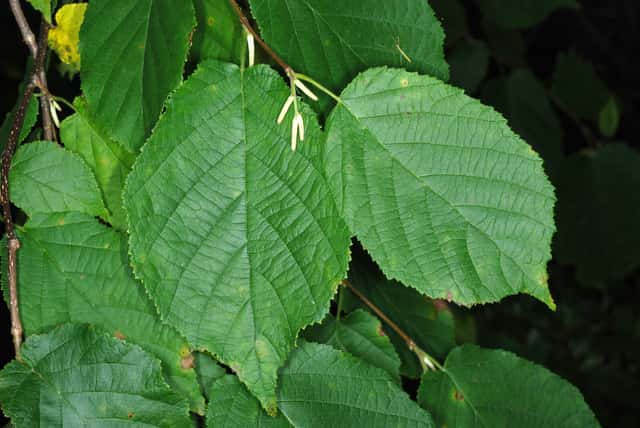
Giant Filbert (Corylus maxima) Care Guide
Corylus maxima
A low-maintenance, cold-hardy shrub best grown outdoors in full sun to part shade. Tolerates a wide range of soils but performs best in moist, well-drained, organically rich loam. Water regularly during establishment and dry spells, especially while nuts are developing. Prune in late winter to remove suckers, dead wood, and crossing branches, and watch for eastern filbert blight cankers on stems.
Every 7 days
Direct sun
-20° - 32°C
% - %
Categories
What is Giant Filbert?
Giant Filbert (Corylus maxima) is a easy-care plant from the Betulaceae family. Corylus maxima, the giant filbert, is a vigorous deciduous shrub or small tree native to the Balkan Peninsula and parts of southeastern Europe and southwestern Asia. Closely related to the common hazel (Corylus avellana), it is distinguished by its edible nuts enclosed in a long, tubular husk that e...
Giant Filbert grows up to 4.6m, spread of 460cm, watering every 7 days, -20°C – 32°C. It is not suitable for indoor environments and safe for pets.
Unlike many tropical plants, Giant Filbert tolerates watering mistakes. Best for beginners. Unlike many popular species, Giant Filbert is safe to keep around pets.
How to Care for Giant Filbert?
TLDR: Giant Filbert needs Direct sun, watering every 7 days, and temperatures between -20-32°C with 40-70% humidity.
How Often Should You Water Giant Filbert?
Water deeply once a week during the growing season and any dry spells, more often for young or newly planted specimens. Established plants tolerate short dry periods but need consistent moisture while nuts are filling out in summer. Avoid waterlogging, which encourages root and crown rot.
How Much Light Does Giant Filbert Need?
Plant in full sun for the best nut production, though it tolerates partial shade. At least 6 hours of direct sun daily encourages strong catkin and nut development.
What Is the Best Soil for Giant Filbert?
Prefers moist, well-drained, organically rich loam with a slightly acidic to neutral pH (5.5-7.0). Tolerates average garden soil but struggles in heavy, waterlogged clay.
What Pot Should You Use for Giant Filbert?
Best planted directly in the ground given its mature size; if container growing is necessary, use a large pot (60cm/24in or wider) with substantial drainage holes and repot every few years into a bigger container.
Care Schedule
Fertilize
Every 365 days
What Is Giant Filbert and Where Does It Come From?
Corylus maxima, the giant filbert, is a vigorous deciduous shrub or small tree native to the Balkan Peninsula and parts of southeastern Europe and southwestern Asia. Closely related to the common hazel (Corylus avellana), it is distinguished by its edible nuts enclosed in a long, tubular husk that extends well beyond the shell. Grown both for its nut harvest and, in purple-leaved cultivars such as Purpurea, as an ornamental garden specimen, it produces striking pale yellow male catkins in late winter that are among the first signs of the growing season.
How to Propagate Giant Filbert?
Layering (stooling)
Layering in autumn or winter, while the plant is dormant, gives the highest success rate.
- 1 Choose a young, flexible sucker near the base of the plant
- 2 Bend the shoot down to the soil and bury a section, leaving the tip exposed
- 3 Pin the buried section down with a hook or stone
- 4 Keep the soil consistently moist until roots form
- 5 Sever from the parent plant and transplant once well rooted
Materials needed:
Seed sowing
Seedlings may not come true to the parent plant, especially for cultivars such as Purpurea.
- 1 Collect ripe nuts in autumn
- 2 Cold-stratify the seeds for 3-4 months in moist substrate in the fridge or outdoors
- 3 Sow in pots or directly in the ground in spring
- 4 Keep the substrate lightly moist until germination
Materials needed:
How Big Does Giant Filbert Grow?
TLDR: Giant Filbert can reach up to 4.6m tall with Medium growth rate.
Max height
4.6m
Spread
4.6m
Growth rate
Medium
Foliage
Deciduous
Plant Uses
Edible
Can be consumed
Ornamental
Great for decoration
Medicinal Uses
- Leaves and bark traditionally used in folk herbalism as a mild astringent
Culinary Uses
- Nuts eaten raw or roasted
- Used in confectionery and mixed nut blends
- Ground into flour for baking and pastries
Is your plant showing symptoms?
Click on the symptom to discover possible causes:
What Diseases Commonly Affect Giant Filbert?
TLDR: Giant Filbert is susceptible to 9 known diseases. Monitor regularly for early detection.
Canker
Canker is a disease caused by various fungi and bacteria that create necrotic, sunken areas on bark of branches, stems, and trunks. Pathogens enter through wounds and natural openings, especially when plants are stressed. Canker can gradually weaken or kill branches by disrupting water and nutrient flow.
Powdery Mildew
Powdery mildew is a common fungal disease caused by various fungi species including Erysiphe, Podosphaera, Oïdium, and Leveillula. It affects over 10,000 plant species worldwide. The disease thrives in warm, dry climates with high humidity and appears as a distinctive white powdery coating on plant surfaces.
Bacterial Blight
Bacterial blight is a serious plant disease caused by pathogenic bacteria that enters plants through wounds or natural openings. It spreads rapidly in warm, wet conditions and can cause significant damage to leaves, stems, and flowers. The bacteria are transmitted by water splash, contaminated tools, and insects.
Crown Gall
Crown gall is a bacterial disease caused by Agrobacterium tumefaciens that affects over 140 species of plants. The bacteria insert DNA into plant cells, causing them to divide uncontrollably and form large tumor-like growths (galls) primarily on roots, stems, and at the soil line. These galls restrict water and nutrient flow, severely impacting plant health and potentially killing the plant.
Meaning & Symbolism
In European folklore, the hazel genus Corylus has long symbolized wisdom, protection, and fertility; forked hazel branches were traditionally used as divining rods to locate water and buried treasure.
Fun Facts
The name filbert likely comes from Saint Philibert, whose feast day falls near the time the nuts ripen in late summer.
Its native range is thought to be limited to the northwestern Balkan Peninsula, though it has been cultivated across Europe for centuries.
The purple-leaved cultivar Purpurea is grown purely as an ornamental, valued for its dark foliage and showy catkins.
Frequently asked questions
Is Corylus maxima the same as a hazelnut tree?
How much sun does a giant filbert need?
How often should I water a newly planted filbert?
What diseases affect giant filbert?
Is Corylus maxima toxic to pets?
Compare with similar plants
| Attribute | Difficulty | Light | Watering | Pet Safe |
|---|---|---|---|---|
| Field Maple | Easy | Bright indirect | 14d | ✓ |
| Silver Birch | Easy | Direct sun | 14d | ✓ |
| Common Blanketflower | Easy | Direct sun | 10d | ✓ |
| Cushion Bush | Easy | Direct sun | 14d | ✓ |





