Acanthaceae
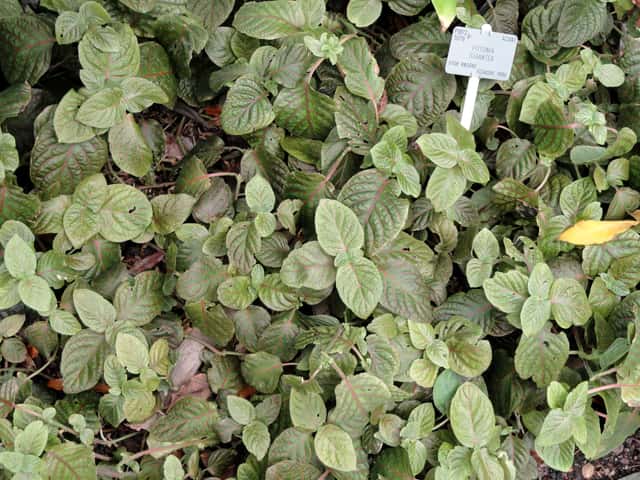
Giant Nerve Plant (Fittonia gigantea)
Fittonia gigantea
Thrives in filtered indirect light, consistently moist soil, and high humidity (above 50%). Sensitive to inconsistent watering and intolerant of dry or cold air.
Every 4 days
Low light
16° - 27°C
50% - 80%
Categories
What is Giant Nerve Plant?
Giant Nerve Plant (Fittonia gigantea) is a medium-care plant from the Acanthaceae family. The Giant Nerve Plant (Fittonia gigantea) is a mat-forming evergreen perennial native to the tropical rainforests of Ecuador and Peru, in the Acanthaceae family. Its oval leaves, up to 16 cm long, display deep green tones traced by striking dark red veins that resemble a network of nerves - the sour...
Giant Nerve Plant grows up to 80cm, spread of 60cm, watering every 4 days, 16°C – 27°C, 50–80% humidity. It is suitable for indoor environments and safe for pets.
Unlike many popular species, Giant Nerve Plant is safe to keep around pets. Without adequate drainage, root rot can develop within 8 days.
How to Care for Giant Nerve Plant?
TLDR: Giant Nerve Plant needs Low light, watering every 4 days, and temperatures between 16-27°C with 50-80% humidity.
How Often Should You Water Giant Nerve Plant?
Water once the top 2-3 cm of soil feels dry, keeping the substrate evenly moist but never soggy. The plant wilts dramatically when thirsty but bounces back quickly after watering - avoid letting it dry out repeatedly.
How Much Light Does Giant Nerve Plant Need?
Provide bright, filtered indirect light, such as behind a sheer curtain or a few feet from an east- or north-facing window. Direct sun scorches the leaves, while very low light causes leggy, weak growth.
What Is the Best Soil for Giant Nerve Plant?
Use a light, peat-moss based potting mix enriched with organic matter, amended with perlite or coarse sand for drainage while retaining moisture.
What Pot Should You Use for Giant Nerve Plant?
Shallow, wide pots with good drainage, or closed terrariums that help maintain constant humidity.
Care Schedule
Fertilize
Every 30 days
Misting
Every 3 days
Rotate
Every 14 days
Repot
Every 540 days
What Is Giant Nerve Plant and Where Does It Come From?
The Giant Nerve Plant (Fittonia gigantea) is a mat-forming evergreen perennial native to the tropical rainforests of Ecuador and Peru, in the Acanthaceae family. Its oval leaves, up to 16 cm long, display deep green tones traced by striking dark red veins that resemble a network of nerves - the source of its common name. It spreads as a low, creeping groundcover, making it a favorite for terrariums, greenhouse cabinets, and high-humidity indoor spaces.
How to Propagate Giant Nerve Plant?
Stem Cutting
Use clean, sharp scissors, apply rooting hormone to speed up the process, and change the water every 3-4 days if propagating in water.
- 1 Cut a stem segment about 5 cm long with 3 to 5 healthy leaves
- 2 Remove the leaves near the base of the cutting, leaving only the top ones
- 3 Place the cutting in filtered water or moist peat-based substrate
- 4 Keep in a warm spot (above 18°C) with indirect light and high humidity until roots form
Materials needed:
Clump Division
Divide preferably in spring, while the plant is actively growing.
- 1 Remove the plant from its pot and examine the roots
- 2 Divide the clump into sections at least 5 cm wide, each with roots and leaves
- 3 Replant each section in its own pot with light, moist substrate
- 4 Keep in a humid, shaded spot until the plant settles in
Materials needed:
How Big Does Giant Nerve Plant Grow?
TLDR: Giant Nerve Plant can reach up to 80cm tall with Slow growth rate.
Max height
80cm
Spread
60cm
Growth rate
Slow
Foliage
Evergreen
Plant Uses
Ornamental
Great for decoration
Is your plant showing symptoms?
Click on the symptom to discover possible causes:
What Diseases Commonly Affect Giant Nerve Plant?
TLDR: Giant Nerve Plant is susceptible to 9 known diseases. Monitor regularly for early detection.
Spider Mites
Spider mites are tiny arachnids (less than 1/20 inch long) related to spiders and ticks that feed on plant sap. They thrive in hot, dry conditions and can cause significant damage to ornamental and vegetable plants. During severe infestations, crop losses can reach 14% or higher as these pests disrupt vital plant processes including photosynthesis, carbon dioxide absorption, and transpiration.
Mealybugs
Mealybugs are small, soft-bodied insects covered with a white, waxy, cottony material. They are common pests of houseplants and outdoor plants in mild climates. These sap-sucking insects feed on plant tissue, causing damage, stunted growth, and can lead to plant death if left untreated. They produce sticky honeydew which attracts sooty mold.
Thrips
Thrips are tiny cigar-shaped insects (1/25-inch long) that damage plants by sucking plant juices and scraping at fruits, flowers, and leaves. With over 6,000 species and rapid reproduction (lifecycle as short as 14 days), they can quickly infest plants and transmit viruses like tomato spotted wilt virus.
Fungus Gnats
Fungus gnats are small, gray-to-black mosquito-like insects (1/8 to 1/10 inches long) commonly found in indoor plants. Adult gnats are mostly a nuisance, but their larvae feed on plant roots and organic matter in soil, potentially causing serious damage to young or vulnerable plants. The larvae are translucent white with distinctive black heads and can leave slime trails on the soil surface in heavy infestations.
Meaning & Symbolism
With leaves patterned like veins and nerves, the Giant Nerve Plant is often linked to connection, inner vitality, and attentive care - a reminder that beauty lives in the details.
Fun Facts
Its red leaf veins resemble a network of nerves, which is how the plant got its common name
It is the largest species in the Fittonia genus, reaching up to 80 cm tall
Its cream-white flowers rarely appear when grown as a houseplant
Frequently asked questions
Is the Giant Nerve Plant toxic to cats and dogs?
Why is my Giant Nerve Plant wilting?
Can I grow the Giant Nerve Plant in a terrarium?
How often should I fertilize the Giant Nerve Plant?
Compare with similar plants
| Attribute | Difficulty | Light | Watering | Pet Safe |
|---|---|---|---|---|
| Dark Fieldcap | Medium | Low light | 2d | ⚠️ |
| Azalea | Medium | Partial shade | 3d | ⚠️ |
| Muriel's Bamboo | Medium | Partial shade | 3d | ✓ |
| Bougainvillea | Medium | Direct sun | 7d | ⚠️ |




