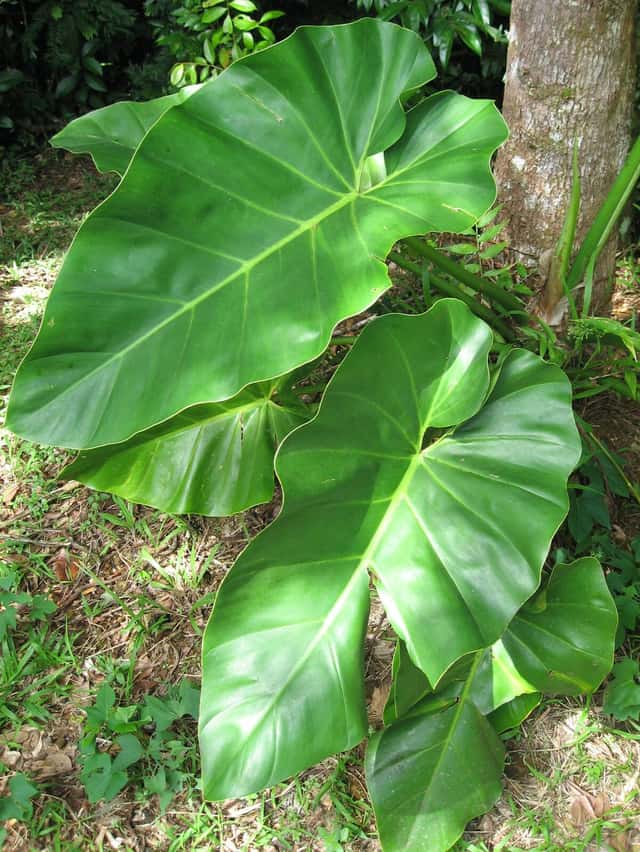
Araceae
Philodendron giganteum (Giant Philodendron) Care Guide
Philodendron giganteum
Give it medium to bright indirect light, rich well-draining soil, and high humidity above 60%. It is prone to root rot, so let the top couple of inches of soil dry out between waterings.
Every 7 days
Partial shade
13° - 29°C
60% - 80%
Categories
What is Giant Philodendron?
Giant Philodendron (Philodendron giganteum) is a medium-care plant from the Araceae family. Philodendron giganteum is a striking aroid native to the tropical forests of the Caribbean and South America, including Brazil's Para state. In the wild it grows as a hemiepiphyte, climbing tree trunks and producing leaves that can exceed 60 cm (2 ft) in length. Its bold, glossy foliage makes it a d...
Giant Philodendron grows up to 2.0m, spread of 150cm, watering every 7 days, 13°C – 29°C, 60–80% humidity. It is suitable for indoor environments and not safe for pets.
Without precautions, ingestion can cause irritation in pets. Keep out of reach of cats and dogs. Without adequate drainage, root rot can develop within 14 days.
How to Care for Giant Philodendron?
TLDR: Giant Philodendron needs Partial shade, watering every 7 days, and temperatures between 13-29°C with 60-80% humidity.
How Often Should You Water Giant Philodendron?
Water about once a week during spring and summer once the top 2-5 cm of soil is dry; cut back in winter to prevent overwatering and root rot.
How Much Light Does Giant Philodendron Need?
Provide medium to bright indirect light; avoid harsh direct midday sun, which can scorch the large leaves.
What Is the Best Soil for Giant Philodendron?
Use a rich, well-draining mix with organic matter, orchid bark or coconut husk, and perlite for aeration.
What Pot Should You Use for Giant Philodendron?
A sturdy terracotta or ceramic pot with several drainage holes, sized generously for its large mature form.
Care Schedule
Fertilize
Every 30 days
Misting
Every 2 days
Repot
Every 1095 days
What Is Giant Philodendron and Where Does It Come From?
Philodendron giganteum is a striking aroid native to the tropical forests of the Caribbean and South America, including Brazil's Para state. In the wild it grows as a hemiepiphyte, climbing tree trunks and producing leaves that can exceed 60 cm (2 ft) in length. Its bold, glossy foliage makes it a dramatic statement plant for spacious indoor or greenhouse settings.
How to Propagate Giant Philodendron?
Stem cutting
Keep humidity high around the cutting and use clean, sharp tools to prevent contamination.
- 1 Cut a healthy stem segment with at least one node
- 2 Let the cut surface callous over for a few hours
- 3 Plant in moist, well-draining substrate or place in water until roots form
Materials needed:
Air layering
Keep the moss consistently moist and check weekly for root development.
- 1 Wrap a node with moistened sphagnum moss
- 2 Cover with plastic to retain moisture
- 3 Wait for visible roots before separating and potting
Materials needed:
Offset division
Wait until offsets have visible roots of their own before separating them from the mother plant.
- 1 Locate offsets or side shoots at the base of the mother plant
- 2 Carefully separate them with their own roots intact
- 3 Pot into an individual container with suitable substrate
Materials needed:
How Big Does Giant Philodendron Grow?
TLDR: Giant Philodendron can reach up to 2.0m tall with Fast growth rate.
Max height
2.0m
Spread
1.5m
Growth rate
Fast
Foliage
Evergreen
Warning: Toxic Plant
This plant can be toxic if ingested. Keep out of reach of:
Plant Uses
Ornamental
Great for decoration
Is your plant showing symptoms?
Click on the symptom to discover possible causes:
What Diseases Commonly Affect Giant Philodendron?
TLDR: Giant Philodendron is susceptible to 9 known diseases. Monitor regularly for early detection.
Root Rot
Root rot is a serious fungal disease that affects the root system of plants, causing them to decay and die. It is primarily caused by overwatering, poor drainage, or soil-borne fungi such as Pythium, Phytophthora, Rhizoctonia, and Fusarium. The disease thrives in waterlogged conditions where roots are deprived of oxygen, making them susceptible to fungal infection.
Bacterial Leaf Spot
Bacterial leaf spot is a plant disease caused by bacteria in the Xanthomonas and Pseudomonas genera that affects various ornamental and edible plants. The bacteria infect leaves through wounds or natural openings, causing characteristic lesions that can lead to premature leaf drop and plant weakening.
Bacterial Soft Rot
Bacterial soft rot is a destructive plant disease caused primarily by bacteria from the genera Pectobacterium (formerly Erwinia) and Dickeya. These bacteria produce enzymes that break down plant cell walls, causing rapid and foul-smelling tissue decomposition. It mainly affects succulent tissues such as tubers, fruits, stems, and bulbs, being especially problematic in warm and humid conditions.
Scale Insects
Scale insects are small sap-sucking pests that appear as brown, shell-like bumps on plant stems and leaves. There are over 25 species, divided into armored (hard) and unarmored (soft) scales. They feed by piercing plant tissue and extracting sap, which weakens the plant and can lead to yellowing, stunted growth, and even death if left untreated. They also excrete honeydew, which attracts ants and promotes sooty mold growth.
Meaning & Symbolism
With its oversized, lush leaves, the Giant Philodendron symbolizes abundance and vigorous growth, evoking a lush tropical rainforest canopy.
Fun Facts
Its leaves can grow past 60 cm (2 feet) long in the wild.
It is native to both the Caribbean islands and the Amazonian state of Para in Brazil.
As a hemiepiphyte, it starts life rooted in soil and later climbs tree trunks in search of light.
Frequently asked questions
Is Philodendron giganteum toxic to cats and dogs?
How often should I water Philodendron giganteum?
Why are my Giant Philodendron leaves turning yellow?
How big does Philodendron giganteum get?
Compare with similar plants
| Attribute | Difficulty | Light | Watering | Pet Safe |
|---|---|---|---|---|
| Dark Fieldcap | Medium | Low light | 2d | ⚠️ |
| Azalea | Medium | Partial shade | 3d | ⚠️ |
| Muriel's Bamboo | Medium | Partial shade | 3d | ✓ |
| Bougainvillea | Medium | Direct sun | 7d | ⚠️ |




