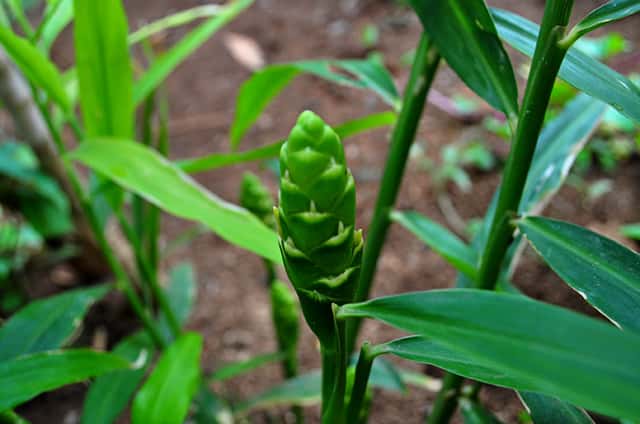
Zingiberaceae
Ginger: Complete Growing Guide
Zingiber officinale
Thrives in warmth, high humidity, and bright indirect light. Keep soil evenly moist but never waterlogged, in rich, well-draining soil.
Every 4 days
Partial shade
21° - 32°C
60% - 80%
Categories
What is Ginger?
Ginger (Zingiber officinale) is a medium-care plant from the Zingiberaceae family. Ginger (Zingiber officinale) is a tropical rhizomatous herb in the family Zingiberaceae, cultivated for thousands of years for its aromatic, pungent rhizome used in cooking and traditional medicine.
Ginger grows up to 1.0m, spread of 60cm, watering every 4 days, 21°C – 32°C, 60–80% humidity. It is suitable for indoor environments and safe for pets.
Unlike many popular species, Ginger is safe to keep around pets. Without adequate drainage, root rot can develop within 8 days.
How to Care for Ginger?
TLDR: Ginger needs Partial shade, watering every 4 days, and temperatures between 21-32°C with 60-80% humidity.
How Often Should You Water Ginger?
Water regularly to keep soil evenly moist; avoid standing water, which can rot the rhizome.
How Much Light Does Ginger Need?
Bright indirect light or partial shade; strong direct sun can scorch the foliage.
What Is the Best Soil for Ginger?
Loose, rich, well-draining soil with organic matter, slightly acidic (pH 5.5-6.5).
Care Schedule
Fertilize
Every 14 days
Misting
Every 3 days
Rotate
Every 7 days
Repot
Every 365 days
What Is Ginger and Where Does It Come From?
Ginger (Zingiber officinale) is a tropical rhizomatous herb in the family Zingiberaceae, cultivated for thousands of years for its aromatic, pungent rhizome used in cooking and traditional medicine.
How Big Does Ginger Grow?
TLDR: Ginger can reach up to 1.0m tall with Medium growth rate.
Max height
1.0m
Spread
60cm
Growth rate
Medium
Foliage
Deciduous
Plant Uses
Edible
Can be consumed
Medicinal
Medicinal properties
Aromatic
Pleasant fragrance
Medicinal Uses
- Relieves nausea and motion sickness
- Natural anti-inflammatory
- Aids digestion
Culinary Uses
- Seasoning for savory and sweet dishes
- Teas and infusions
- Syrups and beverages like ginger beer
Is your plant showing symptoms?
Click on the symptom to discover possible causes:
What Diseases Commonly Affect Ginger?
TLDR: Ginger is susceptible to 6 known diseases. Monitor regularly for early detection.
Bacterial Wilt
Bacterial wilt is a fatal vascular disease caused by bacteria (Erwinia tracheiphila, Ralstonia solanacearum, Xanthomonas spp.) that infects the water-conducting tissue of plants. The bacteria multiply and block the flow of water and nutrients, causing rapid wilting and plant death within 1-2 weeks.
Root Rot
Root rot is a serious fungal disease that affects the root system of plants, causing them to decay and die. It is primarily caused by overwatering, poor drainage, or soil-borne fungi such as Pythium, Phytophthora, Rhizoctonia, and Fusarium. The disease thrives in waterlogged conditions where roots are deprived of oxygen, making them susceptible to fungal infection.
Leaf Spot
Leaf spot is a common fungal disease caused by various pathogens including Alternaria, Ascochyta, Colletotrichum, Septoria, and Venturia. It primarily affects leaves, causing discolored spots that can lead to premature leaf drop if left untreated.
Aphids
Aphids are small, soft-bodied, pear-shaped insects (1/16 to 1/8 inch long) that feed by sucking nutrient-rich sap from plants. They reproduce rapidly and can quickly weaken plants, causing distorted growth and transmitting plant viruses. Aphids come in various colors including green, black, red, yellow, brown, and gray. They secrete honeydew, a sticky substance that attracts ants and encourages sooty mold growth.
Fun Facts
Ginger has been used for over 5,000 years in traditional Chinese and Indian medicine.
The edible rhizome is actually a modified underground stem, not a root.
Compare with similar plants
| Attribute | Difficulty | Light | Watering | Pet Safe |
|---|---|---|---|---|
| Dark Fieldcap | Medium | Low light | 2d | ⚠️ |
| Azalea | Medium | Partial shade | 3d | ⚠️ |
| Muriel's Bamboo | Medium | Partial shade | 3d | ✓ |
| Bougainvillea | Medium | Direct sun | 7d | ⚠️ |
Choose & Compare
Sources & References
- Zingiber officinale (Ginger) - Gardenia.net
- How to Plant, Grow, and Care for Ginger - Epic Gardening
- Zingiber officinale - NC Extension Gardener Plant Toolbox
- Bacterial wilt of ginger (Zingiber officinale) - Journal of Plant Pathology
- Fusarium as potential pathogenic fungus of Ginger wilt disease - PMC
- Soft rot disease management in ginger - ScienceDirect




